
Tape and Reel Packaging for SMT Components & Assembly
What Is Tape and Reel Packaging for SMT Components?
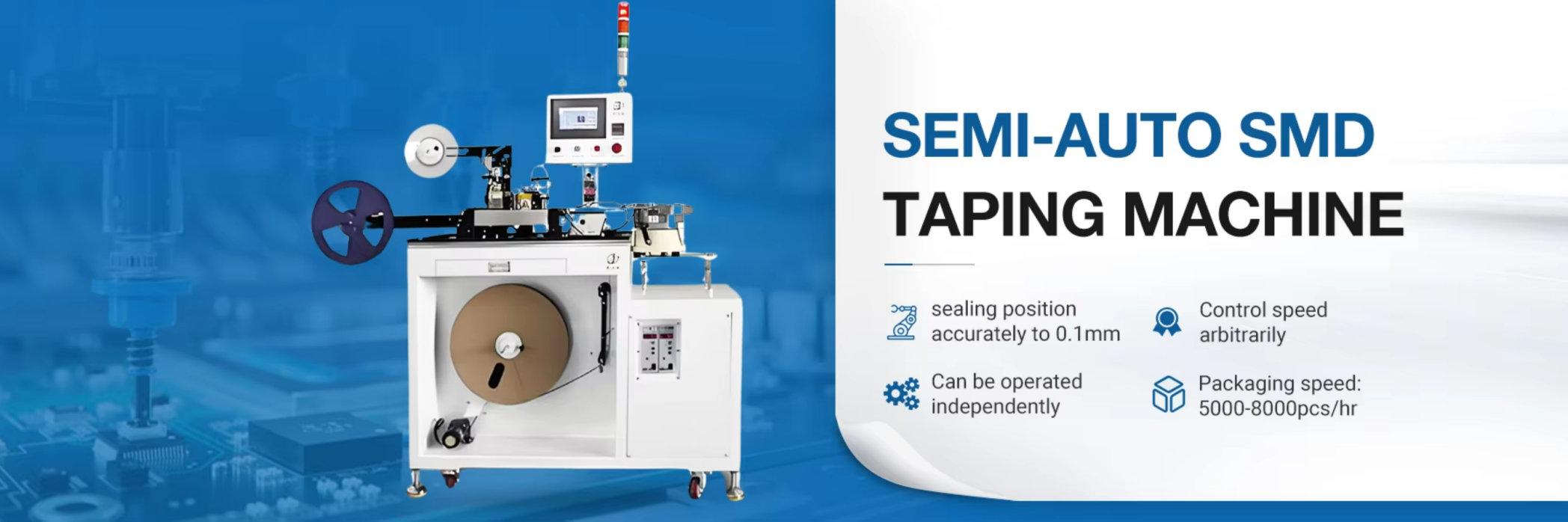
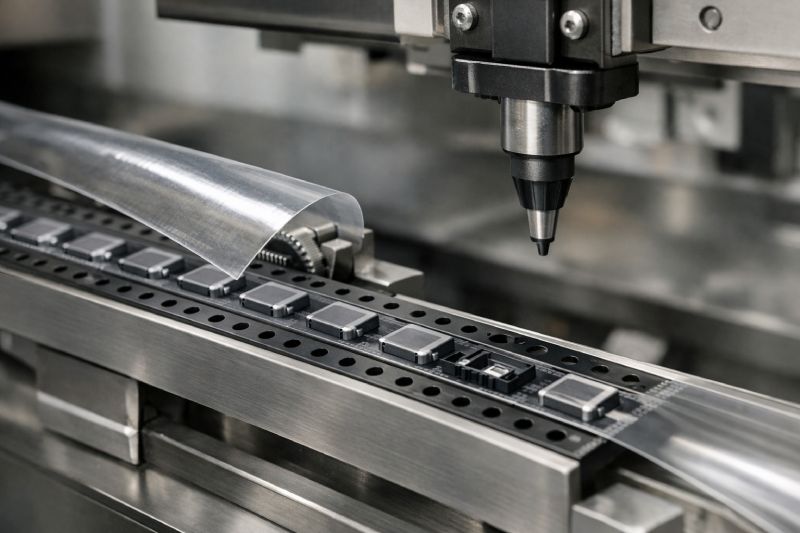
Tape and reel packaging is the most widely used automated packaging format in SMT production, designed specifically to support continuous feeding in pick-and-place assembly lines. In this system, electronic components are precisely positioned inside pockets of a carrier tape, sealed with a cover tape, and wound onto a reel for stable, high-speed handling.
From an application perspective, tape and reel is not just a storage or transport method—it is a feeding system engineered for automation. Its core purpose is to ensure that components are presented to SMT machines at a consistent orientation, spacing, and timing, allowing placement equipment to operate at maximum speed with minimal interruption.
In modern SMT environments, the value of tape and reel packaging lies in three outcomes: speed, stability, and consistency. By enabling uninterrupted component supply and predictable machine behavior, tape and reel packaging becomes a foundational element of reliable, scalable SMT assembly rather than a passive packaging choice.
Why Tape and Reel Packaging Is Used in SMT Assembly
From the perspective of an SMT production line, tape and reel packaging exists to match the rhythm of high-speed automation. Modern pick-and-place machines are designed to place tens of thousands of components per hour, which requires a packaging format that can feed parts continuously, accurately, and without manual intervention.
Tape and reel packaging supports this by allowing components to advance in a controlled, indexed sequence that aligns with machine timing. Once loaded into a feeder, the system can run for extended periods with minimal operator involvement, reducing line stoppages caused by refilling, repositioning, or handling errors.
This consistency directly impacts yield and line stability. Fewer handling steps mean fewer opportunities for component damage, misorientation, or contamination. Compared with alternative formats, tape and reel offers the most predictable interaction between packaging, feeder, and placement head—an essential requirement for scalable SMT assembly.
SMT Components Commonly Packaged in Tape and Reel
Tape and reel packaging is used across a wide range of SMT components because it provides the most reliable way to control orientation, spacing, and feeding behavior during automated assembly. Any component that must be placed quickly, repeatedly, and with consistent accuracy is a strong candidate for tape and reel.
Passive components such as resistors, capacitors, and inductors are the most common examples. Their small size and high placement volume make continuous, high-speed feeding essential for efficient SMT production. Tape and reel ensures these components are presented uniformly to the placement head, reducing pick errors and downtime.
Integrated circuits and semiconductor devices are also frequently packaged in tape and reel, particularly when precise orientation is required. Stable pocket positioning helps maintain lead alignment and protects sensitive structures during feeding.
In addition, connectors, automotive electronics, LEDs, and discrete components are often supplied in tape and reel format. These components may vary in shape or weight, but they share the same requirement: predictable, repeatable feeding under automated conditions. Tape and reel packaging provides that consistency across diverse SMT applications.
Key Elements of Tape and Reel Packaging for SMT
Tape and reel packaging functions as a system, not as isolated parts. Each element plays a specific role in maintaining feeding accuracy, component security, and production stability throughout SMT assembly.

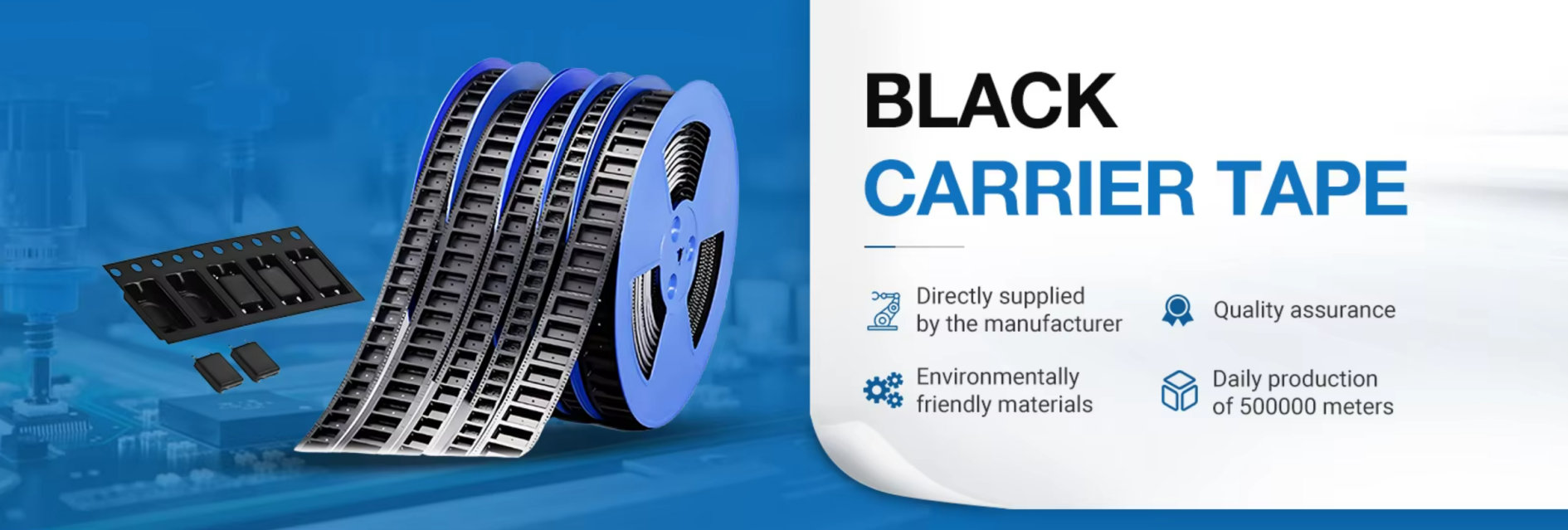
Carrier Tape
The carrier tape is responsible for holding and positioning components. Its pockets locate each part in a fixed orientation and keep spacing consistent as the tape advances through the feeder. During SMT operation, the carrier tape defines how reliably a component can be picked, not by force, but by positional repeatability. Any inconsistency here directly affects feeding accuracy and placement performance.
Learn more about its role → /carrier-tape/
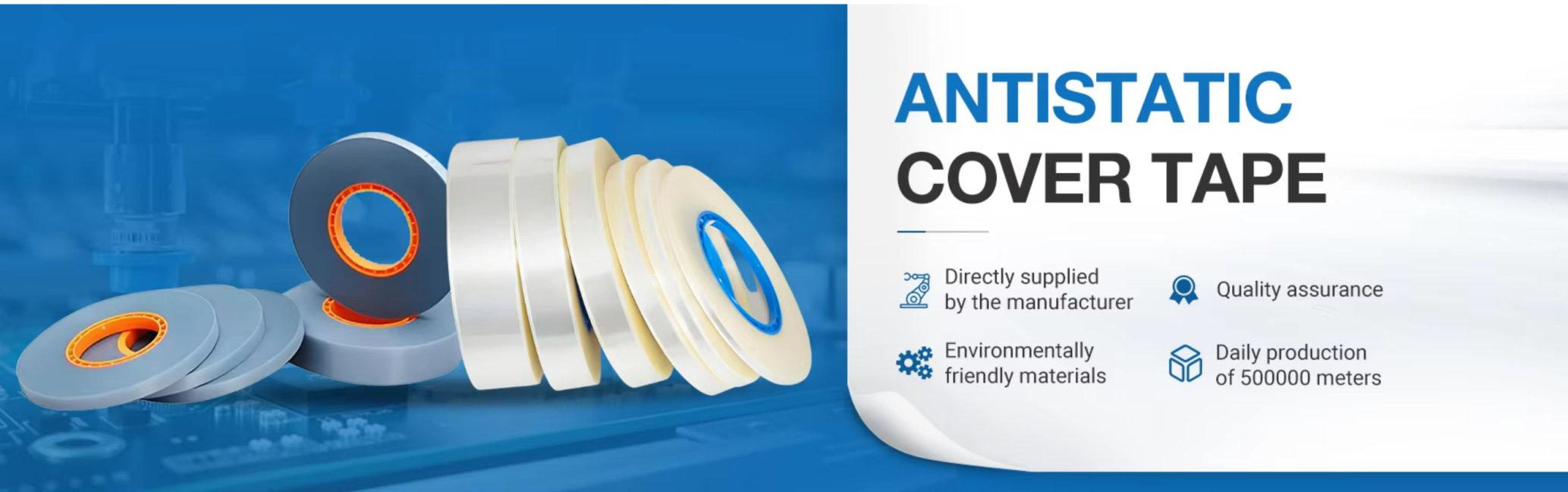
Cover Tape
The cover tape secures components inside the carrier tape pockets while still allowing controlled release at the pick point. Its function is a balance: strong enough to protect components during transport and feeding, yet predictable enough to peel away smoothly without disturbing component position. In SMT lines, cover tape behavior has a direct impact on feeding continuity and mis-pick risk.
See how cover tape works → /cover-tape-for-carrier-tape/
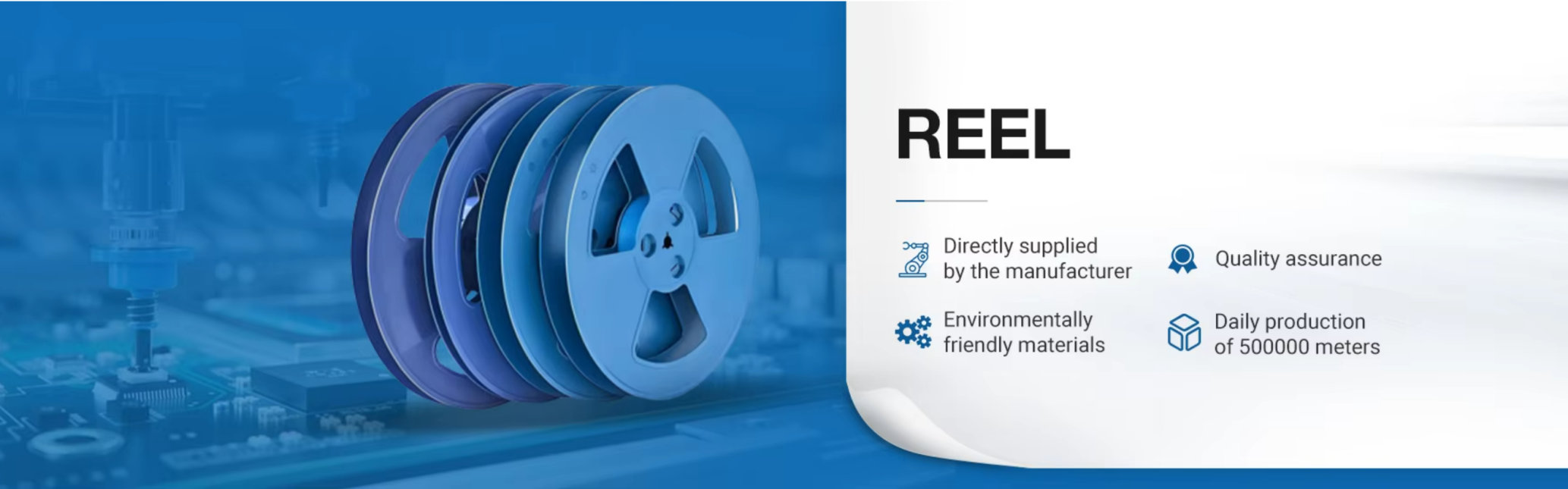
Reel
The reel supports storage, handling, and continuous feeding. By winding the taped components under controlled tension, the reel ensures that the carrier tape advances smoothly without slack, jerks, or misalignment. During operation, reel stability helps maintain consistent feeding speed and reduces the risk of stoppages caused by uneven tape movement.
Together, carrier tape, cover tape, and reel form a coordinated system. Their combined role is not dimensional accuracy alone, but process stability—ensuring SMT equipment receives components in a steady, predictable manner throughout the production cycle.
How Tape and Reel Packaging Supports SMT Pick-and-Place
Tape and reel packaging supports SMT pick-and-place by translating mechanical consistency into machine-level reliability. Rather than relying on software compensation or operator adjustment, the system establishes a predictable physical rhythm that placement equipment can follow at high speed.
The pitch of the carrier tape defines the feeding cadence. Each advance of the tape presents a single component at a fixed interval, allowing the pick-and-place head to synchronize motion without hesitation or correction. When pitch behavior is consistent, machine timing remains stable even at higher placement speeds.
Learn more → /carrier-tape-pitch/
Sprocket holes control indexing. They ensure that each tape movement is precise and repeatable, preventing cumulative position drift as the feeder runs. This mechanical reference point is what allows feeders to stop exactly where the next component must be picked, cycle after cycle.
Related reference → /carrier-tape-d1-hole/
The cover tape governs release behavior. Smooth, predictable peeling allows components to remain seated until the moment of pickup, avoiding lift, rotation, or vibration that could affect placement accuracy.
Finally, the reel maintains continuous tension and tape flow. Stable winding prevents sudden resistance or slack, helping feeders maintain uniform motion. Together, these elements allow tape and reel packaging to act as a silent enabler of high-speed, high-accuracy SMT placement—without adding complexity to the machine itself.
Materials Used in SMT Tape and Reel Packaging
Material selection in SMT tape and reel packaging is driven by application behavior, not by material properties alone. The goal is to ensure stable feeding, component protection, and compatibility with automated equipment under real production conditions.
Plastic carrier tapes are the most common choice, typically using materials such as PC, PS, or PET. These materials offer consistent pocket formation and sufficient rigidity to maintain component position as the tape advances through the feeder. The emphasis is on dimensional stability during continuous motion, not on structural strength for its own sake.
For sensitive electronic components, conductive or ESD-safe materials are often required. These options help reduce electrostatic risk during handling and feeding, especially in high-speed SMT lines where repeated contact and friction are unavoidable.
Material selection must also consider cover tape compatibility. The interaction between carrier tape and cover tape directly affects peel behavior and release stability. Mismatched materials can lead to inconsistent peeling or feeding interruptions, even if each material performs well individually.
Common Issues in SMT Tape and Reel Packaging
Most tape and reel issues in SMT assembly are not random defects—they are the result of mismatch between packaging behavior and production conditions. When the packaging system fails to support stable feeding, problems tend to appear repeatedly along the line.
Feeding instability is one of the most common issues. It often occurs when tape movement, indexing, or tension is inconsistent, causing feeders to hesitate or misalign during operation. Even small variations can become amplified at high placement speeds.
Component rotation or loss typically happens when components are not adequately constrained during tape advancement or cover tape peeling. If a component can shift within the pocket before pickup, placement accuracy is immediately compromised.
Cover tape peel inconsistency is another frequent source of disruption. Uneven peeling behavior can introduce vibration at the pickup point, increasing mis-pick rates or causing intermittent stoppages.
Finally, reel-related tension problems can affect the entire feeding sequence. Excessive resistance or uneven winding can interrupt smooth tape flow, turning what should be a continuous process into a stop-and-go operation.
In most cases, these issues stem from packaging design not being fully aligned with the realities of SMT automation.
When Custom Tape and Reel Packaging Is Required for SMT
Standard tape and reel packaging works well for many SMT applications, but there are situations where customization becomes necessary to maintain production stability. This is especially true when component characteristics or assembly conditions fall outside typical assumptions.
Non-standard SMT components are a common trigger. Unusual shapes, asymmetric geometries, or sensitive contact areas may not be securely supported by off-the-shelf pocket designs. In these cases, custom carrier tape geometry is required to control orientation and prevent movement during feeding.
High-speed SMT lines also increase the need for customization. As placement speeds rise, even minor inconsistencies in feeding behavior become unacceptable. Custom tape and reel solutions allow packaging behavior to be tuned to the specific feeder, machine, and cycle rate in use.
Customization is often critical in yield-sensitive production, where component loss, mis-picks, or intermittent stops carry a high cost. Rather than compensating at the machine level, adjusting the packaging system can remove the root cause of instability.
For these scenarios, tailored solutions such as custom carrier tape or custom embossed carrier tape are used to align packaging performance with real SMT operating conditions.
Standards and Compatibility in SMT Tape and Reel Packaging
Standards play a coordination role in SMT tape and reel packaging rather than acting as rigid design limits. Their primary purpose is to ensure that packaged components can move reliably across different feeders, pick-and-place machines, and production environments without requiring special adaptation.
In SMT assembly, standards such as EIA-481 define a common reference for how tape and reel systems interact with equipment. This shared framework allows component packaging to remain compatible with a wide range of feeders and machines, reducing integration risk when switching suppliers or scaling production.
At the same time, standards are not intended to represent the upper boundary of performance. Real-world SMT conditions—such as higher speeds, unique component shapes, or yield-critical processes—often require solutions that go beyond baseline definitions while still remaining compatible at the system level.
In practice, standards provide interoperability, while effective tape and reel design determines production stability.
Summary
Tape and reel packaging plays a central role in modern SMT assembly by enabling consistent, high-speed, and stable automation. Its value does not come from any single parameter, but from how carrier tape, cover tape, and reel work together as a coordinated feeding system. When packaging behavior aligns with machine requirements, SMT lines achieve higher yield, fewer interruptions, and more predictable output.
For manufacturers and assemblers, the next step is not just choosing tape and reel, but selecting or designing solutions that match real production conditions.



 Emial
Emial John Mr