

Carrier Tape and Reel Packaging Explained for SMT Assembly
What Is Carrier Tape and Reel Packaging?
Carrier tape and reel packaging is a system-level packaging method designed specifically for automated SMT (Surface Mount Technology) assembly. It is not a single material or component, but a coordinated unit made up of carrier tape, cover tape, and reel, engineered to work together during high-speed production.
In this system, electronic components are precisely positioned in pockets along the carrier tape, secured by the cover tape, and wound onto a reel for continuous feeding into pick-and-place machines. The core objective is not storage or protection alone, but stable, repeatable feeding that aligns with the rhythm of automated assembly lines.
What defines tape and reel packaging is its focus on process reliability. Every element supports accurate indexing, controlled component release, and uninterrupted motion through feeders. When properly designed, the system enables high placement accuracy, minimizes stoppages, and supports the demands of modern, high-throughput SMT environments.

Why Tape and Reel Packaging Is Used in SMT Assembly
SMT assembly is built around speed, consistency, and repeatability. Pick-and-place machines operate in fixed cycles, indexing components at precise intervals with minimal tolerance for variation. Tape and reel packaging matches this requirement by delivering components in a continuous, machine-readable format that aligns naturally with automated feeders.
Unlike other packaging forms, tape and reel supports uninterrupted feeding without manual intervention. Components arrive in a known orientation, at a predictable pitch, and are released in sync with machine motion. This consistency is critical for maintaining placement accuracy as line speeds increase and component sizes shrink.
From an engineering perspective, tape and reel packaging reduces variability at the system level. It stabilizes feeding behavior, limits unexpected stops, and allows SMT lines to scale throughput without redesigning upstream processes. That is why, across most high-volume electronics production, tape and reel has become the default interface between component packaging and automated assembly, rather than just one option among many.
Key Components of Tape and Reel Packaging
Tape and reel packaging functions as a coordinated system, not a collection of independent parts. Each component has a clearly defined role in maintaining feeding stability, orientation control, and process continuity during SMT assembly.
Carrier Tape
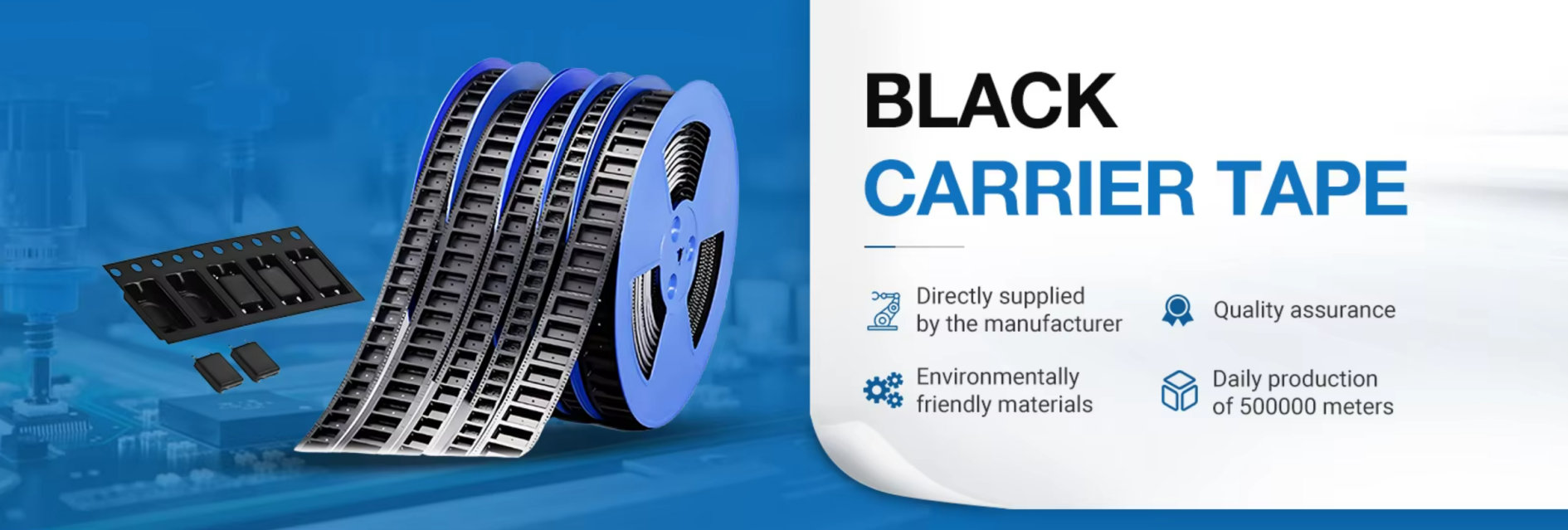
Carrier tape is the structural backbone of the system. It holds individual components in formed pockets, maintaining their position, orientation, and spacing as the tape advances through the feeder. Its primary role is accurate component presentation—ensuring each part arrives at the pick position in a predictable and repeatable manner. The carrier tape also provides the reference geometry that feeders rely on for indexing and alignment.
Cover Tape
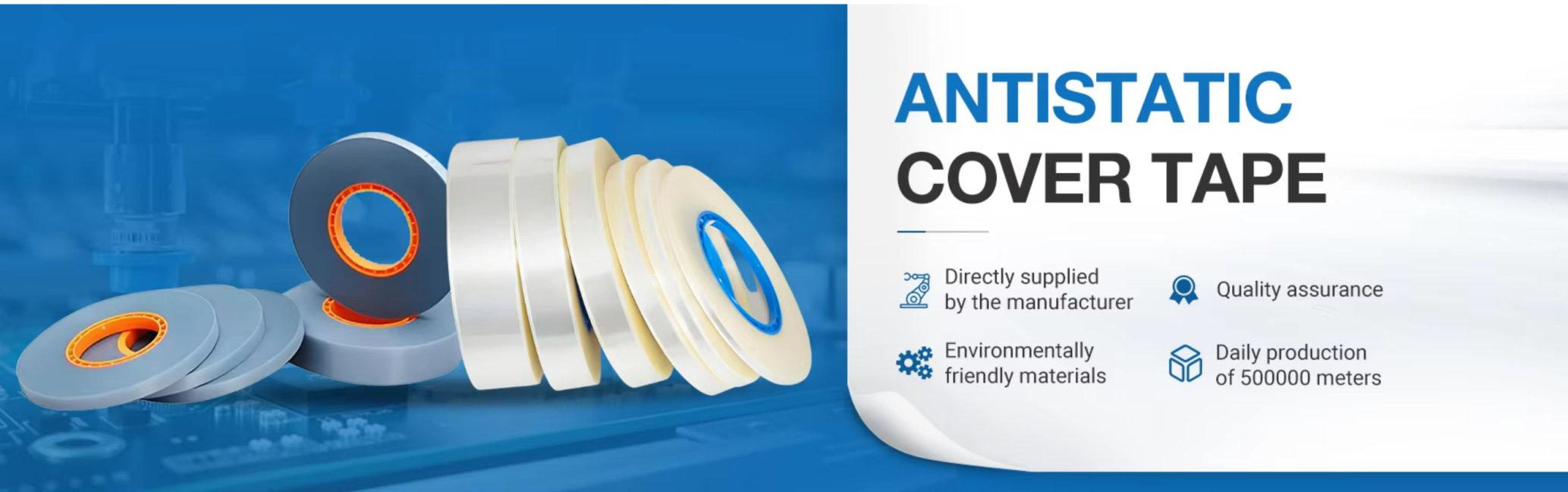
Cover tape works in direct coordination with the carrier tape. Its function is to secure components during transport and feeding, while still allowing controlled release at the pick point. The balance between adhesion and peel behavior is critical: too weak, and components may shift or escape; too strong, and release becomes unstable. In system terms, cover tape governs the transition from containment to accessibility.
Reel
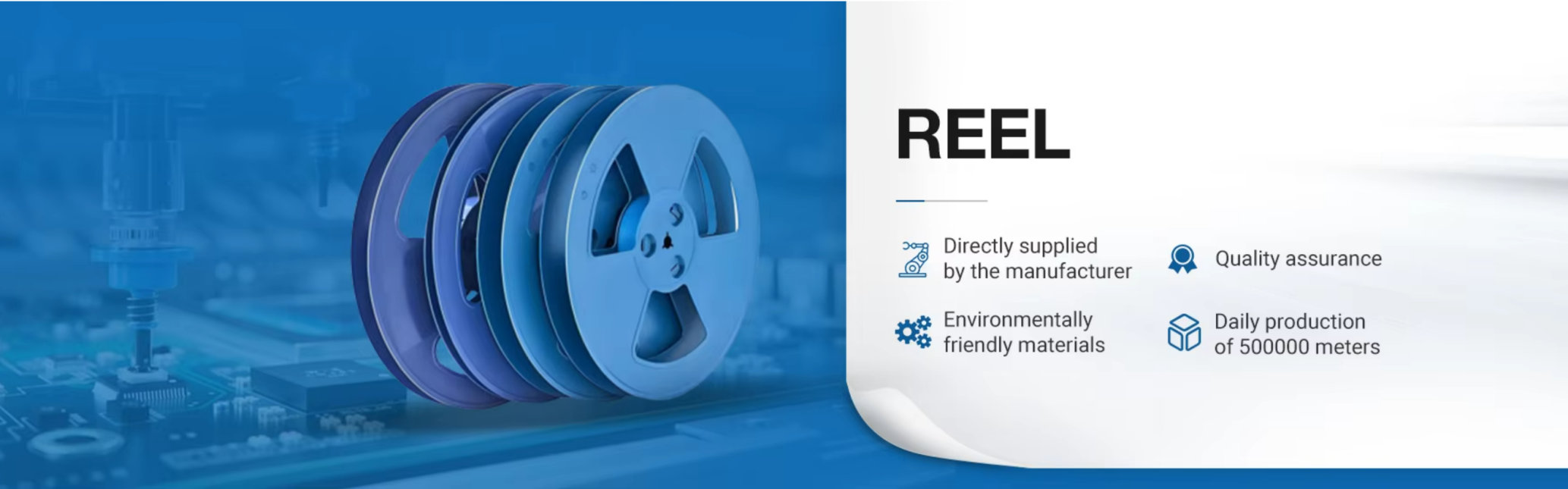
The reel serves as the delivery and handling interface. It stores the loaded tape, maintains consistent winding tension, and enables smooth, continuous feeding into SMT equipment. Beyond transport convenience, the reel influences how evenly the tape advances, especially during long production runs. A stable reel supports uninterrupted motion, which is essential for automated, high-speed assembly lines.
Together, these three elements define the functional integrity of tape and reel packaging.
How Carrier Tape and Reel Work as a System
Tape and reel packaging only performs reliably when all elements are engineered to work in sync. The system is driven by controlled motion, where timing, alignment, and release must remain consistent from the first component to the last.
Pitch sets the feeding rhythm. It defines how far the tape advances with each indexing step and directly determines whether components arrive at the pick position on time. Any mismatch between pitch and feeder motion immediately affects placement accuracy.
D1 sprocket holes provide positional control. Feeders use them as the mechanical reference for indexing, so their accuracy governs how precisely the tape advances. Even small deviations can translate into cumulative misalignment over long runs.
Cover tape manages the moment of release. It must peel back smoothly and consistently, allowing components to be exposed without movement or rotation. Unstable peel behavior disrupts the pick process and increases placement errors.

The reel maintains continuity. Its winding quality and tension influence how evenly the tape moves, especially at high speed. Inconsistent tension can introduce feeding variation even when the tape itself is well designed.
The key takeaway is simple: tape and reel is a single system. When one element fails to match the others, overall feeding stability breaks down.
Materials Used in Tape and Reel Packaging
Material selection in tape and reel packaging follows system-level logic, not isolated performance targets. Each material choice must support feeding stability, component protection, and compatibility across the full packaging set.
For carrier tape, materials are chosen based on forming behavior, dimensional stability, and application demands. Common options include PS and PET for general SMT use, PC for higher precision or temperature resistance, and conductive or anti-static variants where ESD control is required. The material must hold pocket geometry consistently while advancing through feeders at speed.
Cover tape materials are selected to match the carrier tape surface and application conditions. Adhesion behavior, peel consistency, and static control all depend on proper material pairing rather than cover tape properties alone.
Reels are typically made from plastic or paper-based composites, chosen for structural rigidity and winding stability. The reel must maintain shape under load and preserve even tension throughout feeding and transport.
Ultimately, materials are not interchangeable parts—they are interdependent elements that directly affect how the tape and reel system performs in real SMT production.
Applications of Carrier Tape and Reel Packaging
Carrier tape and reel packaging is widely used wherever automated, high-consistency assembly is required. Its system design makes it especially suited to environments where manual handling is impractical or where placement accuracy directly affects yield.
In SMT electronic component assembly, tape and reel is the standard interface between component suppliers and pick-and-place machines. Passive components, connectors, and small mechanical parts rely on consistent orientation and spacing to support high-speed placement without interruption.
For semiconductors and ICs, tape and reel packaging provides controlled handling of delicate devices. Stable feeding and predictable release are critical when dealing with fine-pitch leads, sensitive packages, or components where misplacement can lead to costly scrap.
Automotive electronics represent another major application. Production lines in this sector demand long, uninterrupted runs and extremely low defect tolerance. Tape and reel systems support this by minimizing feeding variability over extended cycles.
More broadly, tape and reel packaging is essential in high-volume automated assembly, where throughput, repeatability, and process control matter more than flexibility. In these contexts, packaging is not a logistics detail—it is a functional part of the manufacturing system itself.
Common Issues in Tape and Reel Packaging
Most problems associated with tape and reel packaging do not originate from a single component, but from system-level imbalance. When carrier tape, cover tape, and reel are not properly matched, issues tend to surface during high-speed SMT operation.
Feeding instability is a common symptom. This can appear as irregular indexing, sudden stops, or inconsistent advancement through the feeder. Often, the root cause lies in misalignment between tape geometry, sprocket hole accuracy, and reel tension rather than feeder settings alone.
Component rotation or loss typically occurs when pocket design, material behavior, or cover tape adhesion fails to control the component during transport and peeling. Even minor instability can result in parts shifting before the pick point.
Cover tape peeling issues—such as jerky release or excessive force—disrupt the timing of component exposure. This instability can cascade into missed picks or placement errors.
Reel tension inconsistency introduces variation across long runs. Uneven winding or deformation affects how smoothly the tape feeds, amplifying small inconsistencies elsewhere in the system.
These issues highlight a core reality: tape and reel problems are rarely isolated—they reflect how well the system works as a whole.
When Custom Tape and Reel Packaging Is Required
Standard tape and reel solutions work well when components, speeds, and tolerances fall within expected ranges. However, custom tape and reel packaging becomes necessary when the production environment places demands beyond those assumptions.
One common trigger is non-standard components. Irregular shapes, unusual lead configurations, or fragile structures often cannot be reliably retained or presented using off-the-shelf pocket designs. In these cases, pocket geometry and system balance must be engineered around the component itself.
High-speed SMT lines are another driver. As placement rates increase, small variations in feeding, peeling, or indexing that were previously acceptable can become failure points. Custom solutions allow tighter coordination between pitch, pocket stability, and release behavior.
Custom tape and reel is also required in yield-sensitive production, where even low defect rates carry high cost. Here, the goal is not basic compatibility, but maximum process stability over long, uninterrupted runs.
In these scenarios, customization is not about deviation from standards—it is about aligning the entire tape and reel system with real manufacturing conditions to protect throughput and yield.
Standards and Compatibility in Tape and Reel Packaging
Standards play a critical role in ensuring baseline compatibility across SMT equipment, feeders, and packaging suppliers. In tape and reel packaging, EIA-481 defines the common reference framework for dimensions, tolerances, and interface relationships. It allows components packaged by one supplier to run on assembly lines built around shared expectations.
However, standards should be understood as a starting point, not a complete design solution. They describe what must align for interchangeability, but they do not account for specific component behavior, feeder dynamics, or production speed. Real-world performance often depends on how well a packaging system operates within those limits, not merely whether it complies on paper.
From an engineering perspective, standards provide a common language between design, packaging, and assembly teams. They reduce integration risk, but they do not replace system-level validation. Effective tape and reel packaging respects standards while adapting intelligently to actual manufacturing conditions.
Summary
Carrier tape and reel packaging is best understood as a coordinated system, not a collection of individual specifications. Its purpose goes beyond holding components—it enables stable feeding, precise indexing, and reliable release in automated SMT assembly.
Throughout the system, interaction matters more than any single parameter. Pitch, sprocket holes, cover tape behavior, reel tension, and material choices must work together to support consistent machine performance. When one element is misaligned, the entire process becomes vulnerable to instability.
For engineering teams, the key takeaway is clear: evaluating tape and reel packaging requires a system mindset. With that clarity, the next step—whether selecting standard solutions or discussing custom tape and reel packaging—becomes far more deliberate and effective.



 Emial
Emial John Mr