What Is Mini LED Carrier Tape?
Mini LED technology refers to light-emitting diode components that are significantly smaller than traditional surface-mount LEDs. In most industrial applications, Mini LEDs typically measure between 100–200 micrometers, while conventional SMD LEDs usually range from 300 micrometers to over 1 millimeter depending on the package type. This dramatic reduction in size allows manufacturers to build high-density LED arrays used in advanced display technologies such as Mini LED backlighting for televisions, monitors, automotive displays, and high-brightness signage.
Because Mini LEDs are extremely small and often include sensitive optical surfaces or micro lenses, they require far more controlled packaging conditions than standard LEDs. Even minor movement inside the carrier pocket can cause orientation shifts, component overlap, or optical surface damage during transport and feeding.
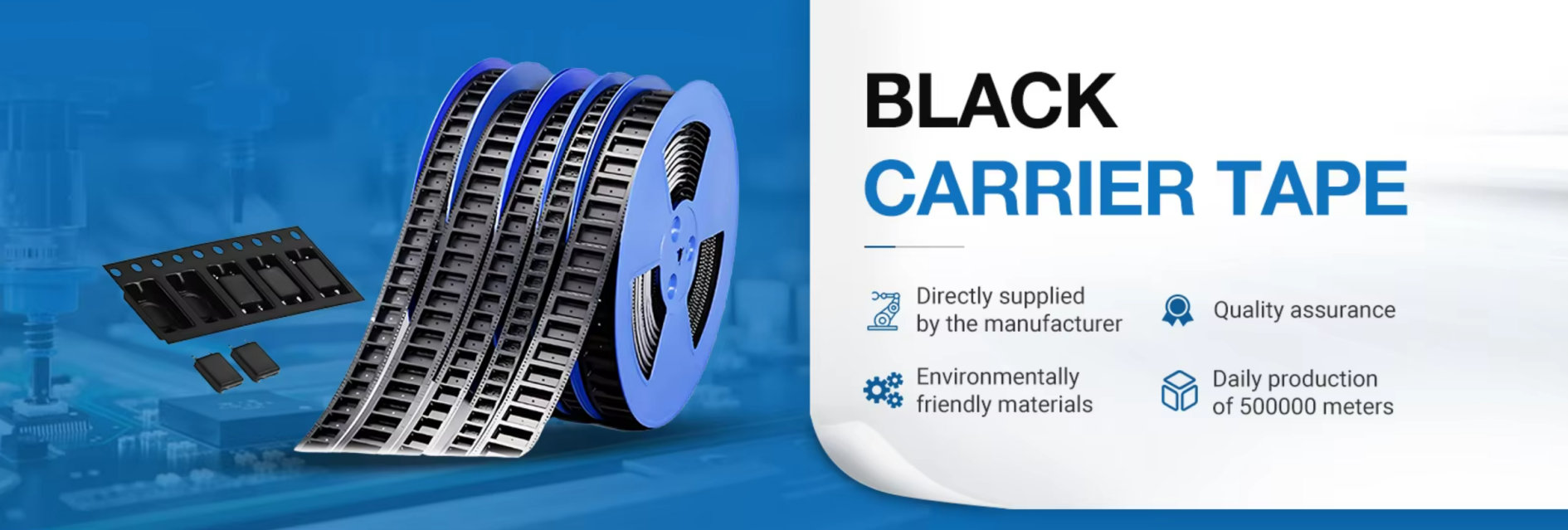
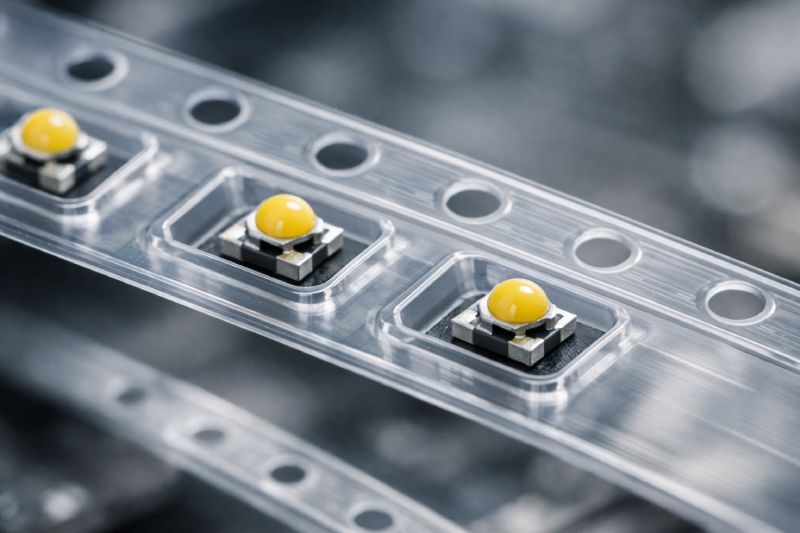
To support automated assembly, Mini LEDs are typically supplied using tape and reel packaging, where the devices are placed into embossed pockets on carrier tape and sealed with cover tape. However, the miniature size and high packing density of these components require much tighter pocket geometry, precise pitch control, and consistent feeding behavior than conventional LED packaging.
In simple terms, Mini LED carrier tape is specifically engineered to handle extremely small LED packages while maintaining component orientation, physical protection, and stable feeding during high-speed SMT assembly processes.
Why Mini LED Packaging Is More Challenging Than Standard LED
Compared with conventional SMD LEDs, Mini LEDs introduce several manufacturing and packaging challenges due to their extremely small size and higher placement density. These factors significantly increase the difficulty of designing reliable tape and reel packaging solutions.
The first challenge is component size. Mini LEDs are often only a fraction of the size of standard LEDs, which means the carrier tape pockets must be manufactured with extremely high precision. Even a slight deviation in pocket dimensions may cause the component to tilt, rotate, or move inside the pocket during transport and feeding.
Another critical factor is optical surface sensitivity. Many Mini LEDs include exposed emitting surfaces or micro lenses that are easily scratched or contaminated. If the carrier tape pocket is poorly designed, contact pressure or vibration can damage these delicate optical surfaces, directly affecting the LED’s light output and performance.
Mini LED products are also commonly used in high-density arrays, especially in display backlight applications. In these cases, thousands of LEDs are mounted on a single panel, which requires extremely accurate component orientation and placement consistency. Any rotation or misalignment during tape feeding can lead to placement errors or production yield loss.
In addition, Mini LEDs require strict orientation control during packaging. Because the polarity or emission direction must be consistent during SMT assembly, the carrier tape pocket design must ensure the component remains stable and correctly aligned throughout handling, transportation, and feeding.
For these reasons, standard LED carrier tape designs are often insufficient for Mini LED packaging, and specialized carrier tape structures are typically required to ensure reliable automated assembly.
Design Requirements for Mini LED Carrier Tape
Designing carrier tape for Mini LED applications requires significantly higher engineering precision than standard electronic components. Because Mini LEDs are extremely small and sensitive to movement, the carrier tape must ensure stable positioning, precise spacing, and reliable feeding behavior throughout the entire SMT process. Several key design factors determine whether the tape can meet the demands of Mini LED packaging.
Ultra-Precise Pocket Geometry
Pocket geometry is one of the most critical elements in Mini LED carrier tape design. The pocket must match the LED package dimensions with very tight tolerances to prevent unwanted movement. If the pocket is too large, the component may rotate or shift during transport. If it is too small, excessive pressure may damage the LED structure or optical surface.
For Mini LED devices, pocket dimensions are typically designed with minimal clearance between the component and pocket walls, ensuring the LED remains centered while still allowing smooth pick-up by the SMT nozzle.
Pocket Depth Control
Pocket depth must be carefully engineered to prevent component tilting. Because Mini LEDs are extremely thin, insufficient depth may cause the component to protrude above the tape surface, increasing the risk of contact with the cover tape. Conversely, overly deep pockets can allow the LED to tilt or stand at an angle.
Proper depth control ensures that the LED sits flat and stable inside the pocket, enabling consistent vacuum pick-up during high-speed placement.
Pitch Accuracy
Mini LED applications often involve very dense component spacing, which makes pitch accuracy particularly important. Pitch refers to the distance between adjacent pockets along the carrier tape. Any deviation in pitch can lead to misalignment between the tape pockets and the feeder indexing system.
Precise pitch control ensures that each LED arrives at the pick-up position exactly when required, supporting accurate placement in automated SMT equipment.
Component Orientation Stability
Maintaining correct component orientation is essential in Mini LED packaging. Many Mini LED packages include polarity markings or directional optical structures that must remain consistent during placement.
The pocket design therefore needs features such as orientation guides or asymmetrical pocket shapes that prevent rotation inside the pocket. This ensures the LED maintains the correct alignment from packaging through final assembly.
Material Selection for Mini LED Carrier Tape
Material selection plays a critical role in the performance of Mini LED carrier tape. Because Mini LEDs are extremely small and sensitive to both mechanical and electrostatic influences, the carrier tape material must provide high dimensional stability, consistent pocket formation, and reliable protection during SMT handling.
Several materials are commonly used in carrier tape manufacturing, but their suitability for Mini LED applications varies depending on precision requirements and production conditions.
PC Carrier Tape
Polycarbonate (PC) is widely considered one of the most suitable materials for Mini LED carrier tape. PC offers excellent rigidity and dimensional stability, which helps maintain precise pocket geometry even at very small scales.
This stability is particularly important when producing high-density pocket arrays where even small deformation could affect component positioning. PC also provides good transparency, making it easier for automated vision inspection systems to verify component presence and orientation during packaging.
Because of these advantages, PC carrier tapeis frequently used in high-end Mini LED and semiconductor packaging applications where precision and consistency are critical.
PET Carrier Tape
Polyethylene terephthalate (PET) is another commonly used carrier tape material. PET tapes generally offer good mechanical strength and cost efficiency, making them suitable for many standard electronic components.
However, PET typically has slightly lower rigidity compared with PC, which may limit its use in extremely small or high-precision Mini LED packages. In some cases, PET carrier tape can still be used if the pocket design and forming process are optimized for the specific LED package dimensions.
Conductive Carrier Tape
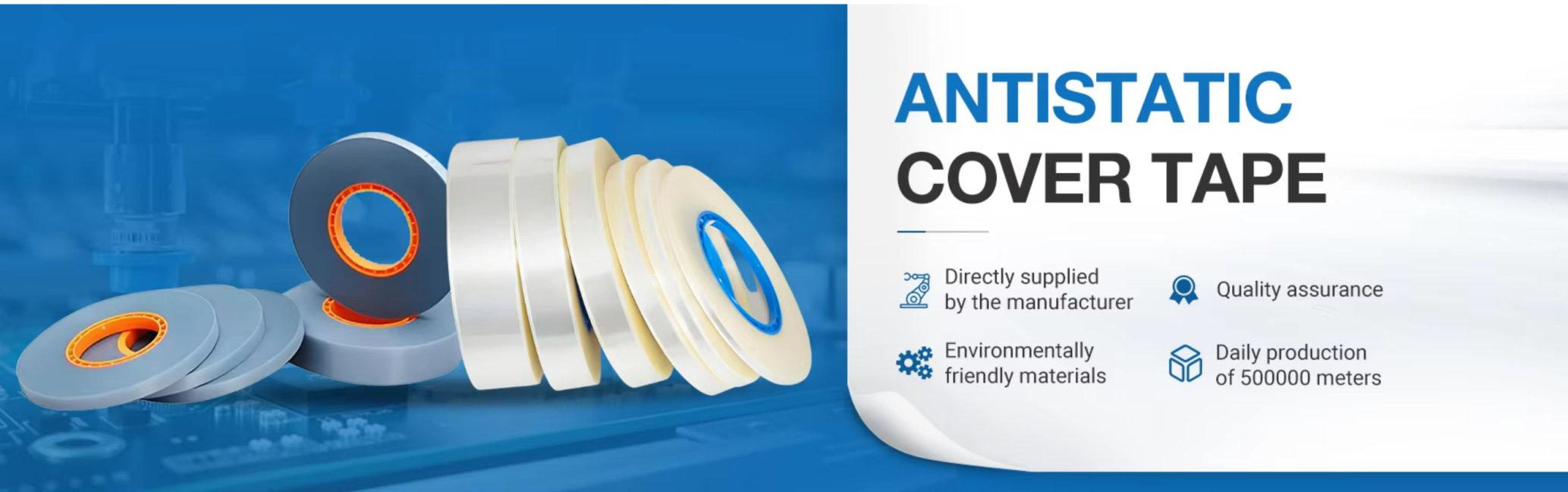
In Mini LED manufacturing environments, electrostatic discharge (ESD) control is also an important consideration. Conductive or antistatic carrier tapes are often used to dissipate static electricity that could potentially damage sensitive electronic components.
Conductive carrier tape materials help maintain a controlled electrostatic environment during component loading, transportation, and SMT feeding, improving overall reliability in high-volume production.
Overall, while multiple materials can be used for carrier tape production, PC carrier tape is often preferred for Mini LED packaging due to its superior dimensional stability and ability to maintain precise pocket structures.
Carrier Tape Tolerance in Mini LED Applications
Tolerance control becomes significantly more critical in Mini LED packaging compared with standard electronic components. Because the LEDs are extremely small and often arranged in high-density arrays, even minor dimensional deviations in the carrier tape can affect feeding stability and placement accuracy during SMT assembly.
One important parameter is pocket tolerance, which defines the allowable variation in pocket length, width, and depth. If the pocket is slightly oversized, the Mini LED may shift or rotate inside the cavity during transport. If the pocket is undersized, the component may experience mechanical pressure that can damage the LED structure or optical surface. Maintaining tight pocket tolerance ensures the component remains stable while still allowing reliable pick-up.
Another key factor is pitch tolerance, referring to the spacing between consecutive pockets along the carrier tape. In Mini LED applications, pitch accuracy must be tightly controlled so that each component aligns correctly with the feeder indexing system. Any cumulative pitch deviation can cause misalignment between the pocket position and the SMT pick-up location, potentially leading to placement errors.
Sprocket hole positioning tolerance is also essential for feeding stability. The feeder mechanism relies on the sprocket holes along the tape edge to advance the carrier tape at precise intervals. If the hole position deviates from specification, the tape may not index correctly, resulting in feeding instability or component misplacement.
Because of these factors, Mini LED carrier tape manufacturing typically requires stricter dimensional control and higher forming precision than standard LED packaging. Accurate tolerance management helps ensure stable feeding, reliable pick-up, and consistent placement in high-speed SMT production lines.
Interaction Between Mini LED Carrier Tape and Cover Tape
In tape and reel packaging, the interaction between the carrier tape and cover tape plays an important role in protecting Mini LED components while maintaining stable feeding during SMT assembly. Because Mini LEDs are extremely small and lightweight, the behavior of the cover tape during peeling can directly influence component stability inside the pockets.
One critical factor is peel force, which refers to the force required to separate the cover tape from the carrier tape during SMT feeding. If the peel force is too high, the peeling action can create vibration or sudden movement that may cause the Mini LED to shift or rotate inside the pocket. On the other hand, if the peel force is too low, the cover tape may not remain securely sealed during transportation, increasing the risk of component loss or contamination.
Cover tape compatibility is also important for Mini LED packaging. The adhesive characteristics of the cover tape must match the carrier tape material to ensure consistent sealing performance. Different carrier tape materials—such as PC or PET—often require specific cover tape formulations to maintain stable peel characteristics.
Another key consideration is release consistency during continuous feeding. In high-speed SMT lines, the cover tape must peel smoothly and evenly as the tape advances through the feeder. Any irregular peeling behavior can introduce vibration or sudden tension changes, which may affect pick-up reliability.
For Mini LED applications, achieving stable interaction between the carrier tape and cover tape helps ensure component protection during transport and predictable behavior during the peeling process, both of which are essential for maintaining consistent SMT production performance.
High-Speed SMT Considerations for Mini LED Carrier Tape
Mini LED production is typically associated with high-volume SMT assembly, where thousands or even tens of thousands of LEDs may be placed on a single panel. In such environments, the performance of the carrier tape must support stable feeding, precise positioning, and reliable component pick-up throughout continuous high-speed operation.

One of the most important factors is feeder stability. The carrier tape must advance smoothly through the SMT feeder without jerking or misalignment. Because Mini LEDs are extremely lightweight, even small vibrations during tape indexing can cause the component to shift within the pocket. Proper pocket design, consistent pitch accuracy, and stable sprocket hole positioning all contribute to maintaining reliable feeder performance.
Another critical aspect is placement accuracy. Mini LED displays often require very tight placement tolerances due to the dense arrangement of LEDs in backlight or display modules. The carrier tape must present each component at the correct pick-up location so the placement head can accurately capture and position the LED on the PCB. Any deviation in pocket positioning or tape indexing can result in misplacement or alignment errors.
Vibration sensitivity is also a major concern in Mini LED packaging. During high-speed feeding, rapid tape movement and cover tape peeling can introduce mechanical vibration. If the carrier tape pocket does not adequately stabilize the component, these vibrations may cause the LED to rotate or tilt before pick-up.
Finally, component pick-up reliability depends heavily on how the LED sits inside the pocket. The component must remain flat and correctly oriented so that the SMT nozzle can create a stable vacuum seal during pick-up. Proper pocket depth, geometry, and orientation features help ensure consistent pick-and-place performance across large production runs.
By addressing these SMT-related factors during the carrier tape design stage, manufacturers can significantly improve placement efficiency, reduce production interruptions, and maintain consistent yield in Mini LED assembly lines.
Common Problems in Mini LED Carrier Tape Packaging
Despite careful design, Mini LED packaging can still encounter several practical issues during tape and reel handling or SMT assembly. Because the components are extremely small and lightweight, even minor design or process variations may lead to instability during transportation or feeding.
One common issue is LED rotation inside the pocket. If the pocket clearance is too large or the geometry does not adequately constrain the component, the Mini LED may rotate during transport or feeder vibration. This can cause orientation errors during SMT placement, particularly for LEDs that require polarity alignment.
Another potential problem is pocket deformation. If the carrier tape material lacks sufficient rigidity or the forming process is not well controlled, pocket shapes may deform slightly during winding, storage, or feeding. Even small structural changes in the pocket can affect how the LED sits inside the cavity, leading to unstable pick-up.
Lens or optical surface damage is also a concern in Mini LED packaging. Many Mini LED packages include exposed emitting surfaces that are sensitive to mechanical contact. If the pocket depth is insufficient or the component protrudes above the pocket, the cover tape may press against the optical surface, potentially causing scratches or contamination.
A further issue is feeding instability during SMT operation. Misaligned sprocket holes, inconsistent pitch spacing, or uneven cover tape peeling can create vibration during tape advancement. These disturbances may cause the LED to move slightly inside the pocket, affecting placement reliability.
Understanding these potential problems helps manufacturers optimize carrier tape design, material selection, and packaging processes to achieve stable handling and consistent performance in Mini LED production environments.
When Custom Mini LED Carrier Tape Is Required
While some Mini LED components can be packaged using modified standard carrier tape designs, many applications require custom carrier tape solutions to ensure reliable handling and SMT placement. The extremely small size of Mini LEDs and the diversity of package structures often make standard tape specifications insufficient.
One situation where customization becomes necessary is when Mini LED packages have non-standard dimensions or shapes. Some Mini LED devices include unique optical structures, micro lenses, or irregular package outlines that cannot be securely held by conventional pocket designs. In these cases, the pocket geometry must be specifically engineered to match the component’s shape and orientation requirements.
Custom carrier tape is also often required for ultra-high-density LED arrays, where the spacing between components is very small. These applications demand extremely accurate pitch control and pocket positioning to ensure the LEDs align precisely with SMT pick-up locations. Standard carrier tape formats may not provide the dimensional precision needed for such dense packaging.
Another important scenario is high-speed SMT production lines. When assembly equipment operates at very high placement speeds, even small component movements inside the pocket can cause pick-up failures or placement errors. Custom carrier tape designs can incorporate optimized pocket structures and tolerance control to improve component stability during feeding.
In these situations, developing a custom Mini LED carrier tape helps ensure stable component protection, precise orientation control, and reliable performance in automated SMT assembly.
Summary: Designing Carrier Tape for Next-Generation Mini LED Production
Mini LED technology places significantly higher demands on tape and reel packaging compared with traditional LED components. The extremely small device size, high-density packaging requirements, and sensitivity of optical surfaces require carrier tape designs with precise pocket geometry, controlled tolerances, and stable component positioning.
Throughout the SMT process, the carrier tape must ensure consistent interaction with the feeder system, maintain reliable cover tape peeling behavior, and prevent component rotation or damage. Material selection, pocket design, and dimensional accuracy all play critical roles in maintaining stable handling conditions.
As Mini LED applications continue to expand in advanced display technologies, carrier tape design becomes an essential factor in achieving stable assembly performance and high manufacturing yield. Considering packaging requirements early in the design stage helps ensure smooth integration into high-speed SMT production environments.






 Emial
Emial John Mr