


How Tape and Reel Packaging Works in SMT Assembly
Introduction
Modern electronics manufacturing relies heavily on automation. Surface Mount Technology (SMT) assembly lines place thousands of components onto printed circuit boards (PCBs) every hour, requiring a reliable and standardized way to deliver components to high-speed placement machines. This is where tape and reel packaging plays a critical role.
Tape and reel packaging is not just a shipping method—it is a functional part of the SMT production process. By organizing electronic components in a continuous carrier tape sealed with cover tape and wound onto reels, manufacturers can feed parts automatically into pick-and-place machines with high accuracy and speed.
This packaging method is widely used for resistors, capacitors, ICs, LEDs, connectors, and sensors. It is standardized under EIA-481 to ensure compatibility across different packaging suppliers and SMT equipment.
Understanding how tape and reel packaging works helps engineers optimize production efficiency, reduce placement errors, and maintain stable SMT operations.
What Is Tape and Reel Packaging
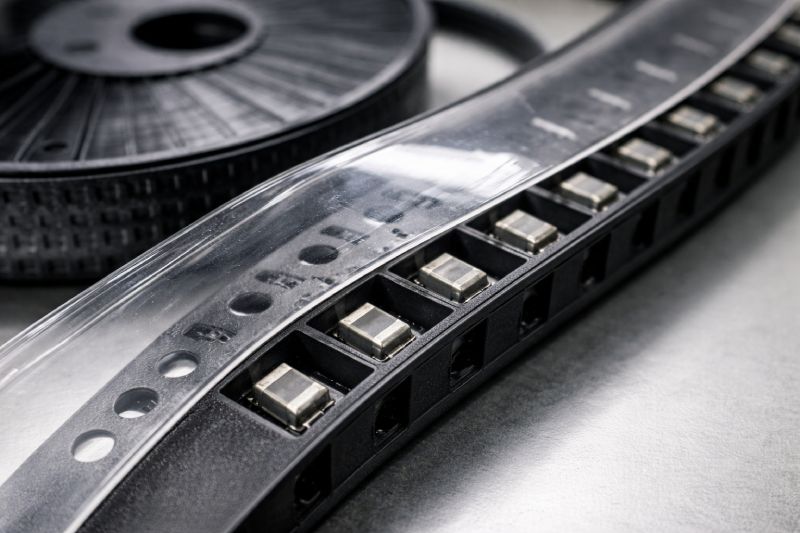
Tape and reel packaging is a standardized system used to package and deliver electronic components for automated SMT assembly. In this system, components are placed into pockets formed in a continuous carrier tape. A cover tape seals the pockets, and the entire tape is wound onto a plastic reel for handling and storage.
The structure of tape and reel packaging consists of several key elements working together to protect components and enable automated feeding.
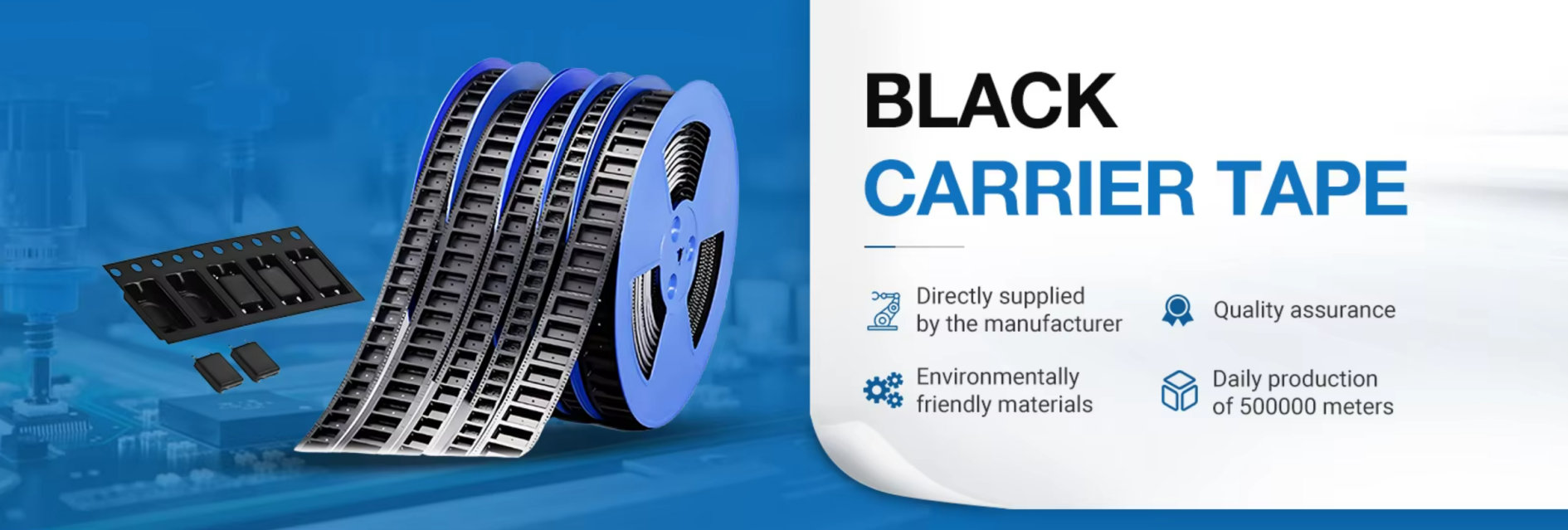
Carrier tape contains embossed pockets designed to hold individual components. These pockets keep the parts in a fixed orientation, preventing movement or damage during transportation and feeding.
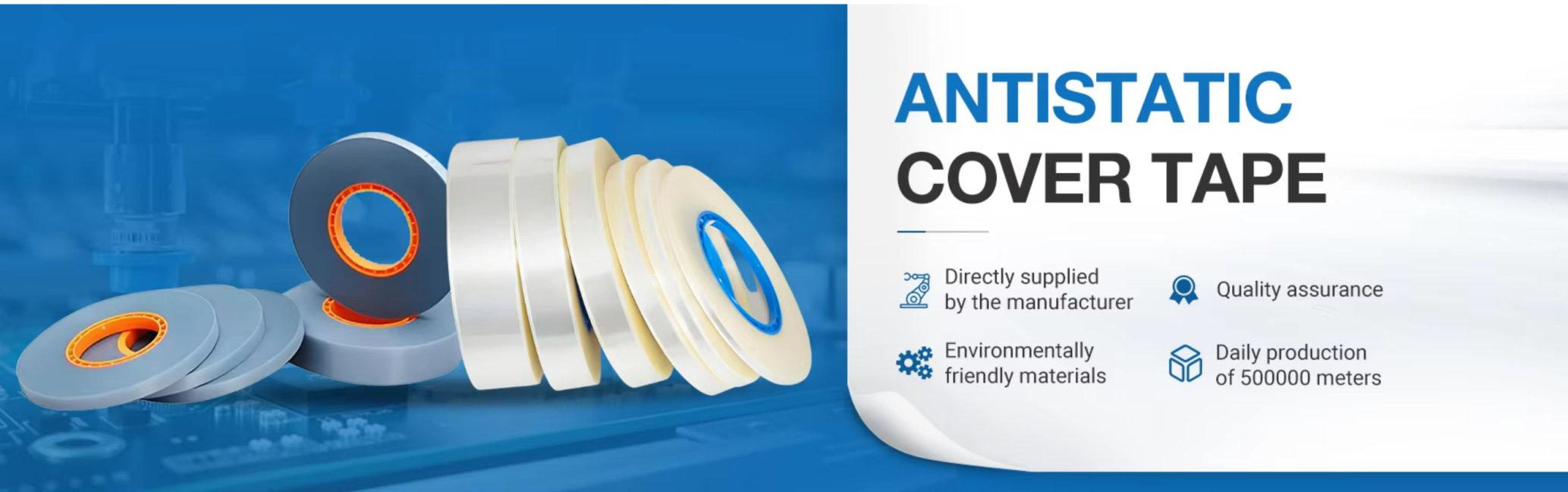
Cover tape is applied on top of the carrier tape to seal the components inside the pockets. During SMT assembly, the cover tape is peeled away in a controlled manner so that the pick-and-place machine can access each component.
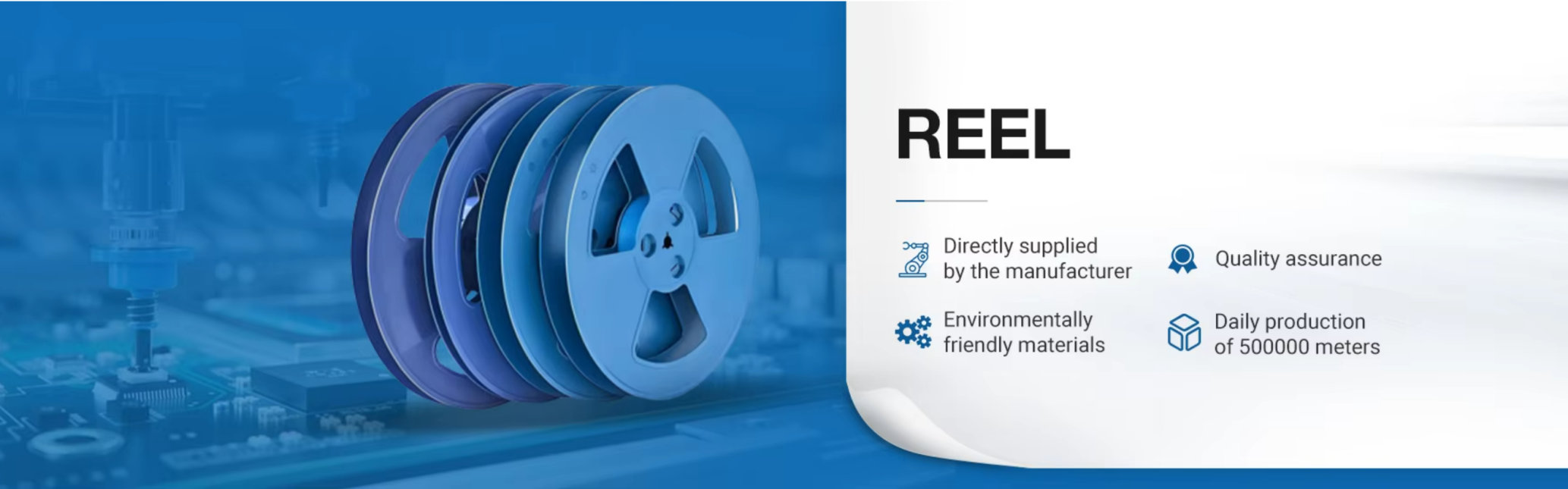
Plastic reels hold long lengths of carrier tape and allow the tape to unwind smoothly during feeding. Reels are designed to fit directly into SMT feeders.
Leader and trailer tape sections are added at the beginning and end of the tape to allow the reel to be loaded into feeders without exposing components prematurely.
Tape and reel packaging is commonly used for many types of electronic components, including:
-
Chip resistors
-
MLCC capacitors
-
Integrated circuits (ICs)
-
LEDs
-
Connectors
-
Sensors
Because of its compatibility with automated equipment, tape and reel packaging has become the dominant packaging format in SMT manufacturing.
Why SMT Assembly Requires Tape and Reel Packaging
SMT assembly lines operate at extremely high speeds. Modern pick-and-place machines can place between 30,000 and 120,000 components per hour, depending on machine configuration and component size.
At these speeds, manual component handling is not feasible. Components must be delivered in a format that allows machines to pick them reliably and continuously without interruption.
Tape and reel packaging enables this level of automation by organizing components into a predictable and standardized feeding format. Each component is precisely positioned within the carrier tape pockets, ensuring that placement machines can access them consistently.
The benefits of tape and reel packaging in SMT production include:
-
Continuous automated component feeding
-
Accurate component orientation control
-
Reduced handling damage
-
Compatibility with automated feeders
-
Improved production speed and efficiency
Without tape and reel packaging, SMT assembly would require frequent manual intervention, resulting in slower production and higher error rates.
In modern electronics manufacturing, tape and reel packaging is therefore considered an integral part of the SMT automation system rather than just a transportation method.
Key Components of a Tape and Reel Packaging System
A tape and reel packaging system consists of several components that work together to protect electronic parts and ensure reliable feeding during SMT assembly.
Carrier Tape
Carrier tape is the base structure that holds electronic components. It contains embossed pockets designed to match the shape and dimensions of specific components.
The pocket dimensions must be carefully designed to prevent component movement while allowing easy pick-up by the placement machine.
Carrier tapes are typically manufactured from materials such as:
-
Polystyrene (PS)
-
Polyethylene terephthalate (PET)
-
Polycarbonate (PC)
These materials provide the necessary rigidity, dimensional stability, and electrostatic protection required for electronic components.
Cover Tape
Cover tape seals the components inside the carrier tape pockets. It protects the parts during shipping and handling while allowing controlled peeling during SMT feeding.
Two common types of cover tape are used:
-
Pressure-sensitive cover tape
-
Heat-activated cover tape
A key parameter in cover tape performance is peel strength. The peel force must be carefully controlled so that the tape opens smoothly during feeding without damaging components or causing feeding interruptions.
Plastic Reel
Plastic reels store long lengths of carrier tape and allow the tape to be easily transported and loaded into SMT feeders.
Common reel sizes include:
-
7-inch reels
-
13-inch reels
-
15-inch reels
Reels are designed to ensure smooth unwinding of the carrier tape during automated feeding.
How Tape and Reel Packaging Works in an SMT Production Line
Tape and reel packaging interacts directly with SMT equipment to provide continuous component feeding throughout the assembly process.
The typical workflow in an SMT production line involves several steps.
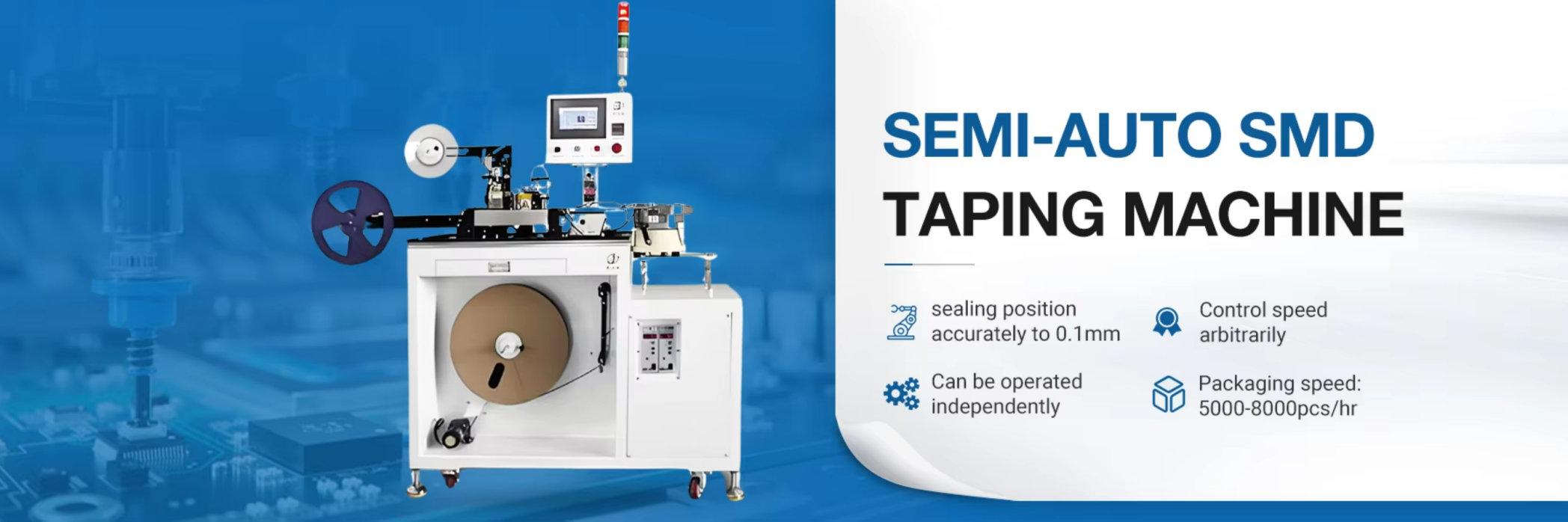
First, electronic components are loaded into the pockets of the carrier tape using automated taping machines. Each pocket holds one component and maintains a consistent orientation.
Next, cover tape is applied to seal the pockets and protect the components. The sealed tape is then wound onto a plastic reel for transportation and storage.
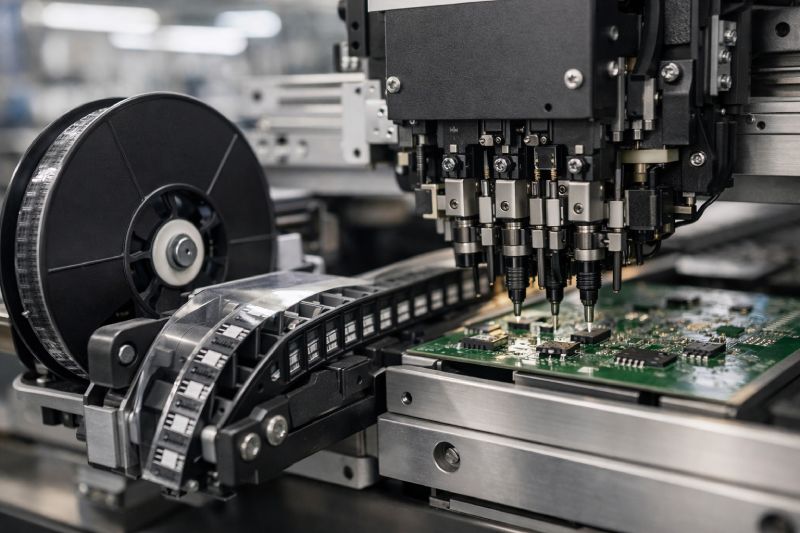
When the reel reaches the SMT assembly line, it is installed into an SMT feeder mounted on the pick-and-place machine.
As the machine operates, the feeder advances the carrier tape step by step according to the pocket pitch. At the same time, the cover tape is peeled back at a controlled angle.
Once the pocket is exposed, the pick-and-place head moves into position and picks the component from the pocket using a vacuum nozzle.
The component is then placed onto the PCB at the correct location.
This cycle repeats continuously as the tape advances through the feeder, allowing thousands of components to be placed efficiently during production.
Tape and Reel Standards Used in SMT Manufacturing
To ensure compatibility across the electronics industry, tape and reel packaging follows standardized specifications defined by EIA-481.
This standard defines critical dimensions and design requirements for carrier tape and reel packaging systems.
Important parameters defined by the standard include:
-
Tape width
-
Pocket pitch
-
Pocket dimensions
-
Sprocket hole spacing
-
Reel size
Typical tape widths used in SMT packaging include:
| Tape Width | Typical Components |
|---|---|
| 8 mm | Small passive components |
| 12 mm | Integrated circuits |
| 16 mm | Connectors and medium components |
| 24 mm and above | Larger components |
Standardization ensures that carrier tapes produced by different suppliers remain compatible with SMT feeders and placement machines.
This compatibility is essential for maintaining stable production in high-volume electronics manufacturing.
Common Problems in Tape and Reel Feeding
Although tape and reel packaging is highly reliable, several issues can arise during SMT feeding if the packaging design or material quality is not properly controlled.
One common problem is component flipping. If the pocket design is too large or poorly shaped, components may rotate or tilt inside the pocket, leading to placement errors.
Another issue is cover tape peeling failure. If the peel force is too high, the feeder may struggle to peel the cover tape. If it is too low, the tape may peel prematurely, causing components to spill.
Feeding jams can also occur if sprocket holes are not manufactured within tight tolerances. Misaligned holes prevent the feeder mechanism from advancing the tape correctly.
Static electricity is another concern in electronic component packaging. Electrostatic discharge can damage sensitive semiconductor devices.
To prevent these issues, manufacturers often use anti-static carrier tape materials and strict dimensional inspection processes.
Proper packaging design and quality control are essential for maintaining stable SMT feeding performance.
How Tape and Reel Design Affects SMT Production Efficiency
The design of tape and reel packaging has a direct impact on the efficiency and reliability of SMT production.
One critical factor is pocket design. Pocket depth, width, and shape must match the component dimensions precisely. Poorly designed pockets can cause components to shift or become difficult for placement machines to pick.
Material rigidity is also important. Carrier tapes made from stable materials maintain dimensional accuracy during transportation and feeding.
Another important factor is peel force stability. If peel force varies too much, feeding performance becomes unpredictable and may cause machine stoppages.
Dimensional accuracy is equally important. Parameters such as pocket pitch and sprocket hole alignment must remain within strict tolerances to ensure smooth feeder operation.
Poorly designed tape and reel packaging can lead to component loss, feeder errors, and costly machine downtime.
For high-volume electronics production, well-engineered packaging is essential for maintaining consistent assembly performance.
When Custom Tape and Reel Packaging Is Required
While standard carrier tapes are suitable for many electronic components, some products require custom tape and reel packaging.
Custom packaging is typically required when components have unusual shapes, fragile structures, or non-standard dimensions.
Examples include:
-
Mini LED devices
-
Automotive connectors
-
Power semiconductor components
-
Sensors with irregular shapes
In these cases, custom pocket designs must be created to ensure that components remain stable during handling and feeding.
Custom carrier tape solutions often involve specialized pocket geometry, optimized materials, and precise dimensional control.
These customized designs allow manufacturers to maintain reliable SMT feeding performance even for complex or delicate components.
Choosing the Right Tape and Reel Packaging Supplier
Selecting the right packaging supplier is important for ensuring stable SMT production.
Manufacturers should evaluate suppliers based on several key factors.
Engineering capability is one of the most important considerations. A supplier should have experience designing carrier tape pockets for different component types and package sizes.
Material capability is another important factor. Reliable suppliers can offer different material options such as PS, PET, or PC to match specific application requirements.
Quality control systems are also essential. Packaging suppliers should perform dimensional inspection, peel force testing, and material verification to ensure consistent product quality.
Finally, production capability must be considered. A supplier must be able to deliver stable large-volume production to support high-speed electronics manufacturing.
Working with an experienced tape and reel packaging provider helps manufacturers reduce feeding issues and maintain efficient SMT operations.
Conclusion
Tape and reel packaging is a fundamental part of modern SMT assembly. By organizing electronic components into standardized carrier tapes sealed with cover tape and stored on reels, manufacturers can achieve high-speed automated component placement.
The system relies on several key elements, including carrier tape, cover tape, plastic reels, and feeder mechanisms. Together, these components enable continuous and reliable feeding of parts into SMT placement machines.
Standards such as EIA-481 ensure compatibility across the electronics industry, allowing manufacturers to integrate packaging and assembly systems seamlessly.
For electronics manufacturers, well-designed tape and reel packaging helps improve production efficiency, reduce placement errors, and maintain stable SMT operations.
As electronic devices continue to become smaller and more complex, reliable tape and reel packaging will remain essential for supporting modern automated assembly processes.



 Emial
Emial John Mr