
Embossed Carrier Tape vs Punched Carrier Tape: Differences, Uses & How to Choose
Introduction
In tape and reel packaging, selecting the right carrier tape directly impacts component protection, feeding reliability, and overall production efficiency. Among the most common options, embossed carrier tape and punched carrier tape serve different purposes and are not interchangeable in many applications.
Embossed carrier tape is manufactured through thermoforming to create precise pockets that securely hold components, while punched carrier tape is produced by die-cutting flat materials with simpler cavity structures. Each type is suited to specific component categories and production environments.
Choosing the wrong carrier tape can lead to misfeeding, component damage, or costly downtime in SMT assembly lines. This guide explains the key differences, applications, cost implications, and selection criteria to help you make the right decision.
What Is Embossed Carrier Tape?
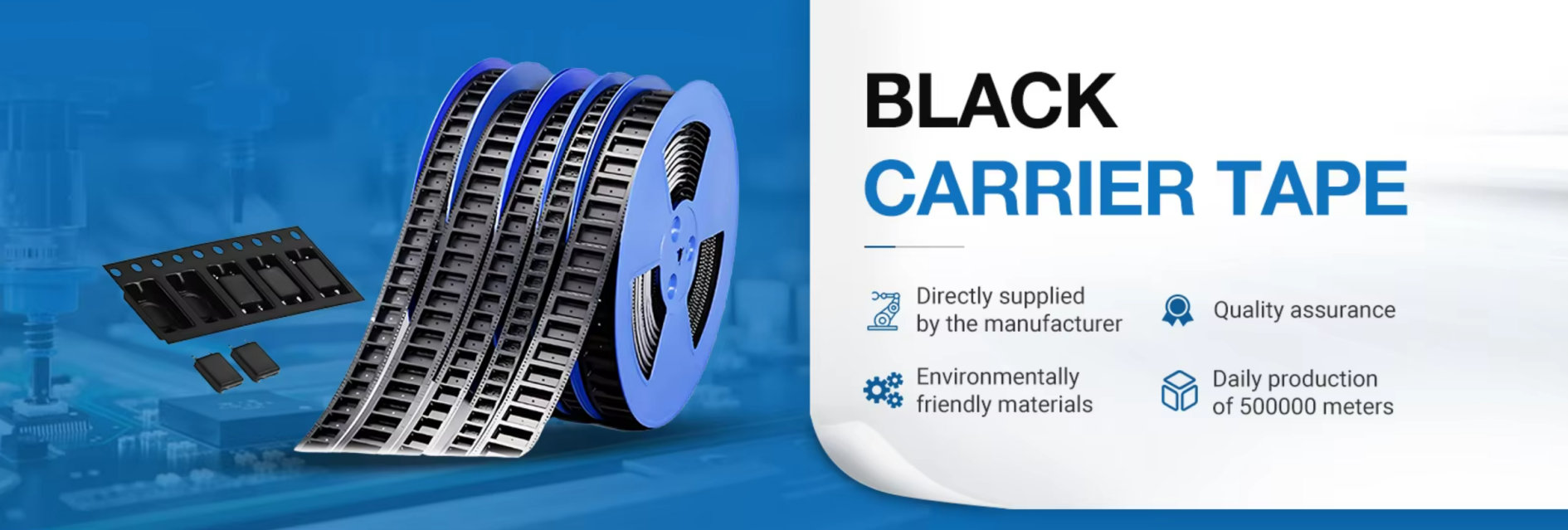
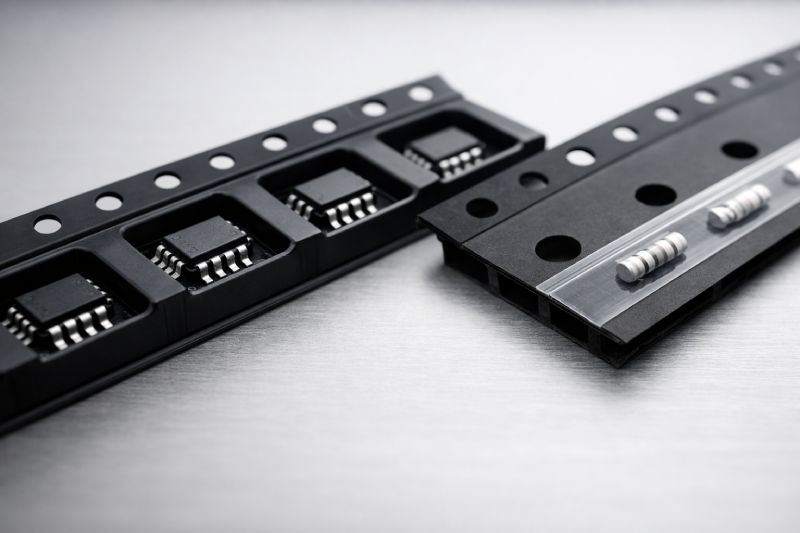
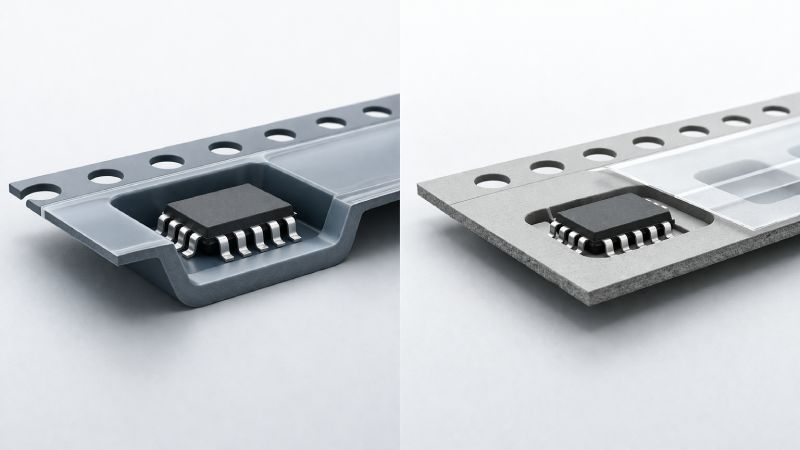
Embossed carrier tape is a type of packaging tape formed by thermoforming plastic materials such as PS (polystyrene), PET (polyethylene terephthalate), or PC (polycarbonate) into precise pocket shapes. These pockets are designed to securely hold electronic components during transportation and automated placement.
The manufacturing process involves heating a plastic film and forming it into cavities using molds. This allows for high customization in pocket dimensions, depth, and geometry, making embossed tape ideal for components with complex shapes or strict positioning requirements.
Embossed carrier tape is widely used in semiconductor and electronics manufacturing, particularly for IC chips, connectors, and precision components. It is typically designed to comply with EIA-481 standards, ensuring compatibility with automated pick-and-place machines.
Key advantages include tight dimensional tolerances, anti-static properties, and excellent protection against mechanical damage during high-speed SMT operations.
What Is Punched Carrier Tape?
Punched carrier tape is produced using a die-cutting process, where flat materials such as paper or thin plastic films are mechanically punched to create openings or shallow cavities for components.
Unlike embossed tape, punched carrier tape does not feature deep or fully enclosed pockets. Instead, it relies on simple cutouts or surface-level cavities to hold components in place, often combined with cover tape for retention.
This type of carrier tape is typically used for low-profile or less sensitive components, such as resistors and basic passive devices. Because of its simpler structure, punched carrier tape offers lower production costs and shorter manufacturing lead times.
However, its limited structural design means reduced protection and lower precision compared to embossed carrier tape, making it less suitable for high-speed or high-reliability applications.
Embossed vs Punched Carrier Tape: Key Differences
Understanding the differences between embossed and punched carrier tape is essential for selecting the right solution.
| Feature | Embossed Carrier Tape | Punched Carrier Tape |
|---|---|---|
| Manufacturing Process | Thermoforming | Die-cut punching |
| Pocket Structure | Deep, fully formed pockets | Shallow or open cavities |
| Precision | High (tight tolerances) | Lower precision |
| Component Protection | Excellent | Limited |
| Materials | PS, PET, PC | Paper or thin plastic |
| Cost | Higher initial cost | Lower cost |
| Applications | ICs, connectors, semiconductors | Resistors, simple components |
| SMT Compatibility | High-speed automation | Limited |
In summary, embossed carrier tape provides superior precision and protection, making it ideal for complex or sensitive components. Punched carrier tape, on the other hand, is a cost-effective option for simpler applications where high precision is not required.
Applications: When to Use Each Type
The choice between embossed and punched carrier tape largely depends on the type of component and production requirements.
Embossed carrier tape is best suited for:
- Integrated circuits (ICs)
- Semiconductor devices
- Connectors and precision components
- Automotive and high-reliability electronics
These applications require accurate positioning, strong protection, and compatibility with high-speed SMT assembly lines.
Punched carrier tape is typically used for:
- Resistors
- Capacitors (low-profile types)
- Basic passive components
These components are generally less sensitive to mechanical stress and do not require complex pocket geometries.
Using the wrong type of carrier tape can result in feeding issues, component flipping, or damage during transport. For example, insufficient pocket depth may cause components to shift, leading to pick-and-place errors.
Advantages and Limitations
Each type of carrier tape offers distinct advantages and trade-offs.
Embossed Carrier Tape Advantages:
- Customizable pocket design for different component shapes
- High dimensional accuracy and consistency
- Anti-static material options for ESD-sensitive components
- Reliable performance in high-speed SMT processes
Embossed Carrier Tape Limitations:
- Higher tooling and setup costs
- Longer development and lead times
Punched Carrier Tape Advantages:
- Lower manufacturing cost
- Faster production cycles
- Simpler design and tooling
Punched Carrier Tape Limitations:
- Limited protection against mechanical damage
- Lower precision and consistency
- Not suitable for complex or fragile components
For most modern electronics manufacturing environments, embossed carrier tape is preferred due to its reliability and compatibility with automation.
Cost Comparison: Which Is More Economical?
At first glance, punched carrier tape appears more economical due to its lower production cost and simpler manufacturing process. However, evaluating cost based solely on unit price can be misleading.
Embossed carrier tape typically requires higher upfront tooling investment, especially for custom pocket designs. However, it reduces the risk of component damage, misfeeding, and production defects.
When considering total cost of ownership (TCO), embossed carrier tape often becomes more cost-effective in medium to high-volume production. Reduced scrap rates, improved efficiency, and fewer machine stoppages can significantly offset the initial cost.
In contrast, punched carrier tape may be suitable for low-cost, high-volume passive components where the risk of damage is minimal.
How to Choose the Right Carrier Tape
Selecting the right carrier tape requires evaluating both component characteristics and production conditions.
Key factors to consider include:
- Component size and geometry
- Sensitivity to electrostatic discharge (ESD)
- Mechanical fragility
- SMT machine speed and requirements
- Compliance with EIA-481 standards
- Production volume and cost targets
Choose embossed carrier tape if:
- The component has a complex shape
- High precision and positioning accuracy are required
- The production line operates at high speed
- Component protection is critical
Choose punched carrier tape if:
- The component is simple and robust
- Cost reduction is a priority
- Production speed is relatively low
- Precision requirements are minimal
For critical applications, it is recommended to conduct engineering validation and testing before mass production to ensure compatibility and performance.
Common Mistakes When Selecting Carrier Tape
Many selection issues arise from focusing on cost rather than performance.
Common mistakes include:
- Choosing the cheapest option without evaluating total production impact
- Ignoring pocket tolerance and component fit
- Overlooking compatibility with SMT equipment
- Failing to test peel force and cover tape performance
These mistakes can lead to feeding failures, increased defect rates, and production downtime. Working with an experienced supplier and conducting proper validation testing can help avoid these risks.
FAQs
What is the main difference between embossed and punched carrier tape?
Embossed carrier tape features thermoformed pockets for high precision and protection, while punched carrier tape uses simple cutouts with lower structural support.
Which carrier tape is better for IC components?
Embossed carrier tape is the preferred choice for ICs due to its precise pocket design and superior protection.
Is punched carrier tape still used today?
Yes, it is still used for simple, low-cost components such as resistors and basic passive devices.
How do I choose the right carrier tape for SMT?
You should consider component size, sensitivity, SMT speed, and required precision before selecting the tape type.
Does embossed carrier tape significantly increase cost?
While it has higher initial costs, it often reduces overall production costs by minimizing defects and improving efficiency.
Conclusion
Embossed and punched carrier tapes serve different roles in electronic packaging, and selecting the right type is essential for ensuring product quality and manufacturing efficiency.
Embossed carrier tape offers superior precision, protection, and compatibility with high-speed SMT processes, making it ideal for complex and sensitive components. Punched carrier tape provides a cost-effective solution for simpler applications with lower performance requirements.
Ultimately, the best choice depends on your specific components, production environment, and cost considerations. For optimal results, working with an experienced carrier tape supplier and conducting proper validation testing is highly recommended.



 Emial
Emial John Mr