
What Is Cover Tape in Tape and Reel Packaging? Types, Materials & Selection Guide
Introduction
In modern electronics manufacturing, tape and reel packaging is essential for high-speed automated assembly. One critical but often overlooked component in this system is cover tape.
Cover tape is a thin film applied over carrier tape to seal electronic components inside pockets during transportation and feeding. It plays a vital role in protecting components, ensuring stable feeding in SMT machines, and preventing damage caused by static electricity or mechanical stress.
Without properly selected cover tape, manufacturers may face issues such as component loss, feeder jams, or inconsistent production yields. This guide explains everything you need to know—from types and materials to peel strength and selection strategies—so you can choose the right cover tape for your application.
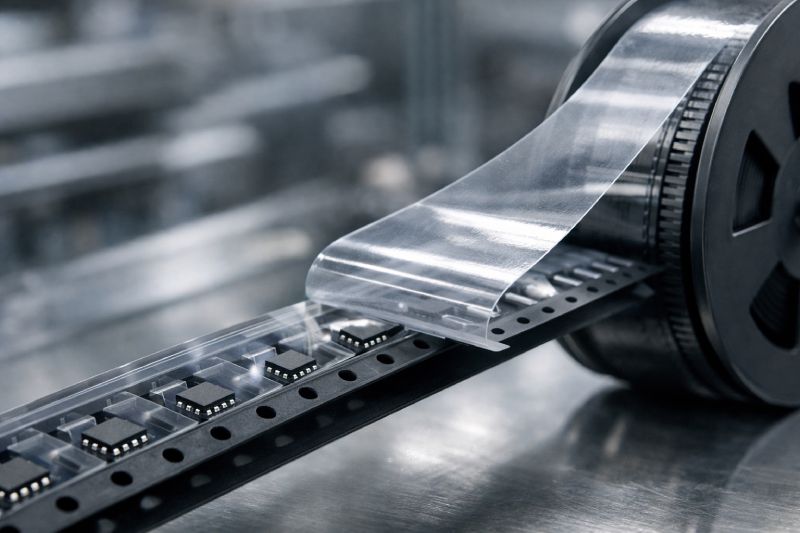
What Is Cover Tape? (Definition + Core Function)
Cover tape is a flexible sealing film used in tape and reel packaging to secure electronic components inside carrier tape pockets.
It works together with carrier tape to form a closed packaging system. While the carrier tape holds and organizes components, cover tape seals them in place and protects them throughout handling, shipping, and automated assembly.
Its core functions include:
- Sealing components inside pockets to prevent displacement
- Protecting against contamination such as dust and moisture
- Enabling controlled peeling during SMT placement
- Maintaining positioning accuracy in high-speed feeding systems
Unlike carrier tape, which provides structural support, cover tape is designed for consistent peel performance, making it critical for automation reliability.
Types of Cover Tape Used in Electronics Packaging
Different applications require different types of cover tape depending on component sensitivity, packaging speed, and production environment.
Pressure-Sensitive Cover Tape
This type uses an adhesive layer that bonds to the carrier tape with light pressure.
- Advantages: Easy to apply, no heat required
- Applications: Low to medium-speed packaging, general electronics
- Limitations: May have less stable peel force over time
Heat-Seal Cover Tape
Heat-seal cover tape bonds to the carrier tape using heat and pressure during the sealing process.
- Advantages: Strong, consistent adhesion and stable peel strength
- Applications: High-speed SMT lines, precision components (ICs, semiconductors)
- Limitations: Requires specialized sealing equipment
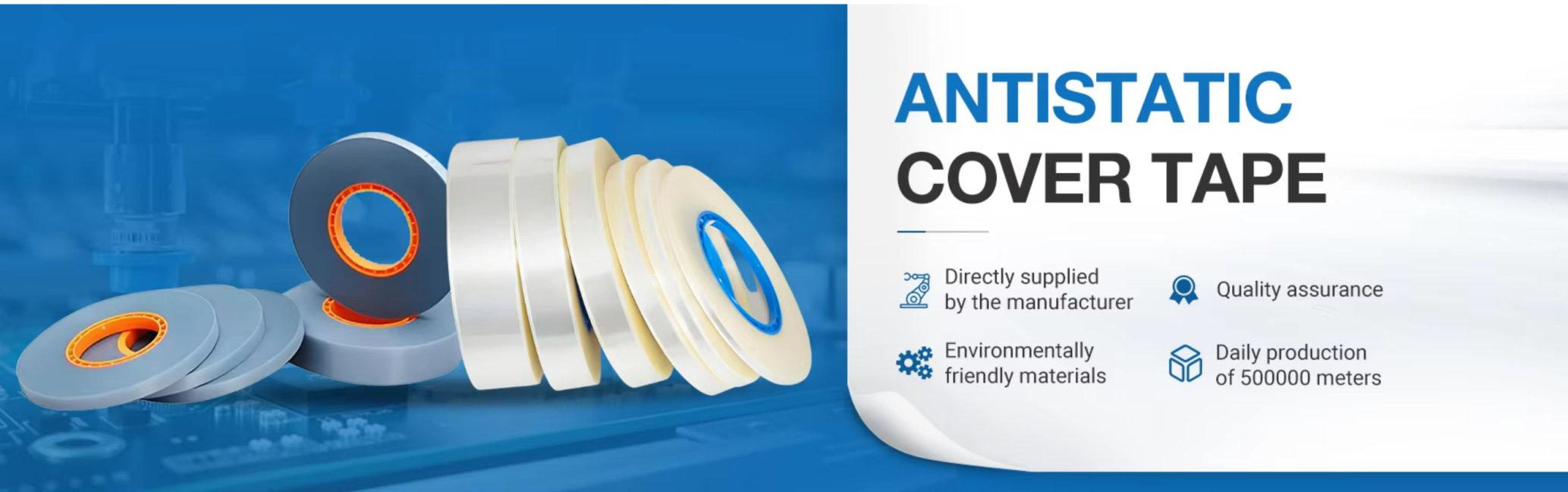
Anti-Static (ESD) Cover Tape
Designed to dissipate electrostatic charge, protecting sensitive electronic components.
- Advantages: Prevents ESD damage
- Applications: ICs, LEDs, and semiconductor devices
- Key Feature: Surface resistivity control
Choosing the correct type depends on both process conditions and component requirements.
Key Materials and Structure of Cover Tape
Cover tape is typically made from engineered polymer films designed to balance flexibility, strength, and controlled adhesion.
Common Materials
- PET (Polyethylene Terephthalate): High transparency and strength
- PS (Polystyrene): Cost-effective for general applications
- Multi-layer Films: Combine mechanical strength with functional coatings
Functional Layers
A typical cover tape structure includes:
- Base film layer: Provides mechanical stability
- Adhesive layer: Controls peel strength and bonding
- Anti-static coating (optional): Protects sensitive components
Key Material Properties
- Thickness: Typically 30–80 microns
- Transparency: Allows visual inspection of components
- Uniform adhesion: Ensures consistent peeling
The design of the adhesive layer is particularly critical, as it directly impacts peel performance during SMT processing.
How Cover Tape Works in Tape and Reel Packaging
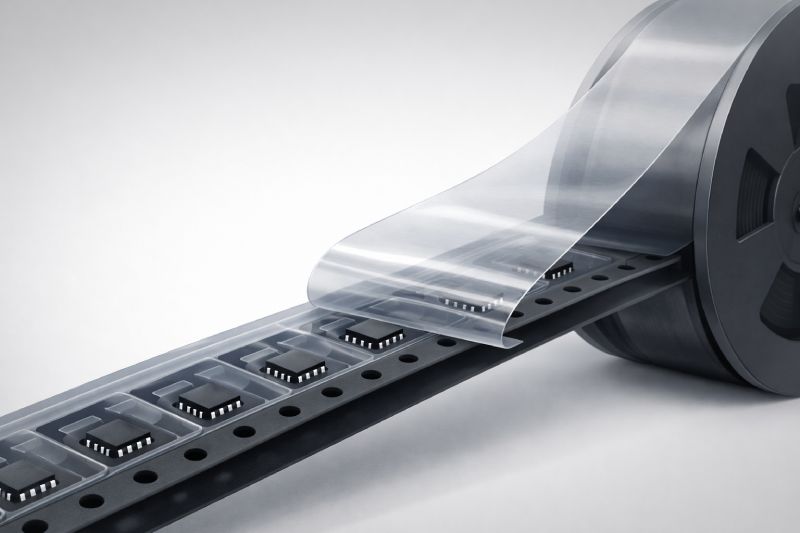
The cover tape functions as part of a coordinated packaging system:
- Carrier tape forms pockets to hold components
- Components are placed into the pockets
- Cover tape seals the pockets
- The tape is wound onto reels for transport
- During SMT assembly, the cover tape is peeled off
The peeling process must be smooth and consistent, typically at a controlled angle (commonly around 165°–180°).
If the peel force fluctuates, it can cause:
- Component misalignment
- Feeding errors
- Machine stoppages
Therefore, cover tape is not just a protective layer—it is a precision-engineered functional component.
Peel Strength and Performance Requirements
Peel strength is one of the most critical parameters in cover tape performance.
What Is Peel Strength?
Peel strength refers to the force required to remove the cover tape from the carrier tape during SMT feeding.
Typical industry ranges:
- 0.1 N to 1.3 N (depending on application and standards)
Why It Matters
- Too low peel force:
- Components may fall out during transport
- Increased risk of contamination
- Too high peel force:
- Feeder jams
- Components may jump out of pockets
- Increased mechanical stress
Stability Is Key
More important than the absolute value is consistency. Fluctuating peel force leads to unstable feeding and reduced yield.
High-quality cover tape ensures:
- Stable peel over long production runs
- Compatibility with different carrier tape materials
- Compliance with industry standards such as EIA-481
Common Problems Caused by Poor Cover Tape
Using low-quality or mismatched cover tape can lead to serious production issues.
Typical Problems
- Component popping out due to weak sealing
- Static damage in ESD-sensitive components
- Inconsistent peeling, causing feeder errors
- Machine downtime due to jams or misfeeds
Root Causes
- Incorrect adhesive formulation
- Poor material compatibility
- Inconsistent manufacturing quality
Impact
These issues can result in:
- Increased defect rates
- Reduced production efficiency
- Higher operational costs
Selecting the right cover tape is therefore essential for maintaining stable and efficient SMT operations.
How to Choose the Right Cover Tape for Your Application
Choosing the correct cover tape requires a systematic evaluation of your application.
Step-by-Step Selection Guide
1. Component Type
- ICs and semiconductors require ESD-safe materials
- Passive components may allow standard options
2. Carrier Tape Material
- Ensure compatibility with PS, PET, or PC carrier tapes
3. Production Speed
- High-speed SMT requires stable peel performance
- Heat-seal tapes are often preferred
4. Environmental Conditions
- Consider humidity, storage time, and transportation
5. ESD Requirements
- Essential for sensitive electronics
Quick Selection Reference
| Requirement | Recommended Cover Tape |
|---|---|
| High-speed SMT | Heat-seal |
| Sensitive ICs | Anti-static |
| Low-cost applications | Pressure-sensitive |
| Long storage time | Heat-seal with stable adhesive |
A well-matched combination of cover tape and carrier tape ensures optimal performance and minimal risk.
Cover Tape vs Carrier Tape: What’s the Difference?
Although they work together, cover tape and carrier tape serve distinct functions.
| Feature | Cover Tape | Carrier Tape |
|---|---|---|
| Function | Sealing | Holding |
| Material | Thin film | Rigid plastic |
| Role | Peelable layer | Structural support |
| Interaction | Removed during SMT | Remains in system |
Understanding this difference is essential for designing an effective packaging solution.
Industry Standards for Cover Tape (EIA-481)
The EIA-481 standard defines requirements for tape and reel packaging, including cover tape performance.
Key Requirements
- Peel strength range
- Dimensional compatibility
- Consistent performance during feeding
Compliance ensures:
- Compatibility with automated equipment
- Reduced risk of production failure
- Standardized quality across suppliers
Non-compliant cover tape can lead to serious operational issues, especially in high-speed SMT environments.
FAQs
What is cover tape used for?
Cover tape seals electronic components in carrier tape pockets, protecting them during transport and enabling controlled feeding in SMT machines.
What is the difference between heat-seal and pressure-sensitive cover tape?
Heat-seal tape uses heat for bonding and offers more stable peel strength, while pressure-sensitive tape uses adhesive and is easier to apply.
What is peel strength in cover tape?
It is the force required to remove the cover tape during SMT feeding, typically ranging from 0.1 to 1.3 N.
Can cover tape be reused?
No, cover tape is designed for single-use applications and must be removed during assembly.
How do I choose the right cover tape?
Consider component type, carrier tape material, SMT speed, and ESD requirements to ensure compatibility and stable performance.
Conclusion
Cover tape is a critical component in tape and reel packaging, directly affecting product protection, feeding stability, and overall manufacturing efficiency.
From material selection to peel strength control, every aspect of cover tape design plays a role in ensuring reliable SMT performance. Choosing the right type—whether pressure-sensitive, heat-seal, or anti-static—can significantly reduce defects and improve production yield.
For manufacturers aiming to achieve consistent, high-speed assembly, investing in the right cover tape solution is not optional—it is essential.
Need help selecting the right cover tape?
Work with a supplier that understands your application requirements and can provide tested, consistent, and standards-compliant solutions.



 Emial
Emial John Mr