
Heat Activated vs Pressure Sensitive Cover Tape: Which Is Better for SMT Packaging?
When sealing carrier tape in tape and reel packaging, manufacturers usually choose between heat activated cover tape and pressure sensitive cover tape. Both are designed to protect components inside the carrier tape pocket during storage, shipping, and SMT feeding. However, they work in different ways and are not suitable for the same production conditions.
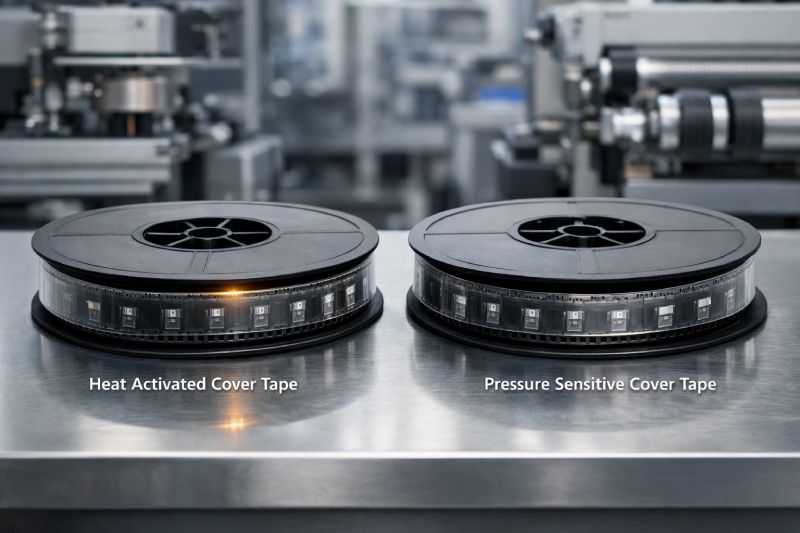
Heat activated cover tape requires heat and pressure to bond with the carrier tape. Pressure sensitive cover tape uses a pre-applied adhesive and seals when pressed onto the tape. One option may reduce defects and improve feeding reliability, while the other may lower equipment cost and simplify production.
The best choice depends on your component type, production volume, SMT speed, storage environment, and packaging equipment. This guide compares both cover tape types in detail so you can choose the right solution for your application.
What Is Heat Activated Cover Tape?
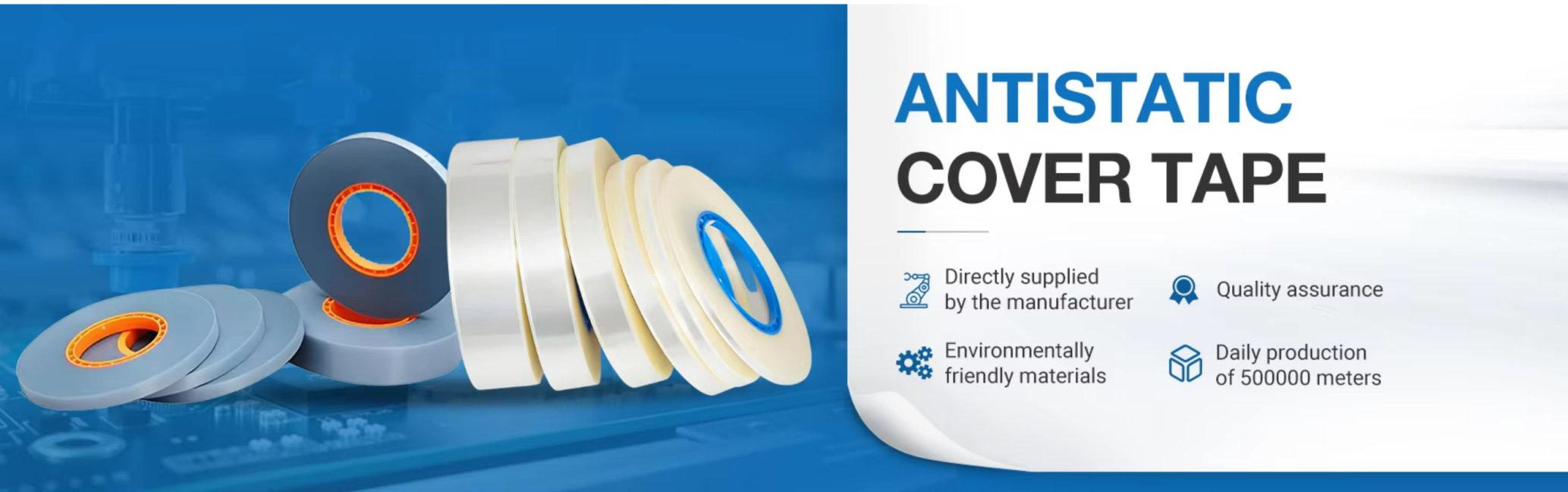
Heat activated cover tape is a type of cover tape that bonds to carrier tape only after heat and pressure are applied by a sealing machine. During the packaging process, the cover tape passes through a heated sealing head. The heat activates the adhesive layer, creating a secure bond between the cover tape and the carrier tape.
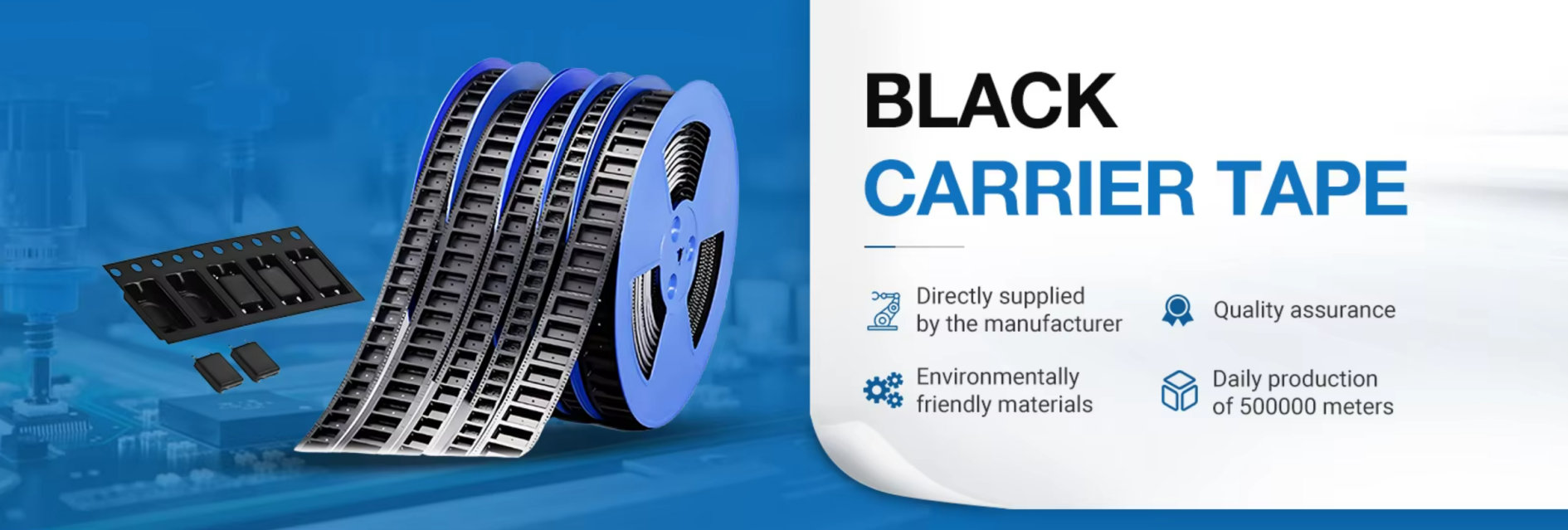
This type of cover tape is commonly used with embossed carrier tape in automated tape and reel packaging lines. Because the sealing temperature, pressure, and dwell time can be controlled, heat activated cover tape usually provides a more stable and uniform seal than other options.
Heat activated cover tape is widely used for:
-
Integrated circuits (ICs)
-
Precision semiconductor devices
-
Automotive electronic components
-
High-value SMT parts
-
Products that require long-distance shipping or long-term storage
The main advantage is seal consistency. Once properly adjusted, the sealing process produces repeatable peel force and reliable pocket retention. This helps prevent cover tape lifting, missing components, and feeding problems during high-speed SMT assembly.
For applications where reliability is more important than initial packaging cost, heat activated cover tape is usually the preferred choice.
What Is Pressure Sensitive Cover Tape?
Pressure sensitive cover tape uses an adhesive layer that bonds to the carrier tape when pressure is applied. Unlike heat activated cover tape, it does not require a heated sealing head or temperature control. The tape is simply pressed onto the carrier tape by a manual, semi-automatic, or automatic packaging machine.
Because no heat is needed, pressure sensitive cover tape is easier to use and requires less equipment investment. Setup time is shorter, machine changeover is faster, and packaging lines are simpler to operate.
Pressure sensitive cover tape is often used for:
-
Passive components
-
LEDs
-
Lower-cost electronic parts
-
Prototype or small-batch production
-
Manual and semi-automatic packaging lines
For manufacturers with lower production volume or frequent product changes, pressure sensitive cover tape can be a practical and economical choice.
However, its performance depends more heavily on storage condition, cleanliness, and adhesive stability. If the tape is exposed to dust, humidity, or high temperature for a long period, the adhesive may become weaker or inconsistent. This can increase the risk of tape lifting or poor peel performance.
Heat Activated vs Pressure Sensitive Cover Tape: Quick Comparison
| Factor | Heat Activated Cover Tape | Pressure Sensitive Cover Tape |
|---|---|---|
| Sealing Method | Uses heat and pressure | Uses pressure only |
| Equipment Needed | Heated sealing machine | Basic sealing machine or manual process |
| Seal Strength | Strong and stable | Moderate, depends on adhesive |
| Peel Consistency | More consistent | Can vary over time |
| Production Speed | Best for high-volume lines | Good for flexible or smaller runs |
| Storage Stability | Better for long-term storage | More sensitive to humidity and aging |
| Initial Cost | Higher equipment cost | Lower equipment cost |
| Best For | Semiconductor and high-value parts | Low-cost parts and short production runs |
| Common Risk | Incorrect sealing temperature | Adhesive contamination or weak bonding |
In general, heat activated cover tape offers better reliability, while pressure sensitive cover tape offers lower cost and easier operation.
How the Sealing Process Differs
Although both products perform the same basic function, the sealing process is very different.
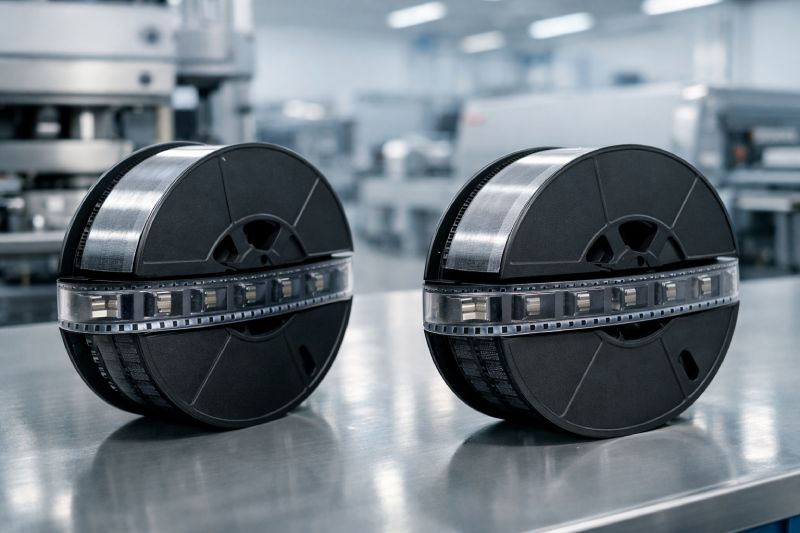
Heat Activated Cover Tape Process
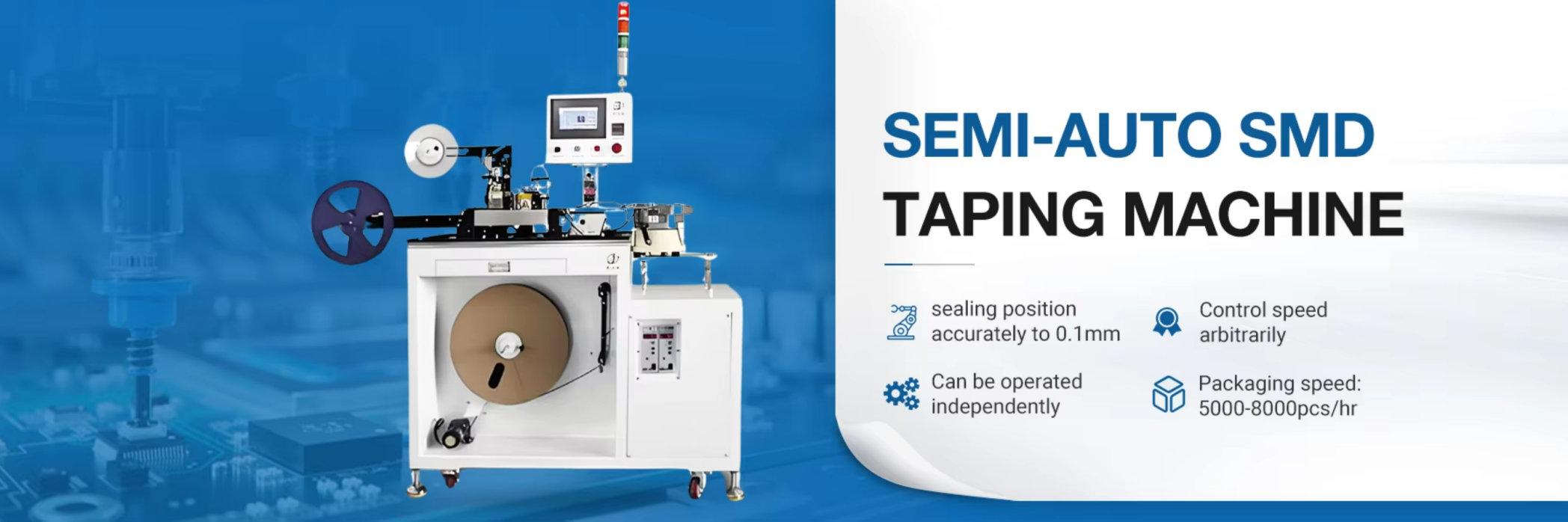
With heat activated cover tape, the carrier tape and cover tape pass through a tape and reel sealing machine. The sealing head applies a specific combination of temperature, pressure, and time.
If the temperature is too low, the adhesive may not fully activate, resulting in weak seals. If the temperature is too high, the cover tape, carrier tape, or even the component may be damaged.
To achieve stable results, manufacturers normally optimize:
-
Sealing temperature
-
Sealing pressure
-
Machine speed
-
Dwell time
Once these settings are established, the process becomes highly repeatable. This is why heat activated cover tape is widely used in fully automatic, high-speed SMT packaging lines.
Pressure Sensitive Cover Tape Process
Pressure sensitive cover tape does not require heating. The tape seals immediately when it is pressed onto the carrier tape.
The process is simpler and faster to set up. There is no need to adjust temperature or wait for the machine to warm up. This makes it suitable for:
-
Small production runs
-
Frequent changeovers
-
Packaging lines with limited equipment
However, the quality of the seal depends more heavily on external conditions. Dust, oil, static, or moisture on the carrier tape surface can reduce adhesive performance.
Engineering Note
Heat activated systems require careful process tuning. Pressure sensitive systems require better cleanliness and storage control.
Which Type Provides Better Seal Reliability?
Seal reliability is one of the most important factors in tape and reel packaging. If the cover tape lifts, opens, or peels inconsistently, components may fall out or jam during SMT assembly.
Reliability During Transportation
During shipping, reels are exposed to vibration, movement, and temperature change. Heat activated cover tape usually performs better because it forms a stronger bond with the carrier tape.
This is especially important for:
-
Long-distance export shipping
-
Heavy or sensitive components
-
High-value semiconductor products
Pressure sensitive cover tape can also perform well, but the adhesive may weaken if the reel is stored in a hot or humid environment for too long.
Reliability During High-Speed SMT Feeding
High-speed SMT machines require stable and consistent peel force. If the cover tape peels unevenly, the component may jump out of the pocket or feeding may stop.
Heat activated cover tape usually provides:
-
More consistent peel force
-
Better pocket retention
-
Lower risk of component loss
This makes it the better choice for high-speed SMT lines, especially when packaging ICs, fine-pitch devices, or small precision components.
Pressure sensitive cover tape is often acceptable for slower production lines or lower-value parts, but it may not provide the same level of consistency at very high feeding speed.
Reliability After Long-Term Storage
If reels need to be stored for several months before use, heat activated cover tape is generally more stable. The bond remains more predictable over time.
Pressure sensitive cover tape may gradually lose adhesion if exposed to:
-
High humidity
-
High temperature
-
Direct sunlight
-
Improper storage conditions
For products with long storage cycles, heat activated cover tape is usually the safer choice.
Cost Comparison: Which One Is More Economical?
At first glance, pressure sensitive cover tape usually appears cheaper because it does not require a heated sealing machine. Equipment cost is lower, and the process is easier to operate.
For small-batch production or prototype packaging, pressure sensitive cover tape often provides the lowest overall cost.
However, the real cost of cover tape should include more than material price. Manufacturers should also consider:
-
Equipment investment
-
Labor cost
-
Packaging speed
-
Rework cost
-
Scrap rate
-
Defects during SMT assembly
Heat activated cover tape requires a higher initial investment, but it may reduce total packaging cost in high-volume production because:
-
Defect rate is lower
-
Feeding is more stable
-
Less rework is needed
-
Product loss during shipping is reduced
| Production Situation | More Economical Choice |
|---|---|
| Prototype or Small Batch | Pressure Sensitive Cover Tape |
| Manual Packaging | Pressure Sensitive Cover Tape |
| High-Volume SMT Packaging | Heat Activated Cover Tape |
| Semiconductor Devices | Heat Activated Cover Tape |
| Low-Cost Consumer Electronics | Pressure Sensitive Cover Tape |
The lowest-cost option is not always the one with the lowest purchase price. In many cases, better seal reliability can save more money in the long term.
When Should You Choose Heat Activated Cover Tape?
Heat activated cover tape is the better choice when your packaging process requires maximum reliability and consistent sealing performance.
You should choose heat activated cover tape if:
-
You use fully automatic, high-speed SMT packaging lines
-
You package ICs, semiconductor devices, or sensitive electronic parts
-
Your products are shipped internationally or stored for a long time
-
Your production environment includes heat or humidity variation
-
You need stable peel force for high-speed feeders
-
Product failure would create high cost or quality risk
Typical industries that prefer heat activated cover tape include:
-
Semiconductor manufacturing
-
Automotive electronics
-
Medical electronics
-
Industrial control systems
-
High-end consumer electronics
Choose Heat Activated Cover Tape If…
-
Seal reliability is your top priority
-
You already use automatic sealing equipment
-
Your products require strict quality control
-
You want fewer packaging and feeding defects
Although the equipment cost is higher, the improved consistency often justifies the investment.
When Should You Choose Pressure Sensitive Cover Tape?
Pressure sensitive cover tape is the better choice when flexibility, lower cost, and simple operation are more important than maximum seal strength.
You should choose pressure sensitive cover tape if:
-
Your production volume is relatively small
-
You package low-cost or less sensitive components
-
You use manual or semi-automatic equipment
-
You frequently change product type or tape size
-
You want to avoid investing in heated sealing equipment
-
Your storage and shipping conditions are not severe
Pressure sensitive cover tape is commonly used for:
-
LEDs
-
Resistors and capacitors
-
Small consumer electronics
-
Prototype production
-
Contract packaging with frequent changeover
Choose Pressure Sensitive Cover Tape If…
-
You need a simple packaging process
-
You want faster setup and lower equipment cost
-
You produce many different products in small quantities
-
Your packaging requirements are less demanding
For many manufacturers, pressure sensitive cover tape is the most practical solution when production volume is low or flexibility is important.
Common Mistakes When Selecting Cover Tape
Choosing the wrong cover tape can create feeding issues, packaging defects, and unnecessary cost. These are some of the most common mistakes.
1. Choosing Only by Price
The cheapest tape is not always the lowest-cost solution. A cheaper cover tape may create more defects, product loss, or rework.
2. Using Pressure Sensitive Tape in Harsh Conditions
Pressure sensitive cover tape may not perform well in high temperature, high humidity, or long-term storage environments.
3. Ignoring Compatibility With Carrier Tape
Not all cover tapes work with all carrier tape materials. Before mass production, always confirm compatibility between:
-
Carrier tape material
-
Pocket design
-
Cover tape adhesive
-
Required peel force
4. Skipping Peel Force Testing
Peel force should always be tested before production begins. If the peel force is too low, the cover tape may open. If it is too high, SMT feeding may become unstable.
5. Using Incorrect Heat Settings
When using heat activated cover tape, incorrect temperature or pressure settings can create weak seals or damage the tape.
Testing before production is the best way to avoid these problems.
How to Test Which Cover Tape Is Best for Your Product
If you are not sure which cover tape to choose, the best approach is to run a small packaging trial.
Start by selecting two or three candidate cover tapes. Then package several sample reels using the same component and carrier tape.
Test the following factors:
-
Peel force consistency
-
Component retention inside the pocket
-
SMT feeding performance
-
Seal stability after storage
-
Defect rate during handling and shipping
You should also compare:
-
Packaging speed
-
Ease of machine setup
-
Total packaging cost
Before making a final decision, review this checklist:
-
What type of component are you packaging?
-
What carrier tape material are you using?
-
How fast is your SMT line?
-
Will the product be stored or exported?
-
What is your production volume?
-
What is the acceptable defect rate?
The best cover tape is not necessarily the strongest or the cheapest. It is the one that provides the right balance between reliability, efficiency, and cost.
Conclusion
Heat activated and pressure sensitive cover tape each have advantages. Heat activated cover tape is usually the better choice for high-volume, high-speed, and high-reliability applications. It provides stronger sealing, more stable peel force, and better performance during storage and transportation.
Pressure sensitive cover tape is often the better choice for smaller production runs, lower-cost products, and simpler packaging processes. It reduces equipment cost and allows faster setup.
The right choice depends on your component type, carrier tape, production line, and storage environment.
If you are unsure which option is best, testing both types with your actual product is the most reliable way to decide. A packaging supplier can help match the right cover tape to your carrier tape, equipment, and application.
Frequently Asked Questions
Is heat activated cover tape stronger than pressure sensitive cover tape?
In most cases, yes. Heat activated cover tape usually creates a stronger and more stable bond, especially in high-temperature, high-humidity, or high-speed SMT environments.
Can pressure sensitive cover tape be used for semiconductor packaging?
It can be used for some semiconductor products, but heat activated cover tape is usually preferred for high-value or highly sensitive semiconductor devices.
Which cover tape is better for high-speed SMT machines?
Heat activated cover tape is generally better for high-speed SMT machines because it provides more consistent peel force and lower risk of feeding problems.
Does heat activated cover tape cost more?
The initial equipment cost is usually higher, but the total packaging cost may be lower in large-scale production because of fewer defects and better reliability.
How do I know if a cover tape is compatible with my carrier tape?
The best way is to test the cover tape with your actual carrier tape and component. You should verify seal strength, peel force, and feeding performance before mass production.



 Emial
Emial John Mr