







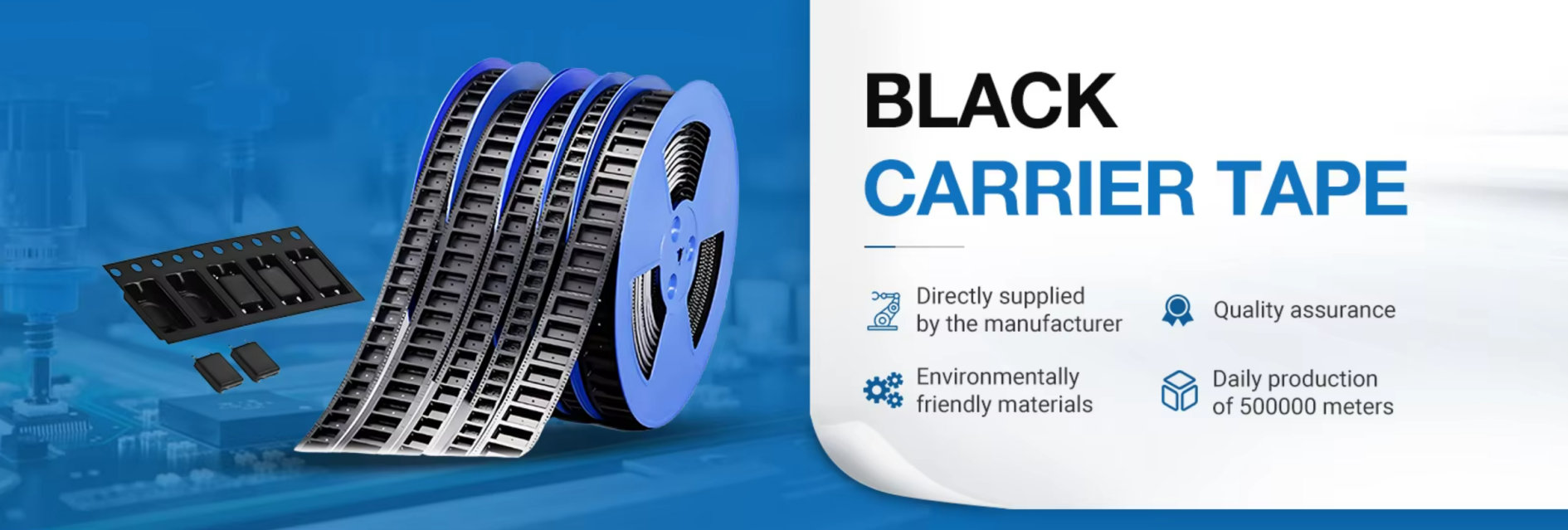
Plastic Reel Specifications for Tape and Reel Packaging: Complete Size & Selection Guide
Plastic reels are often treated as a simple packaging accessory in tape and reel packaging, but in reality, they directly affect SMT production efficiency, feeder compatibility, shipping cost, and even component safety.

A reel that is too small can create excessive tape curvature and deform pockets. A reel with the wrong width may not fit properly in the feeder. Weak flanges can collapse during transport and cause tape spill. Even when the carrier tape itself is correct, an incorrect reel specification can still lead to feeding interruptions, downtime, and higher packaging cost.
For this reason, choosing the right plastic reel is just as important as choosing the right carrier tape and cover tape.
If you are not familiar with the overall system, it is helpful to first understand how tape, reel, and feeder work together in tape and reel packaging. From there, reel selection becomes much easier.
What Is a Plastic Reel in Tape and Reel Packaging?
A plastic reel is the spool used to wind and store carrier tape after the electronic components have been sealed with cover tape. The reel keeps the tape organized during storage, transportation, and automated SMT feeding.
In a typical tape and reel system:
-
The carrier tape holds the electronic components in pockets.
-
The cover tape seals the pockets and protects the components.
-
The plastic reel stores the tape and allows it to unwind smoothly in the SMT feeder.
| Component | Function |
|---|---|
| Carrier Tape | Holds and positions components |
| Cover Tape | Seals and protects components |
| Plastic Reel | Stores and feeds the tape |
The reel must match both the tape dimensions and the feeder equipment. If the reel diameter, width, or hub size is incorrect, the tape may not unwind properly. This can cause tape deformation, feeding interruptions, component loss, or unnecessary empty space inside the package.
In many SMT factories, reel-related problems are often mistaken for carrier tape problems. In reality, the tape may be correct, but the reel may be undersized, too weak, or incompatible with the feeder.
The Most Important Plastic Reel Specifications
Several reel specifications determine whether the tape and reel package will work correctly. Engineers and buyers usually focus on five main parameters: reel diameter, reel width, arbor hole size, flange strength, and reel material.
Reel Diameter
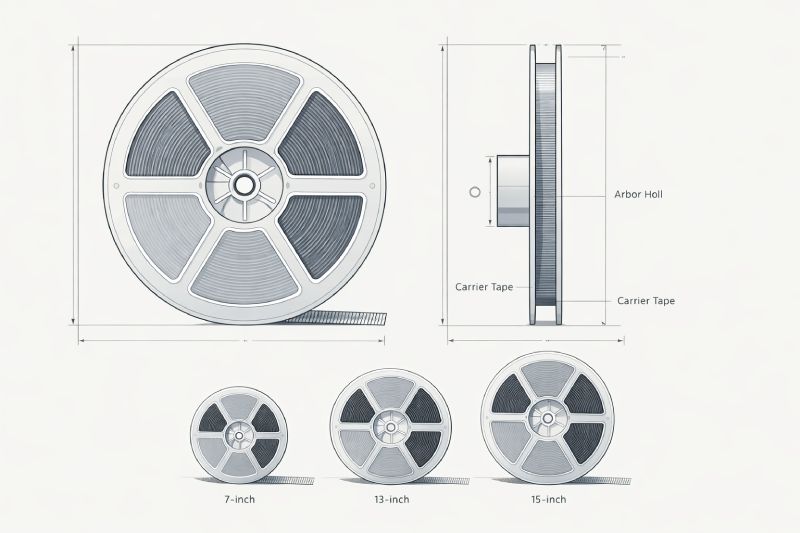
Reel diameter refers to the overall outside diameter of the reel. The most common sizes are:
-
7 inch (178 mm)
-
13 inch (330 mm)
-
15 inch (380 mm)
A larger reel can hold more carrier tape. This reduces the number of reel changes during SMT production and improves line efficiency.
Smaller 7-inch reels are commonly used for sample orders, prototype builds, or manual assembly because they are compact and inexpensive. However, they hold less tape and therefore require more frequent changeover.
13-inch reels are the most common choice in automated SMT production because they balance capacity, compatibility, and shipping efficiency.
15-inch reels are generally used when the carrier tape is wide, the components are heavy, or the required tape length is very long.
Reel Width
Reel width must match the carrier tape width. The reel needs enough clearance to allow the tape to unwind smoothly, but not so much that the tape shifts from side to side.
Common carrier tape widths include:
-
8 mm
-
12 mm
-
16 mm
-
24 mm
-
32 mm
-
44 mm
-
56 mm
The reel is always slightly wider than the tape itself. For example, an 8 mm carrier tape may require a reel width of approximately 12 mm to provide adequate side clearance.
If the reel is too narrow, the tape may rub against the flange. If the reel is too wide, the tape can shift during transport or feeding.
Arbor Hole / Hub Diameter
The arbor hole is the center hole of the reel. This hole must match the spindle or feeder shaft used in the SMT line.
Common hub diameters include:
-
13 mm
-
40 mm
-
60 mm
The correct hub size is important because the reel must fit securely on the feeder spindle. A reel with the wrong center hole may wobble, rotate unevenly, or fail to mount at all.
Flange Diameter and Strength
The flange is the circular side wall of the reel. Its purpose is to keep the carrier tape in place.
A strong flange prevents:
-
Tape spill during shipping
-
Tape shifting during feeding
-
Reel damage when stacked
Standard flanges are usually sufficient for small components and narrow tapes. Reinforced flanges are often needed for:
-
Large reel diameters
-
Wide carrier tape
-
Heavy components
-
Long-distance shipping
Weak flanges may bend or crack, especially if the reel is dropped or compressed during transport.
Reel Material
Plastic reels are commonly made from:
-
Polystyrene (PS)
-
Polycarbonate (PC)
-
Conductive or antistatic plastic
PS reels are the most common because they are economical and lightweight. PC reels are stronger and more rigid, making them suitable for large or heavy packages.
For sensitive electronic components, conductive or antistatic reels are often required to prevent electrostatic discharge.
Standard Plastic Reel Sizes and Dimensions
Although custom reels are available, most tape and reel packaging follows standard reel sizes.
| Reel Diameter | Common Tape Widths | Typical Application |
|---|---|---|
| 7 inch (178 mm) | 8–16 mm | Samples, prototype runs, manual assembly |
| 13 inch (330 mm) | 8–56 mm | Standard SMT production |
| 15 inch (380 mm) | 24–88 mm | Large, heavy, or high-volume packages |
7-Inch Reels
7-inch reels are commonly used for low-volume orders or prototype production. They are easy to handle and cost less to ship. However, because they hold less tape, they are not ideal for high-speed SMT lines.
Typical uses include:
-
Engineering samples
-
Product validation
-
Small-batch production
-
Manual loading
13-Inch Reels
13-inch reels are the standard reel size for most SMT factories. They can hold a much longer tape length and reduce the frequency of reel replacement.
For most 8 mm to 56 mm carrier tapes, the 13-inch reel offers the best balance between:
-
Tape capacity
-
Feeder compatibility
-
Packaging efficiency
-
Shipping cost
Because of this, 13-inch reels are widely accepted by automatic placement machines and are considered the standard choice for mass production.
15-Inch Reels
15-inch reels are used when the tape is very wide or when the packaged components are large and heavy. These reels provide more capacity and a larger bending radius, which helps protect delicate pockets.
However, they also require more storage space and higher transportation cost.
How Reel Specifications Affect SMT Feeding Performance
Incorrect reel specifications often create feeding problems during SMT assembly.
For example, when the reel diameter is too small, the carrier tape bends too sharply. This can deform the pockets and make it difficult for the components to remain stable.
When the reel is too wide, the tape may shift inside the feeder. This can lead to poor alignment and inconsistent indexing.
Weak flanges can also create serious problems. During shipping or feeding, the flange may bend and allow the tape to collapse or unwind.
| Problem | Possible Reel Cause |
|---|---|
| Tape jamming | Reel width too narrow or too wide |
| Pocket deformation | Reel diameter too small |
| Reel wobble | Weak flange or wrong hub size |
| Feeding interruption | Arbor hole incompatible with feeder |
| Tape spill during shipping | Flange too weak |
In high-speed SMT lines, even a small reel mismatch can lead to repeated downtime. This is why reel selection should always be reviewed together with the feeder specification and carrier tape design.
How to Choose the Right Plastic Reel for Your Carrier Tape
The easiest way to select a reel is to follow a simple step-by-step process.
Step 1: Confirm the Carrier Tape Width
The first step is to know the width of the carrier tape.
Typical tape widths are 8 mm, 12 mm, 16 mm, 24 mm, 32 mm, and wider. The reel must provide enough clearance for the tape while still keeping it centered.
As a general rule, the reel width should be slightly larger than the tape width.
Step 2: Calculate the Required Tape Length
Next, determine how much tape must fit on the reel.
If the order quantity is small, a 7-inch reel may be sufficient. For standard SMT production, a 13-inch reel is usually the better choice because it holds much more tape.
If the production run is very large or the tape is wide, a 15-inch reel may be necessary.
Step 3: Consider Component Weight and Sensitivity
Large or heavy components create more stress on the tape and reel. Sensitive parts may also require a larger bending radius to avoid damage.
In these situations:
-
Use a larger reel diameter
-
Choose reinforced flanges
-
Consider stronger PC material
-
Use conductive material if ESD protection is needed
Step 4: Check SMT Feeder Compatibility
Before finalizing the reel, confirm that it is compatible with the SMT feeder.
Check:
-
Center hole diameter
-
Maximum reel diameter accepted by the feeder
-
Reel width limitations
-
Spindle type
A reel that does not match the feeder cannot be used, even if the carrier tape itself is correct.
Step 5: Evaluate Shipping and Storage Needs
Larger reels reduce reel changes and improve production efficiency, but they also occupy more space and cost more to transport.
| Situation | Recommended Reel |
|---|---|
| Prototype or sample order | 7-inch reel |
| Standard SMT production | 13-inch reel |
| Wide or heavy components | 15-inch reinforced reel |
| ESD-sensitive components | Conductive antistatic reel |
The best reel is not necessarily the largest reel. It is the reel that provides the best balance between feeding reliability, shipping efficiency, and production cost.
Plastic Reel Material Options: Standard, Conductive, and Antistatic
Different reel materials are available depending on the application.
| Material Type | Best For | Key Benefit |
|---|---|---|
| Standard PS | General SMT components | Low cost and lightweight |
| Conductive PS | ESD-sensitive components | Protects against static discharge |
| PC Reel | Large or heavy components | Higher strength and rigidity |
| Recycled Plastic | Cost-sensitive packaging | Lower cost and more sustainable |
Standard PS reels are widely used because they are economical and suitable for most components.
When packaging ICs, semiconductors, sensors, or other ESD-sensitive devices, conductive or antistatic reels are usually required. These materials help dissipate static electricity and reduce the risk of component damage.
PC reels are stronger than PS reels and are often chosen when the tape is wide or the components are heavy. Although they cost more, they provide better dimensional stability and are less likely to crack.
Some customers also choose recycled plastic reels to reduce packaging cost or improve sustainability.
Plastic Reel Standards and EIA-481 Requirements
Most plastic reels used in tape and reel packaging follow the EIA-481 standard.
This standard defines the key dimensions and requirements needed to ensure compatibility between different suppliers, tapes, reels, and SMT equipment.
EIA-481 covers:
-
Reel diameter tolerance
-
Hub diameter
-
Tape winding direction
-
Leader and trailer length
-
Flange dimensions
-
Component orientation
For example, the standard specifies how much empty leader tape and trailer tape should remain at the beginning and end of the reel. This ensures that the SMT feeder can load and unload the reel correctly.
The standard also defines the tape winding direction so that the components are presented in the correct orientation during pick-and-place.
Even when a custom reel is required, it should still follow EIA-481 whenever possible. A non-standard reel may fit the tape, but it can still create problems in the SMT line if the feeder is designed for standard dimensions.
Frequently Asked Questions About Plastic Reel Specifications
What is the difference between a 7-inch and 13-inch reel?
A 7-inch reel is smaller and holds less carrier tape, making it suitable for samples or prototype production. A 13-inch reel holds much more tape and is typically used in standard SMT manufacturing.
Which reel size is most common for SMT production?
The 13-inch reel is the most common size because it provides a good balance between tape capacity, feeder compatibility, and shipping efficiency.
Can I use the same reel for different carrier tape widths?
Usually no. The reel width must match the carrier tape width. A reel that is too narrow or too wide may cause feeding problems.
When do I need a conductive or antistatic reel?
Conductive or antistatic reels are recommended when packaging ESD-sensitive components such as ICs, sensors, and semiconductor devices.
How do I know if a reel is compatible with my SMT feeder?
You should compare the reel diameter, width, and arbor hole size with the feeder specification. If these dimensions match, the reel should fit correctly.
What standard should plastic reels follow?
Most plastic reels should follow EIA-481 to ensure compatibility with standard carrier tapes and SMT equipment.
Conclusion
Plastic reel selection has a direct impact on tape feeding, component protection, shipping efficiency, and overall SMT production performance.
The most important specifications are reel diameter, reel width, hub size, flange strength, and material type. A reel that matches the carrier tape and feeder will reduce downtime, protect the components, and improve packaging efficiency.
For most SMT applications, the 13-inch reel is the standard choice. However, smaller 7-inch reels and larger 15-inch reels may be better depending on the component size, tape width, and production volume.
If you are unsure which reel specification is correct for your application, provide your carrier tape width, component dimensions, and required quantity. With this information, an appropriate reel size and material can be recommended.



 Emial
Emial John Mr