
How Cover Tape Sealing Works in Tape and Reel Packaging
Even when the carrier tape dimensions are correct, poor cover tape sealing can still cause serious problems. Components may fall out during shipping, shift inside the pocket, or jam during SMT assembly. In many cases, manufacturers blame the feeder or carrier tape, but the real issue is often the sealing process itself.
Cover tape sealing is the step that locks electronic components safely inside the carrier tape after they have been loaded. A stable seal protects the components during transportation, keeps the reel compatible with automatic SMT feeders, and ensures smooth production on the assembly line.
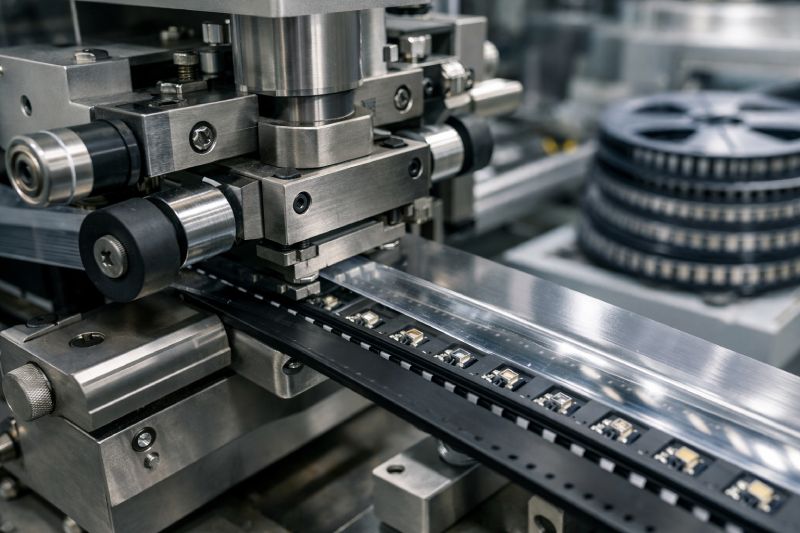
In this guide, you will learn how cover tape sealing works, the difference between heat activated and pressure sensitive cover tape, what affects sealing quality, and how to avoid common sealing failures.
What Is Cover Tape Sealing?
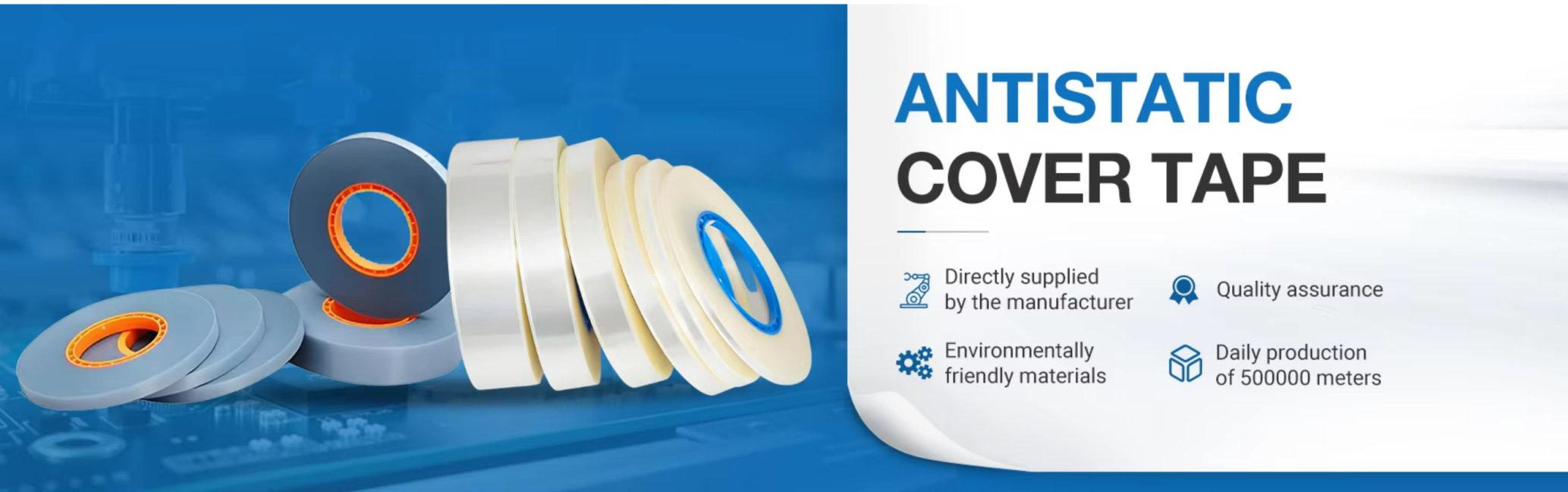
Cover tape sealing is the process of attaching a thin cover tape over the top of a carrier tape after the components have been placed into the pockets. The cover tape creates a secure seal along both sides of the carrier tape, preventing the components from moving or escaping.
In tape and reel packaging, four elements work together:
-
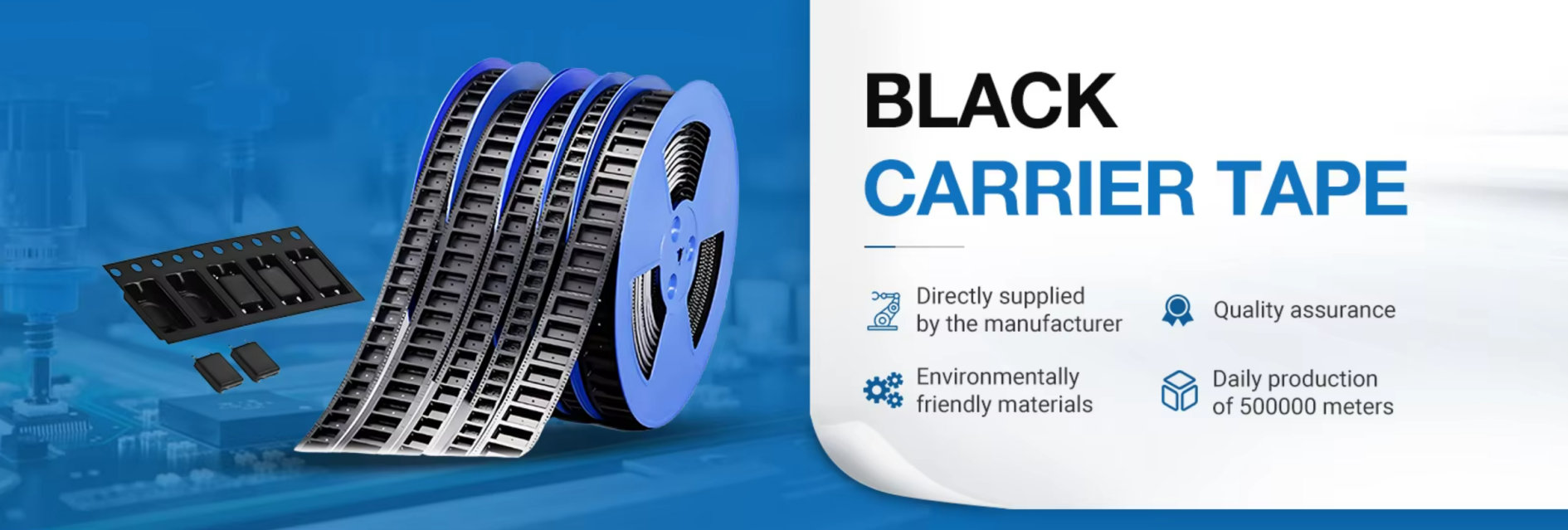
Carrier tape holds the components in formed pockets
-
Cover tape seals the top of the pockets
-
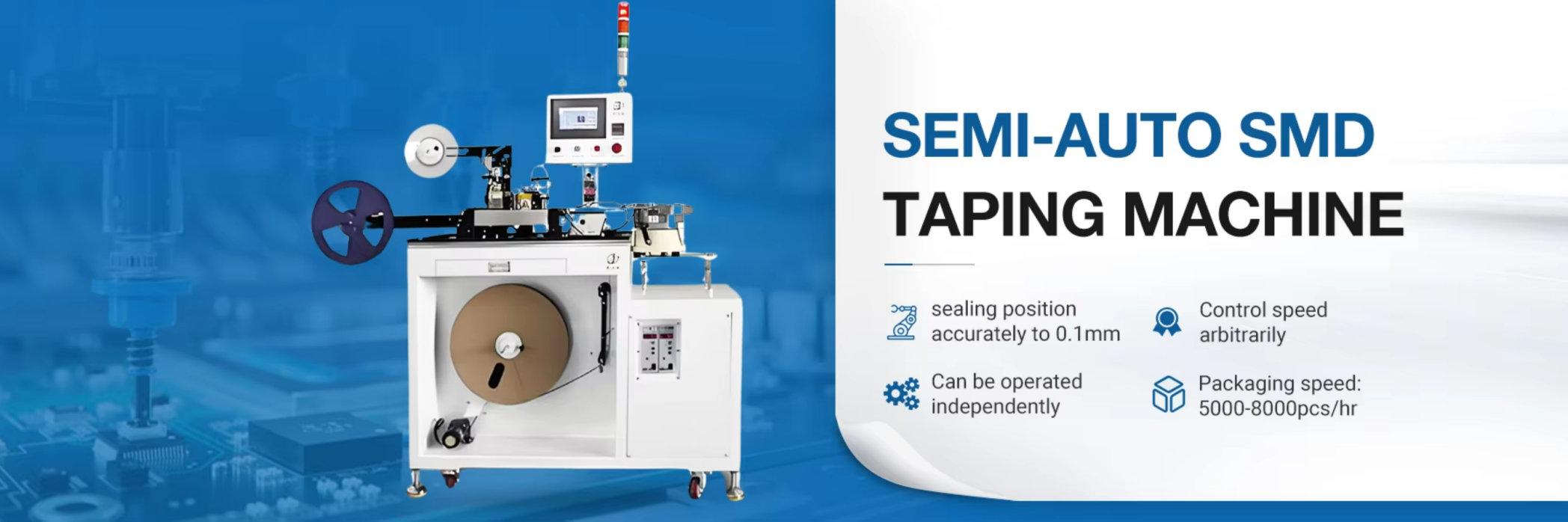
Sealing equipment applies heat or pressure
-
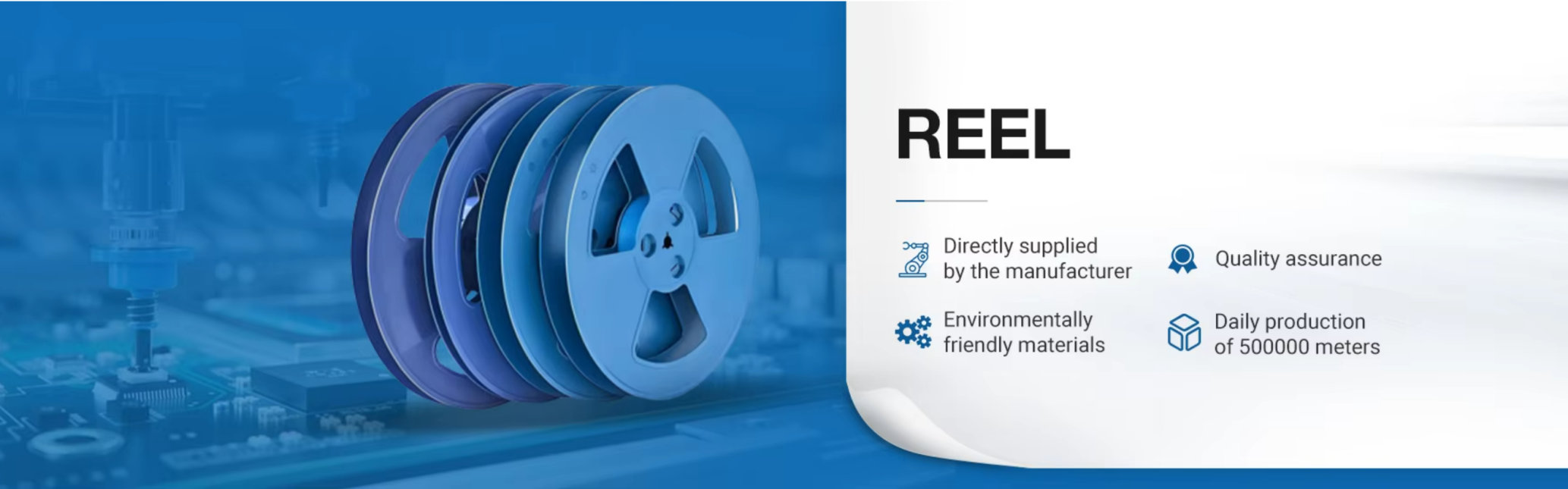
The finished tape is wound onto a reel for storage and SMT feeding
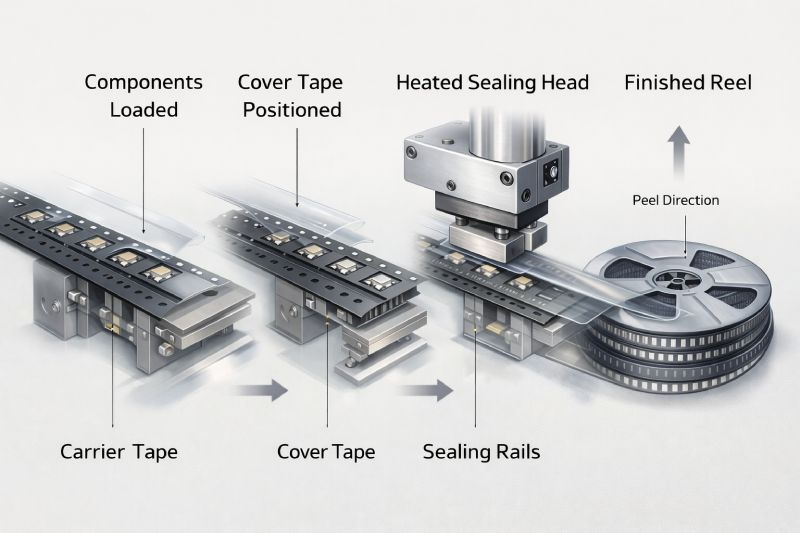
The basic process looks like this:
-
Components are loaded into the carrier tape pockets
-
Cover tape is aligned over the carrier tape
-
Heat or pressure bonds the cover tape to the sealing rails
-
The finished tape is wound onto a reel
The seal is created only on the flat sealing rails beside the pockets. The cover tape should never bond directly to the component area. A properly sealed tape protects the components from vibration, dust, moisture, and handling damage while still allowing the cover tape to peel away smoothly during SMT assembly.
How the Cover Tape Sealing Process Works Step by Step
Step 1 — Aligning the Cover Tape with the Carrier Tape
The first step is to align the cover tape precisely over the carrier tape. The cover tape must sit evenly across the sealing rails on both sides of the carrier tape.
If the tape is too far to one side, one edge may seal correctly while the other edge remains weak. This often causes cover tape lifting, wrinkles, or uneven peel force.
Modern tape and reel machines use guide rollers and alignment systems to keep the cover tape centered. For high-speed packaging, even a small alignment error can create sealing problems across the entire reel.
Step 2 — Applying Heat, Pressure, or Adhesive
Once the cover tape is positioned, the machine applies the correct sealing method.
There are two main types of cover tape:
-
Heat activated cover tape
-
Pressure sensitive cover tape
Heat activated cover tape uses a heat-sealable adhesive layer. The sealing head applies a specific combination of heat and pressure, which activates the adhesive and bonds the cover tape to the carrier tape.
Pressure sensitive cover tape already contains an active adhesive. Instead of heat, the machine uses pressure to create the bond.
The correct sealing settings depend on the carrier tape material, cover tape material, machine speed, and component type.
Step 3 — Forming a Controlled Seal Along Both Edges
The goal is not simply to create the strongest possible seal. The seal must be strong enough to hold the components securely, but not so strong that the cover tape becomes difficult to remove during SMT feeding.
The cover tape bonds only to the sealing rails along the edges of the carrier tape. The component pockets remain untouched.
Uniform sealing is critical. If one section of the reel has a stronger seal than another, the peel force will change during SMT assembly. This can lead to component jumping, feeder stoppages, or rejected parts.
Many manufacturers test the first few meters of sealed tape before running a full production order. This simple step can prevent expensive rework later.
Step 4 — Cooling and Reel Winding
After sealing, the tape usually passes through a short cooling section before it is wound onto the reel.
Cooling allows the adhesive bond to stabilize. If the tape is wound too quickly while the adhesive is still soft, the seal may become uneven or weak.
Reel winding tension is also important. Too much tension can stretch the cover tape and weaken the seal. Too little tension can create loose winding and poor reel quality.
Heat Activated vs Pressure Sensitive Cover Tape Sealing
The two most common cover tape sealing technologies are heat activated sealing and pressure sensitive sealing. Each method has advantages depending on the production environment.
How Heat Activated Cover Tape Sealing Works
Heat activated cover tape uses an adhesive layer that becomes active when exposed to heat. During the sealing process, the machine presses the cover tape against the carrier tape while applying controlled heat.
Typical sealing temperatures are often between 120°C and 180°C, depending on the cover tape and carrier tape materials.
Heat activated sealing is widely used in high-volume SMT packaging because it provides:
-
Consistent seal strength
-
Stable peel force
-
Better performance during shipping and storage
-
Reliable results at high production speed
However, this method also requires more precise control. If the temperature is too low, the cover tape may not bond properly. If the temperature is too high, the adhesive can become too strong or damage the carrier tape.
Heat activated cover tape is usually the best choice for automated packaging lines and large production runs.
How Pressure Sensitive Cover Tape Sealing Works
Pressure sensitive cover tape does not require heat. The adhesive is already active, so the machine only needs to apply pressure.
This type of cover tape is easier to use because it requires simpler equipment and lower setup cost. It is often used for:
-
Small production runs
-
Manual tape and reel operations
-
Low-speed packaging
-
Situations where heat could damage sensitive components
Pressure sensitive cover tape offers several benefits:
-
Faster setup
-
No heating equipment required
-
Lower initial investment
However, the seal is often less stable than heat activated cover tape. Pressure sensitive adhesives may be affected more easily by dust, humidity, or high temperatures.
| Feature | Heat Activated Cover Tape | Pressure Sensitive Cover Tape |
|---|---|---|
| Sealing Method | Heat + pressure | Pressure only |
| Equipment Needed | Heated sealing head | Pressure roller |
| Production Volume | High-volume automatic packaging | Small batch or manual packaging |
| Seal Stability | High | Medium |
| Setup Cost | Higher | Lower |
| Best Use | Fast SMT packaging lines | Flexible low-volume production |
The best option depends on your production volume, carrier tape material, and SMT requirements.
Why Peel Strength Matters in Cover Tape Sealing
Peel strength is one of the most important factors in cover tape sealing.
Peel strength describes how much force is needed to remove the cover tape from the carrier tape during SMT assembly. The seal must stay closed during shipping, but it also must peel away smoothly inside the feeder.
If the peel strength is too low:
-
Components may fall out during transport
-
Cover tape may lift from the carrier tape
-
The reel may fail before it reaches the SMT line
If the peel strength is too high:
-
The feeder may struggle to remove the cover tape
-
Small components may jump out of the pocket
-
The machine may stop because of excessive resistance
Most SMT feeders remove the cover tape at a peel angle between 165° and 180°. The sealing system should create a consistent peel force across the entire reel.
According to EIA-481 standards, the peel force should remain stable from the beginning to the end of the reel. A stable peel force improves feeding reliability and reduces defects during automated assembly.
Common Problems in Cover Tape Sealing and How to Fix Them
Even with the correct materials, sealing problems can still occur if the settings are wrong.
| Problem | Possible Cause | Recommended Solution |
|---|---|---|
| Cover tape does not seal properly | Low temperature, low pressure, dirty carrier tape, incompatible materials | Increase temperature or pressure, clean the carrier tape, verify material compatibility |
| Cover tape peels off during shipping | Weak seal, excessive reel tension, poor storage conditions | Increase seal strength, reduce winding tension, improve storage environment |
| Cover tape is too difficult to peel | Excessive temperature, wrong adhesive type, incompatible carrier tape | Lower the sealing temperature, change cover tape type, test a different material combination |
| Uneven or wrinkled sealing | Poor alignment, uneven pressure, incorrect machine speed | Re-align the cover tape, adjust pressure, slow the machine speed |
| Peel force changes across the reel | Inconsistent heat or pressure | Check the sealing head and machine settings |
Cover Tape Does Not Seal Properly
A weak seal is usually caused by insufficient heat or pressure. This problem often appears when a heat activated cover tape is used with a sealing temperature that is too low.
Another common reason is using the wrong cover tape with the carrier tape. For example, a cover tape designed for PS carrier tape may not seal properly to PET or PC carrier tape.
Cover Tape Peels Off During Shipping
If the cover tape lifts during shipping, the seal may be too weak or the reel may have been wound too tightly.
Environmental conditions also matter. High humidity and extreme temperature can reduce adhesive performance, especially with pressure sensitive cover tape.
Cover Tape Is Too Difficult to Peel in SMT Feeders
When the seal is too strong, the feeder may not be able to remove the cover tape smoothly. Excessive heat is one of the most common causes.
In some cases, the adhesive becomes so strong that the components are pulled out of the pockets together with the cover tape.
Factors That Affect Cover Tape Sealing Quality
Several variables influence the final sealing performance.
Carrier Tape Material
Different carrier tape materials react differently to heat and adhesive.
-
PS carrier tape is common and usually seals easily
-
PC carrier tape often requires different sealing conditions
-
PET carrier tape may need specialized cover tape formulations
The cover tape must always be matched to the carrier tape material.
Cover Tape Material and Adhesive
Different cover tapes use different adhesive formulations. Some are designed for heat activated sealing, while others are designed for pressure sensitive sealing.
The wrong adhesive can create weak bonding, unstable peel force, or damage to the carrier tape.
Sealing Temperature, Pressure, and Speed
These three settings work together.
-
Higher speed may require higher temperature
-
Lower pressure may require slower machine speed
-
Excessive temperature can increase peel force too much
The best settings are usually determined through sample testing.
Storage Conditions
Cover tape and carrier tape should be stored in a clean, dry environment.
Dust, moisture, and long-term storage can reduce sealing quality. Old materials may no longer provide the same seal strength as fresh materials.
How to Choose the Right Cover Tape for Your Sealing Process
Choosing the right cover tape is not only about price. The correct cover tape should match your carrier tape, components, packaging speed, and SMT requirements.
For high-speed automated production, heat activated cover tape is usually the better option because it provides more consistent sealing and peel strength.
For small batch packaging or manual tape and reel operations, pressure sensitive cover tape may be more practical because it requires simpler equipment.
Before selecting a cover tape, ask the supplier these questions:
-
Is this cover tape compatible with my carrier tape material?
-
What sealing temperature is recommended?
-
What peel force range can be achieved?
-
Does the product comply with EIA-481?
-
Can I test samples before mass production?
Testing is essential. Even when two materials appear similar, small differences in the adhesive or carrier tape surface can change the sealing result.
Why Matching Cover Tape and Carrier Tape Is Critical
Many sealing problems are caused by using incompatible materials.
A high-quality cover tape may still fail if it is paired with the wrong carrier tape. For example:
-
A cover tape designed for PS carrier tape may not seal correctly to PC carrier tape
-
Anti-static carrier tape may require a specific adhesive formulation
-
Embossed carrier tape with deep pockets may need stronger sealing control
The best results come from testing the exact combination of:
-
Carrier tape material
-
Cover tape type
-
Sealing temperature and pressure
-
SMT feeder conditions
Working with a supplier that can test both the carrier tape and cover tape together is the fastest way to avoid sealing failures.
Frequently Asked Questions About Cover Tape Sealing
What temperature is used for heat activated cover tape sealing?
Most heat activated cover tapes seal between 120°C and 180°C. The exact temperature depends on the carrier tape material and machine speed.
Can pressure sensitive cover tape be used for automatic SMT packaging?
Yes, but it is usually better for low-speed or small-volume production. High-speed SMT lines often require the more stable performance of heat activated cover tape.
Why does my cover tape peel off during shipping?
The seal may be too weak, the reel may be wound too tightly, or the material may have been exposed to heat and humidity.
How do I know if the peel strength is correct?
The cover tape should stay sealed during transport but peel smoothly during SMT feeding. If components fall out or feeder jams occur, the peel strength may need adjustment.
Can the same cover tape work with different carrier tape materials?
Not always. Some cover tapes are compatible with several materials, but others are designed for only one specific carrier tape type.
Conclusion
Cover tape sealing is one of the most important steps in tape and reel packaging. A successful seal depends on the correct combination of cover tape type, carrier tape material, sealing temperature, pressure, and peel strength.
Heat activated cover tape is usually the best choice for high-speed automated packaging, while pressure sensitive cover tape is better for smaller production runs and simpler equipment.
Before starting mass production, always test the complete carrier tape and cover tape combination under real packaging and SMT conditions. A small amount of testing can prevent major sealing failures, reduce component loss, and improve feeding reliability across the entire production process.



 Emial
Emial John Mr