



Quality Control in Tape and Reel Packaging: Inspection Standards, Common Defects & SMT Reliability
Poor tape and reel quality may not be obvious when a reel first arrives at the SMT line. However, even a small packaging defect can quickly cause feeder jams, missing components, polarity errors, or unplanned downtime.
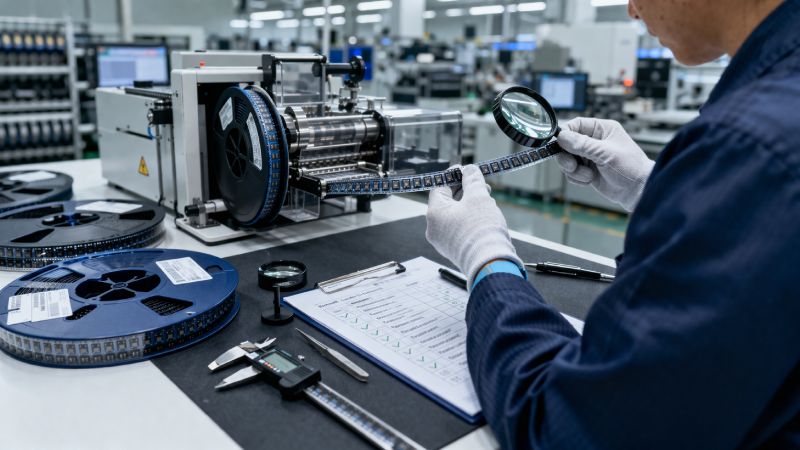
Tape and reel packaging is more than a shipping method. It is part of the SMT process itself. Carrier tape dimensions, component orientation, cover tape sealing, reel winding, and ESD protection all directly affect whether components can be fed smoothly into automated pick-and-place machines.
This is why quality control in tape and reel packaging is essential. By following recognized standards and inspecting critical packaging points before shipment, manufacturers can reduce defects, avoid production delays, and improve overall assembly reliability.
Why Quality Control Matters in Tape and Reel Packaging
In SMT production, every reel must feed consistently from the first component to the last. If the carrier tape is formed incorrectly or the cover tape seal is inconsistent, the feeder may stop unexpectedly or fail to pick up the component correctly.
Common packaging defects can lead to:
- Components rotating inside the pocket
- Parts sticking out of the carrier tape
- Missing or upside-down components
- Cover tape opening during transportation
- Reel deformation that prevents smooth feeding
- Static discharge damage to sensitive devices
These problems often seem minor at first, but their impact on production can be significant. A single defective reel can stop an SMT line, force operators to reload feeders, and create unnecessary scrap.
How Packaging Defects Affect SMT Production
When a component is not positioned correctly inside the carrier tape pocket, the pick-and-place nozzle may fail to pick it up. In other cases, the machine may pick up the part incorrectly and place it in the wrong orientation on the PCB.
For example, if the pocket depth is too large, small components may tip over during transportation. If the pocket is too shallow, the part may sit too high and be damaged when the cover tape is sealed.
Poor cover tape adhesion is another common cause of feeder problems. If the seal is too weak, components can fall out during shipping. If the seal is too strong, the cover tape may not peel smoothly in the feeder, causing the tape to tear or jam.
The Hidden Cost of Poor Packaging Quality
The cost of one reel with packaging defects is usually much lower than the cost of a stopped SMT line. However, the production losses caused by that defective reel can be much higher.
Poor tape and reel quality may lead to:
- Production downtime
- Additional labor for inspection and rework
- Increased scrap and component loss
- Late deliveries to customers
- Warranty claims and product returns
For this reason, preventive quality control is usually far less expensive than correcting packaging problems after shipment.
The Main Quality Control Standards Used in Tape and Reel Packaging
Professional tape and reel suppliers normally follow recognized industry standards to ensure that the packaging is compatible with SMT equipment.
The most widely used standard is ANSI/EIA-481. This standard defines the critical dimensions and performance requirements for carrier tape, cover tape, and reels.
ANSI/EIA-481 Requirements
ANSI/EIA-481 specifies:
- Carrier tape width and pitch
- Pocket dimensions and tolerances
- Component orientation inside the pocket
- Sprocket hole position
- Reel size and winding direction
- Cover tape peel strength
These requirements help ensure that the tape can be used in standard SMT feeders without causing misfeeds or machine stoppages.
For example, the standard defines how much force should be required to peel the cover tape away from the carrier tape. If the peel force is outside the acceptable range, the reel may not run correctly during production.
Manufacturers that follow ANSI/EIA-481 are more likely to provide packaging that is consistent and compatible with different feeder brands.
IPC and Customer-Specific Requirements
In addition to ANSI/EIA-481, many customers also require IPC guidelines or their own internal quality standards.
Some applications may require:
- ESD-safe carrier tape and reels
- Moisture barrier packaging
- Additional visual inspection requirements
- Tighter tolerances for sensitive or unusually shaped components
- Specific orientation or polarity marking
For high-value components, customers may also request full traceability, inspection records, and sample approval before mass production begins.
What Should Be Inspected During Tape and Reel Packaging?
Quality control should include every stage of the packaging process, from the carrier tape itself to the finished reel.
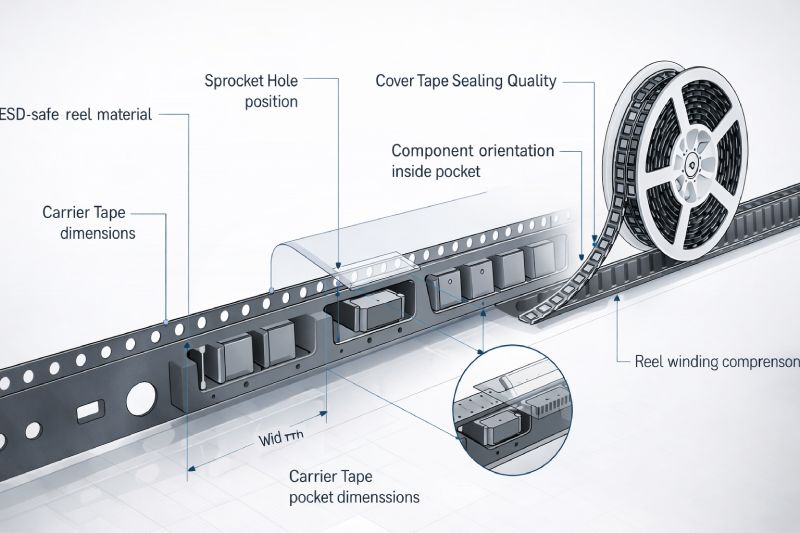
Carrier Tape Dimensional Inspection
The first inspection point is the carrier tape.
Critical dimensions include:
- Pocket width
- Pocket length
- Pocket depth
- Pocket pitch
- Tape width
- Sprocket hole location
If the pocket is too large, the component may move or rotate inside the tape. If it is too small, the component may be damaged when inserted.
The carrier tape should also be checked for:
- Smooth pocket forming
- Flat tape surface
- Consistent dimensions across the entire reel
- No cracks, deformation, or burrs
Even a small variation in pocket size can create feeding problems when thousands of components are running through an SMT machine.
Component Orientation and Position Inspection
Every component must be placed in the correct orientation before sealing.
Quality inspectors should verify that:
- Polarity is correct
- Components are centered in the pocket
- No parts are upside down
- No components are rotated incorrectly
- The correct quantity is loaded
Many professional suppliers use camera systems or vision inspection equipment to check component orientation automatically. For complex or polarized parts, this is often more reliable than manual inspection alone.
Cover Tape Sealing Quality Inspection
The cover tape seal is one of the most important parts of tape and reel quality control.
The seal should be:
- Uniform across the entire reel
- Free from wrinkles or bubbles
- Strong enough to hold components securely
- Weak enough to peel smoothly during feeding
Common sealing defects include:
- Lifted cover tape edges
- Incomplete sealing
- Uneven peel strength
- Cover tape wrinkles
A weak seal may allow components to fall out during transport. An excessively strong seal can cause the cover tape to tear during feeder operation.
Different cover tape types also require different inspection methods. Heat-activated cover tape depends on sealing temperature, pressure, and dwell time. Pressure-sensitive cover tape depends more on adhesive consistency and surface cleanliness.
Reel and Winding Inspection
The finished reel should also be checked before shipment.
Inspectors should verify:
- Reel flange is not cracked or bent
- Tape is wound evenly
- No crossed tape or loose winding
- Leader and trailer lengths meet customer requirements
- Reel label is correct
If the reel is wound too tightly, the tape may deform. If it is wound too loosely, the tape may shift during shipping.
Uniform winding tension helps ensure that the reel feeds smoothly from beginning to end.
Common Tape and Reel Packaging Defects
Most packaging failures are caused by a few common defects that can be identified during inspection.
| Defect | Likely Cause | Possible SMT Problem |
|---|---|---|
| Component rotation | Pocket too large | Pick-up failure |
| Missing components | Weak cover tape seal | Empty pockets on feeder |
| Cover tape tearing | Excessive peel strength | Feeder jam |
| Reel deformation | Poor handling or weak reel | Feeding interruption |
| Static damage | Insufficient ESD protection | Component failure |
| Upside-down parts | Incorrect loading process | Wrong PCB placement |
Incorrect Pocket Size or Shape
When the pocket does not match the component size, the part may shift, tilt, or become damaged.
This problem is especially common when the carrier tape is designed without enough testing or when component tolerances are not considered.
The solution is to redesign the pocket dimensions and verify the new design with trial reels before mass production.
Poor Cover Tape Adhesion
If the cover tape does not bond correctly, components may fall out during transport or handling.
This problem may be caused by:
- Incorrect sealing temperature
- Contaminated carrier tape surface
- Wrong cover tape material
- Inconsistent sealing pressure
Regular peel-force testing can help identify this issue before shipment.
Wrong Component Orientation
Incorrect orientation is a serious problem for polarized or asymmetrical components.
If the part is loaded incorrectly, the pick-and-place machine may install it incorrectly on the PCB, resulting in assembly defects or complete product failure.
Automated vision inspection is often the best way to prevent this problem.
Quality Control Methods Used by Professional Tape and Reel Suppliers
Experienced suppliers usually combine manual inspection with automated quality control methods.
Incoming Material Inspection
Before production begins, the supplier should inspect:
- Carrier tape material
- Cover tape quality
- Reel dimensions
- ESD properties
- Component drawings and dimensions
This helps prevent problems before packaging starts.
In-Process Inspection
During packaging, the supplier should perform:
- First article inspection
- Periodic sampling
- Seal quality checks
- Orientation verification
- Reel winding inspection
The first completed reel is often tested in an actual SMT feeder to confirm that it runs correctly.
Final Inspection Before Shipment
Before the reels leave the factory, a final inspection should confirm:
- Correct part number and label
- Correct quantity
- Proper sealing and winding
- No visible defects
- Packaging complies with customer requirements
Some suppliers also perform random feeder simulation testing to ensure that the reel will work correctly on the customer’s SMT line.
Automated Vision Inspection
Modern tape and reel suppliers increasingly use automated camera systems to inspect:
- Missing components
- Incorrect orientation
- Pocket alignment
- Seal defects
- Foreign particles
Compared with manual inspection, automated systems provide faster and more consistent results, especially for high-volume production.
How to Choose a Tape and Reel Packaging Supplier with Strong Quality Control
When selecting a tape and reel packaging supplier, price should not be the only factor.
A lower-cost supplier may seem attractive at first, but weak quality control can create much higher costs later.
A reliable supplier should be able to demonstrate:
- Compliance with ANSI/EIA-481
- Experience with similar components
- Dimensional inspection reports
- Sample reel approval process
- ESD-safe production environment
- Vision inspection capability
- Feeder compatibility testing
Before placing a large order, ask the supplier to provide:
- Packaging samples
- Photos or videos of the reel running in a feeder
- Inspection reports
- Cover tape peel-force data
If your components require custom carrier tape or unusual packaging conditions, it is especially important to work with a supplier that can quickly identify and solve problems.
Choosing a supplier with a documented quality control process is often more valuable than choosing the lowest price.
Best Practices to Prevent Tape and Reel Packaging Problems
The best way to reduce packaging defects is to prevent them before mass production begins.
Follow these best practices:
- Confirm component dimensions before tooling starts.
- Approve a sample reel before full production.
- Test the reel in an SMT feeder whenever possible.
- Select the correct cover tape type for the component.
- Use anti-static materials for sensitive devices.
- Store finished reels in clean, dry conditions.
- Review packaging defects regularly and improve the process.
Close communication between the component manufacturer, packaging supplier, and SMT assembly team can also reduce the risk of unexpected problems.
Conclusion
Quality control in tape and reel packaging is essential for reliable SMT production. Problems such as incorrect pocket dimensions, poor cover tape sealing, wrong component orientation, or damaged reels can quickly create feeding failures and expensive production downtime.
By following ANSI/EIA-481 standards, inspecting every stage of the packaging process, and working with an experienced supplier, manufacturers can reduce risk and improve assembly efficiency.
If your components require custom tape and reel packaging, the best approach is to review the design, test sample reels, and confirm feeder compatibility before mass production begins. A strong quality control process not only protects the components—it also protects the entire SMT line.



 Emial
Emial John Mr