






Tape and Reel Packaging for Passive Components: Complete Guide for SMT Assembly
Passive components such as chip resistors, MLCC capacitors, ferrite beads, and inductors are the foundation of every SMT assembly. A single PCB may contain hundreds or even thousands of these parts. To keep modern production lines running efficiently, manufacturers almost always use tape and reel packaging.
Tape and reel packaging organizes passive components into precisely spaced pockets inside a carrier tape, seals them with cover tape, and winds them onto a reel for automated feeding. This packaging method allows SMT pick-and-place machines to run at high speed with fewer errors, less waste, and better traceability.
For component manufacturers, EMS providers, and OEMs, choosing the right tape and reel solution directly affects production yield and machine uptime. In this guide, you will learn how tape and reel packaging works for passive components, which tape sizes are commonly used, what standards matter, and how to select the right packaging supplier.
What Is Tape and Reel Packaging for Passive Components?
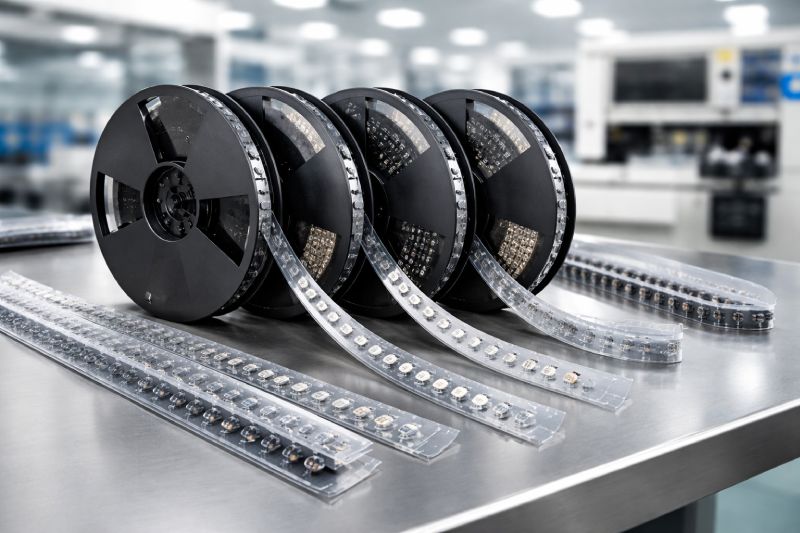
Tape and reel packaging is a method of packing electronic components inside a continuous carrier tape that is wound onto a plastic reel. Each passive component sits in an individual pocket designed to match its size and shape.
The complete system includes four parts:
- Carrier tape
- Cover tape
- Plastic reel
- Leader and trailer tape
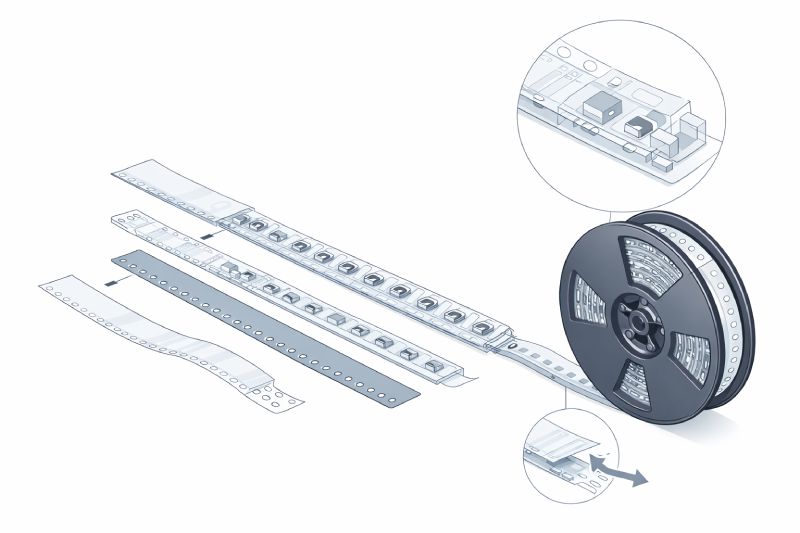
The carrier tape contains a series of pockets. Passive components are loaded into these pockets in the correct orientation. A cover tape is then sealed over the top to prevent movement during shipping and feeding. Finally, the sealed tape is wound onto a reel that fits directly into SMT equipment.
Passive components are especially well suited to tape and reel packaging because they are extremely small and often used in large quantities. Bulk packaging may work for larger through-hole parts, but it is impractical for 0201, 0402, or 0603 chip components.
Typical passive components supplied in tape and reel include:
| Component Type | Common Package Sizes | Typical Tape Width |
|---|---|---|
| Chip Resistors | 0201–2512 | 8 mm |
| MLCC Capacitors | 0201–2220 | 8 mm |
| Ferrite Beads | 0402–1206 | 8 mm |
| Chip Inductors | 0402–1210 | 8–12 mm |
| Varistors | 0603–1210 | 8–12 mm |
If you need a deeper explanation of the tape structure itself, you can also refer to the article about carrier tape design and construction.
Why Tape and Reel Packaging Matters for Passive Components
Passive components are small, lightweight, and used in very large quantities on SMT lines. Because of this, they need a packaging format that can support stable feeding and consistent pickup. Tape and reel packaging does this by keeping each component separated, positioned, and ready for automated placement.
For parts such as chip resistors, MLCC capacitors, and ferrite beads, even minor movement during transport or feeding can affect placement reliability. A properly matched carrier tape and cover tape help keep the components secure until they reach the nozzle.
In practical terms, tape and reel packaging is important because it supports smooth SMT handling, protects small parts during movement, and helps maintain consistent production flow.
Main Components of a Passive Component Tape and Reel System
Although tape and reel packaging looks simple, every part of the system plays an important role.
Carrier Tape
Carrier tape is the main packaging material. For passive components, embossed carrier tape is most common because it provides precise pockets for small parts.
The most important carrier tape design factors include:
- Pocket length and width
- Pocket depth
- Pocket pitch
- Sprocket hole position
- Material type
The pocket must hold the component securely without allowing it to rotate or flip. At the same time, the pocket cannot be too tight, or the part may become damaged during loading.
Many manufacturers use anti-static or conductive materials for passive components, especially when packaging sensitive inductors or ESD-sensitive devices.
Most carrier tapes for passive components are designed according to EIA-481 requirements.
Cover Tape
After the passive components are loaded into the carrier tape, a cover tape is sealed over the pockets. This cover tape keeps the components inside the tape until the reel is used on the SMT line.
When the reel enters the feeder, the cover tape peels away and exposes one component at a time for pickup. For passive components, heat-sealed cover tape is typically used because it provides a stable seal and consistent feeding.
Standard Tape Sizes Used for Passive Components
The correct tape width depends mainly on the component package size.
8 mm Tape
8 mm tape is by far the most common option for passive components. It is typically used for:
- 0201 resistors
- 0402 capacitors
- 0603 ferrite beads
- 0805 chip inductors
- 1206 resistors
These components are small enough that an 8 mm tape provides sufficient space while keeping the reel compact.
12 mm and Wider Tape
Larger passive components may require wider carrier tape. Examples include:
- Large power inductors
- High-power resistors
- Specialty capacitors
- Large ferrite components
Common widths include:
- 12 mm
- 16 mm
- 24 mm
A wider tape provides more room for larger pockets and improves feeding stability.
Pocket Pitch and Orientation
Besides tape width, pocket pitch is also important. Pocket pitch refers to the distance between one component pocket and the next.
Most passive component packaging uses:
- 2 mm pitch
- 4 mm pitch
Smaller components usually use a tighter pitch to increase the number of parts per reel.
Component orientation must also remain consistent throughout the reel. If some parts rotate 90 degrees or flip upside down, the SMT machine may place them incorrectly.
| Passive Component Package | Recommended Tape Width | Common Reel Size |
|---|---|---|
| 0201 / 0402 | 8 mm | 7 in |
| 0603 / 0805 | 8 mm | 7 in or 13 in |
| 1206 / 1210 | 8 mm or 12 mm | 13 in |
| Large Inductors | 12 mm or 16 mm | 13 in |
| Specialty Passive Components | 16 mm+ | 13 in |
For more details about spacing and pitch, you may also read the guide on tape pitch in carrier tape packaging.
Industry Standards for Passive Component Tape and Reel Packaging
Standardization is essential because passive component reels must work on many different SMT machines and feeder systems.
The most important standard is EIA-481. This standard defines:
- Carrier tape dimensions
- Pocket spacing
- Sprocket hole position
- Reel dimensions
- Feeding direction
- Cover tape sealing area
By following EIA-481, packaging suppliers can ensure their products are compatible with common SMT equipment.
The standard also helps avoid confusion between different suppliers. For example, if two suppliers both use EIA-481 compliant 8 mm tape, the reels should run correctly on the same feeder.
Some customers may also require additional specifications such as:
- Barcode labels
- Moisture barrier bags
- RoHS or REACH compliance
- Special leader length
- Custom reel quantities
When selecting a supplier, always confirm whether their packaging meets both EIA-481 and any customer-specific requirements.
Common Problems in Passive Component Tape and Reel Packaging
Even small packaging errors can create major SMT production problems.
Component Flipping
If the pocket is too large, the component may rotate or flip during shipping. This is especially common with very small chip resistors and MLCCs.
A flipped component may not be picked correctly by the nozzle, causing placement errors or missing parts.
Incorrect Pocket Size
A pocket that is too small may damage the component during loading. A pocket that is too large allows the component to move.
The correct pocket design must balance both protection and stability.
Cover Tape Problems
Poor sealing often creates issues such as:
- Cover tape lifting
- Components escaping
- Inconsistent peel force
- Feeding interruptions
Heat-activated cover tape generally provides more stable results for high-speed passive component packaging.
Static Electricity
Although passive components are less sensitive than semiconductors, static electricity can still create contamination and handling issues. Anti-static carrier tape helps prevent static build-up during packaging and transportation.
Reel Feeding Problems
Reel problems can include:
- Reel wobble
- Poor winding tension
- Misaligned tape
- Bad splice connections
These issues often appear only after the reel is installed on the SMT line.
| Packaging Defect | Possible Cause | SMT Result |
|---|---|---|
| Component Flip | Pocket too large | Mis-pick |
| Cover Tape Lift | Weak sealing | Missing components |
| Wrong Orientation | Incorrect pocket design | Placement error |
| Static Build-Up | Non-ESD material | Handling issues |
| Reel Wobble | Poor reel quality | Feeding interruption |
For more troubleshooting examples, you can also read the article on common tape and reel packaging defects.
How to Choose the Right Tape and Reel Packaging Supplier
Choosing the right supplier is just as important as choosing the right tape width or reel size.
First, look for a supplier with experience packaging passive components. Very small parts such as 0201 and 0402 require more precise pocket design than larger devices.
Second, verify that the supplier follows EIA-481 and tests their packaging on real SMT feeders. A tape that looks acceptable in the factory may still fail during high-speed feeding.
Third, compare the available material options. A good supplier should offer:
- Anti-static carrier tape
- Conductive carrier tape
- Multiple cover tape choices
- 7-inch and 13-inch reels
- Custom pocket designs
Before placing a large order, request sample reels and run them on your SMT line. Test the following:
- Pocket fit
- Component orientation
- Cover tape peel strength
- Feeding reliability
- Reel compatibility
Many passive components have non-standard dimensions, especially power inductors and custom ferrite parts. The best supplier can create custom tooling and provide trial runs before mass production.
If you are sourcing tape and reel packaging for chip resistors, MLCC capacitors, ferrite beads, or inductors, working with an experienced packaging supplier can help reduce defects, improve machine uptime, and increase overall production efficiency.
Frequently Asked Questions
What tape width is most commonly used for passive components?
8 mm tape is the most common choice because it fits most 0201, 0402, 0603, 0805, and 1206 passive components.
Can 0201 and 0402 components use the same tape?
Sometimes they can use the same overall tape width, but the pocket dimensions are usually different. Always verify the exact pocket size.
Should I choose a 7-inch reel or a 13-inch reel?
Use a 7-inch reel for prototypes, small orders, or short production runs. Use a 13-inch reel when you need high-volume SMT production with fewer reel changes.
Are passive components always packaged in embossed carrier tape?
Most passive components use embossed carrier tape. However, some special applications may use punched tape or other customized formats.
How can I reduce feeding problems on my SMT line?
The best way is to use EIA-481 compliant packaging with correct pocket dimensions, stable cover tape peel force, and high-quality reels tested on your actual feeder system.
Conclusion
Tape and reel packaging is essential for passive components because it allows SMT machines to place parts quickly, accurately, and consistently. The correct combination of carrier tape, cover tape, reel size, and pocket design helps reduce component damage, minimize machine downtime, and improve overall production efficiency.
For most chip resistors, capacitors, ferrite beads, and inductors, 8 mm embossed carrier tape on a 7-inch or 13-inch reel remains the standard solution. However, larger passive components may require wider tape and custom pocket designs.
By choosing EIA-481 compliant packaging and working with an experienced supplier, manufacturers can achieve more reliable feeding, lower defect rates, and better SMT performance.



 Emial
Emial John Mr