


Tape and Reel Packaging for Automotive Electronics: Materials, Standards & Best Practices
Automotive electronics operate in some of the harshest conditions in modern manufacturing. Components installed in vehicles must continue working after years of exposure to heat, vibration, moisture, dust, and constant mechanical stress. Whether the application is an engine control unit, ADAS module, EV battery management system, infotainment display, or lighting controller, every component must arrive at the SMT production line in perfect condition.
That is why tape and reel packaging for automotive electronics is far more demanding than standard packaging used for consumer devices. Automotive manufacturers require extremely low defect rates, stable automated feeding, and packaging materials that can protect sensitive components throughout transportation and assembly.
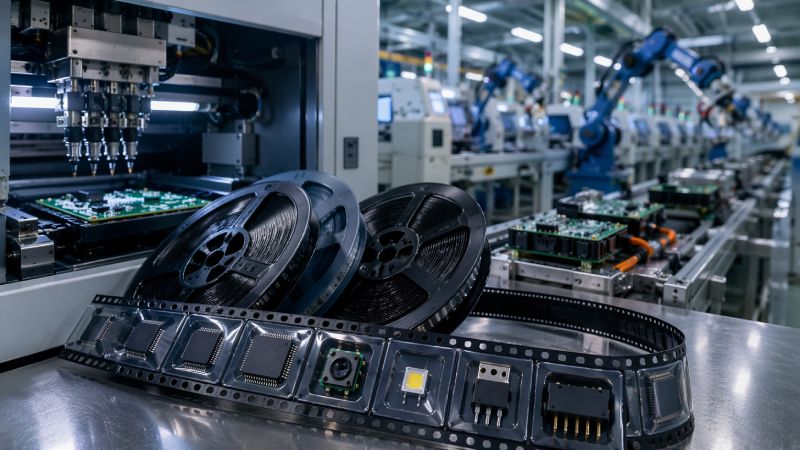
A properly designed tape and reel system keeps components oriented correctly, protects them from damage and electrostatic discharge, and ensures smooth feeding into high-speed pick-and-place equipment. Choosing the right carrier tape, cover tape, and reel configuration can reduce feeder errors, prevent costly downtime, and improve overall production efficiency.
Why Automotive Electronics Need Specialized Tape and Reel Packaging
Unlike smartphones or household electronics, automotive products must survive for many years under difficult conditions. A packaging method that works for standard electronics may not be reliable enough for automotive applications.
Automotive components are often exposed to:
-
High temperatures during manufacturing and operation
-
Moisture and humidity during transportation and storage
-
Constant vibration and shock in vehicles
-
Long product life cycles and strict reliability requirements
Because of these conditions, automotive electronics manufacturers expect nearly zero packaging-related defects. Even a small problem such as a tilted component, weak cover tape seal, or static discharge can stop an SMT line or create failures in the field.
Tape and reel packaging is widely used because it helps maintain consistent orientation and spacing between parts. The packaging also protects delicate components during transport and allows them to feed directly into automated assembly equipment.
Common automotive electronic components packaged in tape and reel include:
-
Automotive IC chips
-
Power semiconductors
-
MLCCs, resistors, and other passive components
-
Connectors
-
LEDs for dashboards and lighting systems
-
MEMS and environmental sensors
-
Relays and power modules
Compared with standard electronics packaging, automotive-grade tape and reel packaging requires tighter tolerances, better ESD protection, and stronger materials.
What Automotive Components Are Commonly Packaged in Tape and Reel
Most surface-mount components used in automotive assemblies can be packaged in tape and reel. However, the tape width, pocket depth, and reel size depend on the component shape and application.
| Component Type | Common Automotive Application | Typical Package | Recommended Tape Width |
|---|---|---|---|
| QFN / BGA ICs | ECU, ADAS, infotainment | 4–12 mm packages | 8–16 mm |
| MOSFETs / Power Devices | EV battery systems, power control | DPAK, TO-252, QFN | 12–24 mm |
| Resistors / Capacitors | Engine control, lighting | 0201–1210 SMD | 8 mm |
| LEDs | Dashboard, headlights, interior lighting | PLCC, chip LED | 8–12 mm |
| MEMS Sensors | Parking assist, airbag, safety systems | Small sensor packages | 12–16 mm |
| Connectors | Automotive PCB assemblies | Irregular shapes | 16–44 mm |
Standard carrier tape sizes are often suitable for small ICs and passive components. However, many automotive connectors and sensors have unusual shapes that require custom pocket designs. A custom carrier tape can prevent rotation, reduce vibration inside the pocket, and improve feeding accuracy.
For irregular automotive parts, manufacturers often need:
-
Wider carrier tape
-
Deeper or specially shaped pockets
-
Anti-static material
-
Larger reel diameters for long production runs
How Tape and Reel Packaging Works in Automotive Electronics Manufacturing
Tape and reel packaging is designed to integrate directly with automated SMT assembly lines. The process begins when components are loaded into carrier tape and ends when the pick-and-place machine removes each component during assembly.
Step 1: Loading Components into Carrier Tape
Components are placed into pockets formed in embossed or punched carrier tape. Each pocket is designed to hold the component securely while maintaining a consistent orientation.
Pocket size is critical. If the pocket is too large, the component may rotate or move during shipping. If it is too small, the component may become damaged or difficult to remove.
Step 2: Sealing with Cover Tape
After the components are loaded, cover tape seals the top of the carrier tape. The seal must be strong enough to prevent parts from falling out during transportation, but not so strong that the cover tape is difficult to peel during SMT assembly.
Two common cover tape options are:
-
Heat-activated cover tape
-
Pressure-sensitive cover tape
Heat-activated tape is often preferred in automotive packaging because it provides more stable sealing performance and better resistance to harsh environments.
Step 3: Winding onto Plastic Reels
The sealed carrier tape is wound onto a plastic reel. Reel diameter depends on the component size, tape width, and SMT feeder requirements.
Common reel sizes include:
-
7-inch reels for smaller production runs
-
13-inch reels for high-volume SMT assembly
Larger reels reduce changeover frequency and improve production efficiency, especially for automotive electronics produced in high volumes.
Step 4: Feeding into SMT Equipment
At the SMT line, the reel is installed into an automatic feeder. The carrier tape advances through the feeder, while the cover tape peels away and the pick-and-place machine removes the component.
Consistent tape pitch, accurate sprocket hole dimensions, and stable component orientation are essential. Any variation can cause feeder jams, mis-picks, or line stoppages.
Key Requirements for Automotive-Grade Carrier Tape
Carrier tape used for automotive electronics must meet much higher performance standards than tape used for ordinary electronics.
Dimensional Precision
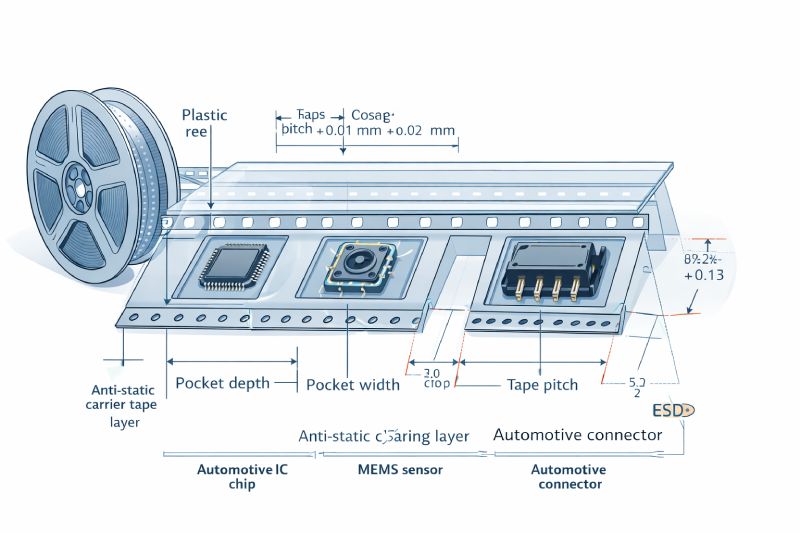
Automotive SMT lines run at very high speeds. If the carrier tape dimensions are inconsistent, even by a small amount, the pick-and-place machine may not be able to locate the component correctly.
Critical dimensions include:
-
Pocket width and depth
-
Tape pitch
-
Sprocket hole spacing
-
Flatness of the carrier tape
Tight dimensional control helps reduce:
-
Misalignment
-
Component rotation
-
Feeder jams
-
Scrap and rework
ESD Protection
Many automotive semiconductors are highly sensitive to electrostatic discharge. Static electricity generated during transportation or handling can permanently damage the component before it reaches the production line.
To prevent this, automotive tape and reel packaging often uses anti-static or conductive carrier tape materials. These materials help dissipate static charges safely.
Typical surface resistivity for automotive anti-static carrier tape is usually within the range of:
-
10^5 to 10^11 ohms/square
The correct ESD protection level depends on the sensitivity of the component being packaged.
Heat Resistance
Automotive production environments often involve higher temperatures than consumer electronics assembly. Carrier tape materials must maintain their shape and performance even when exposed to elevated temperatures during storage or transport.
If the tape softens or deforms, the component may shift inside the pocket and create feeding problems.
Mechanical Strength
Automotive packaging must survive long-distance shipping, warehousing, and vibration during transportation. Weak carrier tape can crack, warp, or tear, especially when heavier components are packaged.
A strong carrier tape should resist:
-
Cracking
-
Deformation
-
Pocket collapse
-
Edge tearing
Common Carrier Tape Materials for Automotive Electronics
| Material | Main Advantages | Temperature Resistance | Typical Automotive Use |
|---|---|---|---|
| PS (Polystyrene) | Low cost, easy to form | Moderate | Small ICs and passive components |
| PET | Strong and stable | Good | LEDs and sensors |
| PC (Polycarbonate) | High strength and heat resistance | Excellent | Power devices and automotive semiconductors |
| Conductive Materials | ESD-safe protection | Good to excellent | Sensitive ICs and MEMS sensors |
The best material depends on the size, weight, shape, and sensitivity of the component, as well as the operating conditions of the SMT line.
Automotive Standards That Affect Tape and Reel Packaging
Automotive manufacturers usually require tape and reel packaging to comply with recognized industry standards. Compliance helps ensure compatibility with automated feeders and reduces the risk of defects.
EIA-481 Standard
EIA-481 is the most important standard for carrier tape and reel packaging. It defines:
-
Tape width
-
Pocket dimensions
-
Sprocket hole spacing
-
Tape pitch
-
Reel size and hub dimensions
Following EIA-481 ensures that carrier tape will work with standard SMT feeders used in automotive electronics manufacturing.
Without compliance, the tape may not fit correctly into the feeder, causing line stoppages and costly downtime.
IATF 16949 and ISO 9001
Automotive suppliers often require packaging manufacturers to operate under quality management systems such as:
-
IATF 16949
-
ISO 9001
These standards do not define carrier tape dimensions directly, but they ensure that the supplier follows strict quality control procedures and maintains consistent production.
AEC-Q100 and AEC-Q200
AEC-Q100 and AEC-Q200 are standards related to automotive electronic component reliability. While they apply mainly to the component itself, the packaging must also protect the component well enough to maintain that reliability.
Packaging that allows ESD damage, vibration, or moisture intrusion may undermine the performance of automotive-qualified components.
Common Problems in Automotive Tape and Reel Packaging
Even small packaging errors can create major problems on an automotive SMT line. Below are some of the most common issues.
| Problem | Typical Cause | Result |
|---|---|---|
| Component rotation | Pocket too large | Mis-pick or incorrect placement |
| Component damage | Pocket too small or weak tape | Broken leads or cracked package |
| Components falling out | Weak cover tape seal | Missing parts in feeder |
| Difficult peeling | Excessive peel force | Feeder jams and downtime |
| ESD damage | Poor anti-static protection | Component failure |
| Reel deformation | Weak reel or poor shipping method | Feeding problems |
Incorrect Pocket Dimensions
If the pocket does not match the component precisely, the component may tilt, rotate, or move during shipping. This often leads to pick-and-place errors.
Weak or Excessive Cover Tape Peel Force
If peel force is too low, components may fall out during transportation. If peel force is too high, the feeder may struggle to remove the cover tape smoothly.
The ideal peel force should remain consistent across the entire reel.
ESD Failure
Sensitive automotive ICs and MEMS sensors may fail because of static electricity. Conductive or anti-static packaging materials are essential for these components.
Reel Damage During Shipping
A deformed reel may no longer feed correctly into SMT equipment. Strong reel materials and proper packaging during shipping are important, especially for international transportation.
How to Choose the Right Tape and Reel Packaging Supplier
Selecting the right packaging supplier is just as important as selecting the correct tape material. Automotive electronics manufacturers should look for a supplier with proven experience in automotive applications.
Experience with Automotive Components
The supplier should already have experience packaging:
-
Automotive ICs
-
Sensors
-
Power semiconductors
-
Connectors
-
LEDs and passive components
Experience helps reduce design mistakes and speeds up development.
Ability to Provide Custom Carrier Tape
Many automotive components cannot be packaged in standard carrier tape. The supplier should be able to create:
-
Custom pocket designs
-
Different tape widths
-
Specialized reel sizes
-
Anti-static or conductive materials
Strong Quality Control
Before approving a packaging supplier, ask whether they perform:
-
Pocket dimension inspection
-
Peel force testing
-
ESD testing
-
Trial runs on SMT feeders
A reliable supplier should also provide detailed inspection reports and sample reels for testing.
Engineering Support
The best suppliers do more than manufacture tape. They also help optimize the pocket design, recommend suitable materials, and improve feeder compatibility.
Before selecting a supplier, request:
-
Sample carrier tape
-
Cover tape peel test results
-
Feeder compatibility testing
-
Material specifications and certifications
Custom Tape and Reel Solutions for Automotive Sensors and Connectors
Standard tape and reel packaging works well for many small components, but automotive connectors, sensors, and power devices often require custom solutions.
For example, a large automotive connector may need:
-
24 mm or 32 mm carrier tape
-
Deep custom pockets
-
Extra pocket support to prevent movement
A fragile MEMS sensor may require:
-
Anti-static conductive material
-
Shock-resistant pocket design
-
Lower peel force cover tape
Power semiconductors used in EV battery systems may need:
-
Heat-resistant carrier tape
-
Stronger reel construction
-
Special orientation control
Custom tape and reel packaging can significantly improve production efficiency by reducing feeder errors, protecting expensive components, and ensuring stable automated assembly.
If a component cannot be packaged reliably using standard tape dimensions, a custom carrier tape design is often the best solution.
Frequently Asked Questions
What makes automotive tape and reel packaging different from standard electronics packaging?
Automotive packaging requires tighter tolerances, stronger materials, better ESD protection, and higher reliability because automotive electronics operate in harsh environments.
Which carrier tape material is best for automotive semiconductors?
Polycarbonate and conductive materials are commonly used because they provide high strength, good heat resistance, and ESD protection.
Can automotive connectors be packaged in tape and reel?
Yes. Many automotive connectors can be packaged in tape and reel, but they often require custom pocket designs and wider carrier tape.
What standard should automotive carrier tape follow?
Most automotive carrier tape follows the EIA-481 standard to ensure compatibility with SMT feeders.
How can ESD damage be prevented?
Use conductive or anti-static carrier tape, anti-static cover tape, and proper grounding during packaging and handling.
Can custom tape and reel packaging reduce SMT line errors?
Yes. A custom design can improve component orientation, reduce movement inside the pocket, and create smoother feeding.
Conclusion
Tape and reel packaging plays a critical role in automotive electronics manufacturing. Compared with ordinary electronics, automotive components require better protection, higher precision, and more reliable automated feeding.
A well-designed tape and reel system can reduce feeder jams, prevent ESD damage, improve SMT efficiency, and protect valuable automotive components throughout transportation and assembly.
The right carrier tape material, cover tape, reel size, and pocket design depend on the specific component being packaged. For sensors, connectors, power devices, and other irregular automotive parts, a custom tape and reel solution is often the most effective option.
If you need tape and reel packaging for automotive electronics, working with an experienced supplier can help you reduce defects, improve production efficiency, and ensure long-term reliability.



 Emial
Emial John Mr