
Tape and Reel Packaging Service vs In-House Packaging: Cost, Quality & Scalability Comparison
In modern electronics manufacturing, efficient component packaging is just as important as component production itself. SMT assembly lines depend on consistent, high-precision tape and reel packaging to maintain stable feeding, reduce downtime, and support automated production.
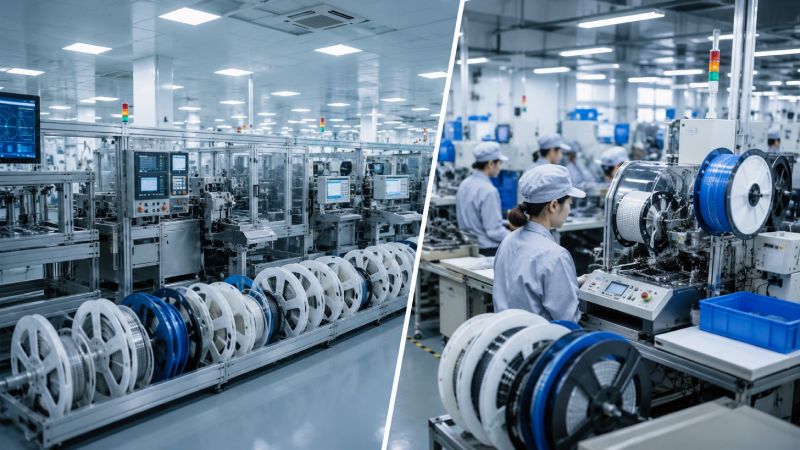
As production demand grows, many manufacturers face an important operational decision: should they outsource tape and reel packaging to a professional service provider, or invest in an in-house packaging system?
The answer depends on production volume, budget, scalability requirements, and long-term manufacturing strategy. In this article, we compare outsourced tape and reel packaging services with in-house packaging operations to help you determine the best solution for your business.
What Is Tape and Reel Packaging?
Tape and reel packaging is a standardized method used to prepare electronic components for automated SMT pick-and-place assembly.
The process typically includes:
-
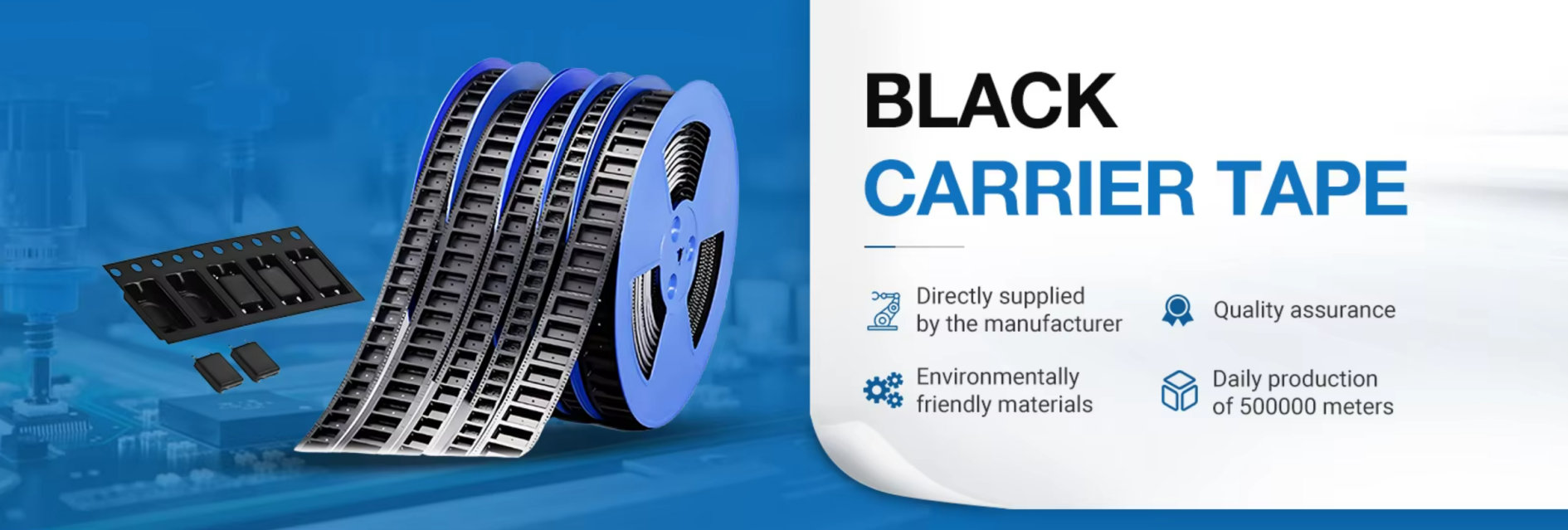
Loading components into carrier tape pockets
-
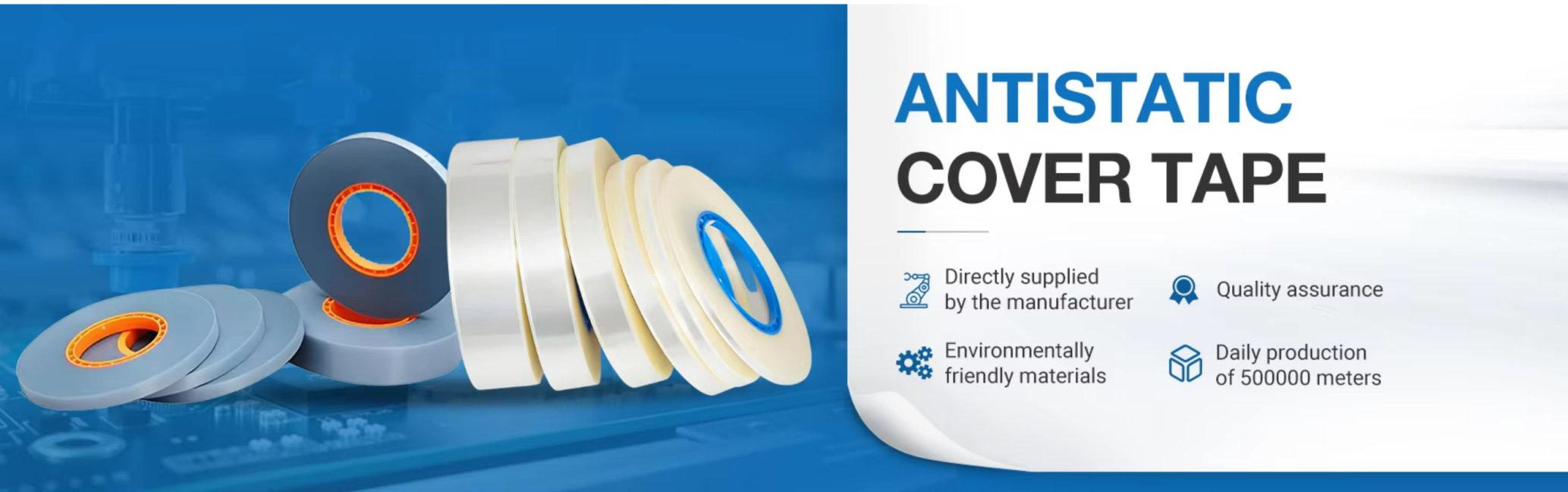
Sealing the tape with cover tape
-
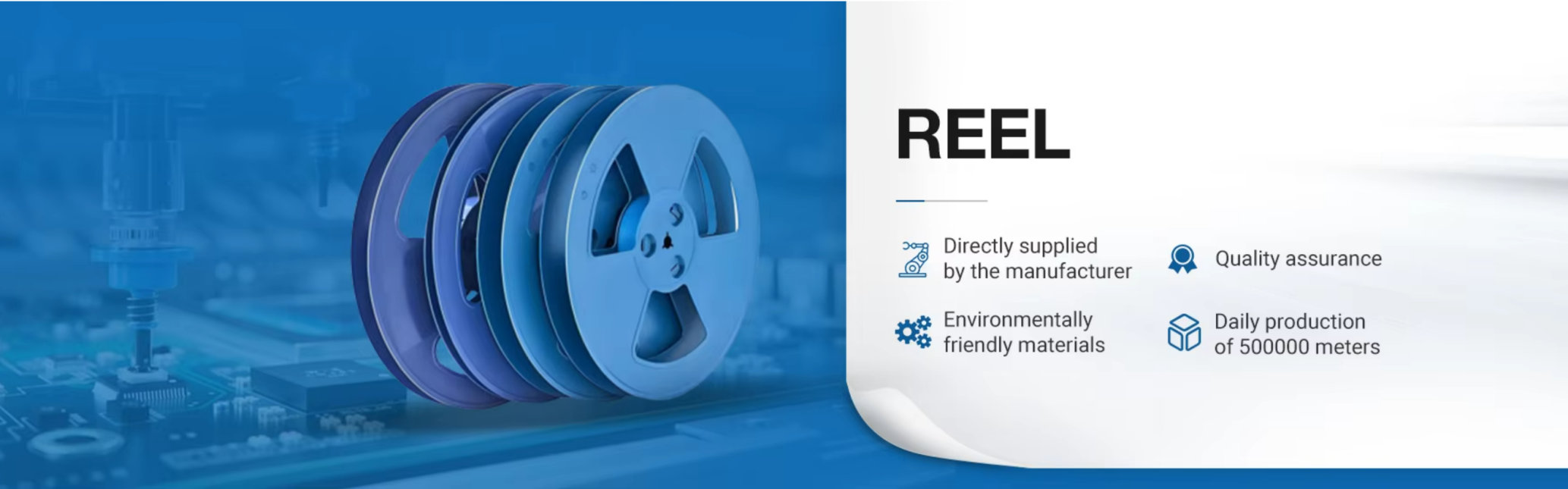
Winding the tape onto plastic reels
-
Labeling and inspection
This packaging format allows SMT feeders to automatically supply components during PCB assembly.
Tape and reel packaging is widely used for:
-
IC chips
-
LEDs
-
Passive components
-
Connectors
-
Semiconductor devices
-
Mini electronic components
Proper packaging quality directly affects SMT production efficiency. Poorly sealed tapes, inconsistent pocket dimensions, or incorrect reel winding can lead to feeder jams, component misalignment, and expensive production interruptions.
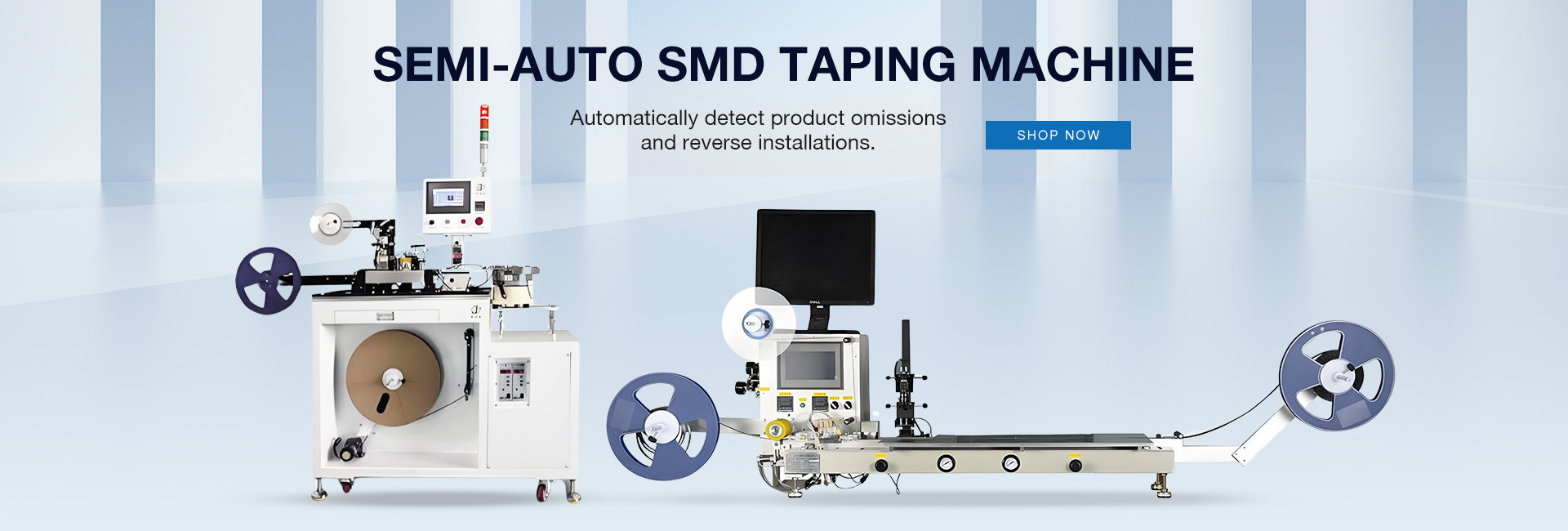
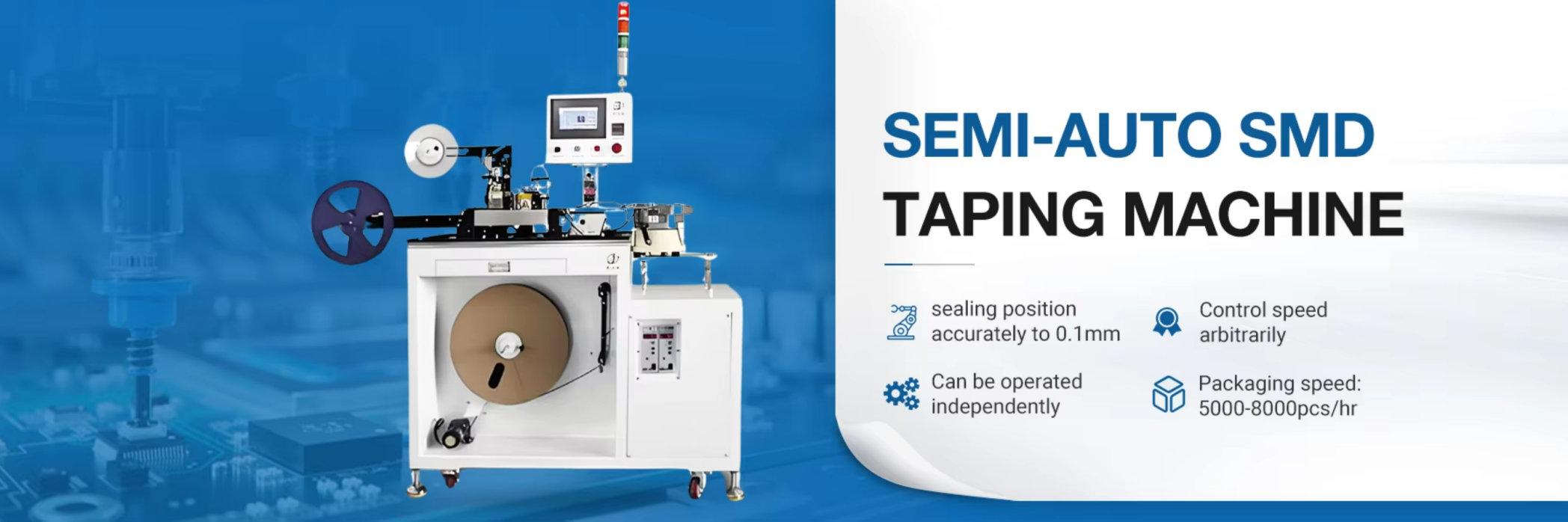
For manufacturers requiring high-speed packaging automation, modern equipment such as fully automatic carrier tape packaging machines and peel strength testing systems help improve consistency and reliability.
What Does an Outsourced Tape and Reel Packaging Service Include?
An outsourced tape and reel packaging service provides complete packaging support without requiring customers to purchase or maintain packaging equipment internally.
Most professional service providers offer:
-
Component loading
-
Carrier tape forming
-
Cover tape sealing
-
Vision inspection
-
Reel winding
-
Labeling
-
ESD-safe packaging
-
Packaging validation
Advanced providers also use automated inspection systems to verify:
-
Component orientation
-
Pocket positioning
-
Missing parts
-
Seal quality
-
Peel strength consistency
Professional packaging facilities usually operate specialized equipment such as:
-
Automatic carrier tape packers
-
Vision inspection systems
-
Carrier tape peel strength testers
-
High-speed reel winding systems
Outsourcing is especially common in industries with high product variety and changing production schedules, including:
-
Semiconductor manufacturing
-
LED packaging
-
Consumer electronics
-
Automotive electronics
-
EMS factories
For startups and growing electronics brands, outsourcing can significantly reduce operational complexity while improving packaging quality.
Instead of investing heavily in equipment, engineering setup, operator training, and maintenance, manufacturers can focus on product development and assembly operations.
What Is In-House Tape and Reel Packaging?
In-house tape and reel packaging means manufacturers operate their own packaging lines within their facilities.
This setup usually involves:
-
Purchasing packaging equipment
-
Installing production lines
-
Training operators
-
Managing maintenance
-
Establishing quality control procedures
Depending on production requirements, companies may use:
-
Semi-automatic packaging machines
-
Fully automatic packaging systems
-
Customized feeding systems
-
Integrated inspection equipment
Some manufacturers prefer in-house packaging because it provides greater production control. Internal teams can adjust packaging parameters quickly, manage urgent production changes, and maintain tighter control over sensitive products.
Large-volume manufacturers may also reduce long-term packaging costs by running internal operations continuously.
However, building internal packaging capability requires significant investment in:
-
Equipment
-
Factory space
-
Technical expertise
-
Maintenance resources
-
Quality management systems
Without proper engineering support, internal packaging operations can become difficult to maintain consistently.
Tape and Reel Packaging Service vs In-House Packaging: Core Comparison
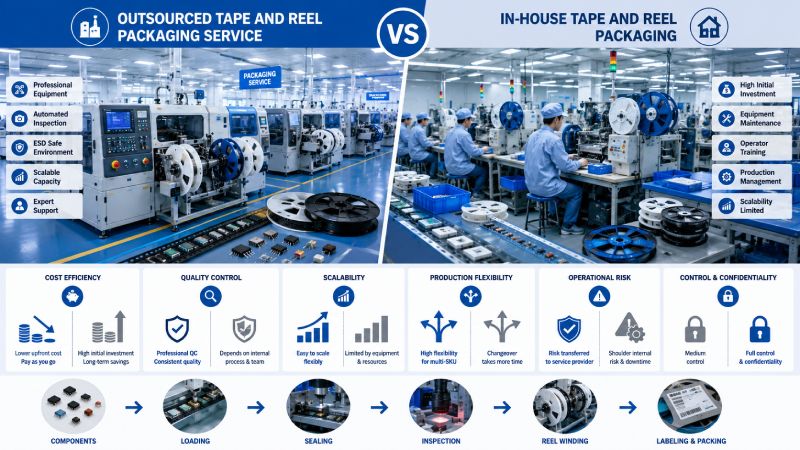
Choosing between outsourcing and in-house packaging requires evaluating multiple operational factors.
| Factor | Outsourced Packaging Service | In-House Packaging |
|---|---|---|
| Initial Investment | Low | High |
| Equipment Cost | Not Required | Required |
| Production Flexibility | High | Medium |
| Technical Expertise | Supplier Handles | Internal Team Needed |
| Maintenance Responsibility | Supplier | Internal Team |
| Scalability | Easy to Expand | Depends on Equipment |
| Process Control | Medium | High |
| Setup Time | Fast | Longer |
| Best for | SMEs & startups | Large-volume factories |
Cost Comparison
One of the biggest advantages of outsourcing is avoiding large upfront investment.
Building an internal packaging line may require:
-
Packaging machines
-
Inspection systems
-
Custom tooling
-
Maintenance equipment
-
Operator training
In addition to machine costs, manufacturers must also consider:
-
Spare parts
-
Engineering support
-
Production downtime
-
Equipment calibration
-
Ongoing maintenance
Outsourcing converts these fixed costs into operational expenses, which is especially beneficial for low-to-medium production volumes.
However, for large-scale continuous production, in-house packaging may reduce per-unit packaging cost over time.
Quality and Consistency
Professional tape and reel packaging providers often specialize exclusively in packaging operations. Their experience helps reduce:
-
Seal failures
-
Pocket inconsistencies
-
Reel winding problems
-
Feeding errors
Many suppliers also use advanced inspection and validation systems that smaller manufacturers may not have internally.
In-house operations can achieve excellent quality as well, but only when supported by strong engineering and QC processes.
Without proper validation systems, packaging inconsistency can lead to SMT feeder issues and costly production interruptions.
Production Speed and Scalability
Outsourced services offer strong flexibility during demand fluctuations.
If production volume suddenly increases, service providers can often scale packaging capacity quickly without requiring customers to purchase additional equipment.
This is valuable for:
-
Seasonal demand spikes
-
New product launches
-
Pilot production
-
Multi-SKU operations
In-house packaging provides more direct scheduling control but scaling production usually requires:
-
Additional equipment
-
More operators
-
Increased maintenance resources
Operational Risk
Internal packaging operations introduce several operational risks:
-
Equipment downtime
-
Maintenance delays
-
Operator shortages
-
Engineering dependency
If a packaging machine stops operating, production schedules may be affected immediately.
Outsourcing shifts much of this operational responsibility to the packaging provider, reducing internal management pressure.
When Should You Choose an Outsourced Packaging Service?
Outsourcing is often the best option for companies with:
-
Low-to-medium production volume
-
Limited packaging expertise
-
Frequent product changes
-
Limited factory space
-
Rapid growth plans
It is particularly suitable for:
-
Startups
-
EMS providers
-
R&D projects
-
Short production runs
-
High-mix manufacturing
One major advantage is faster market entry. Instead of spending months building internal packaging capability, companies can begin production immediately using an experienced packaging partner.
Outsourcing also helps avoid large capital expenditure during early growth stages.
However, choosing the right supplier is critical. Poor-quality packaging services can create:
-
Shipping delays
-
Packaging defects
-
SMT feeding problems
-
Inconsistent quality
Manufacturers should evaluate suppliers carefully and request packaging validation data whenever possible.
When Does In-House Packaging Make More Sense?
In-house packaging becomes more attractive when production volume is stable and continuous.
This approach is often preferred by:
-
Large electronics manufacturers
-
Semiconductor companies
-
Vertically integrated factories
-
High-volume SMT operations
Internal packaging allows manufacturers to:
-
Control scheduling directly
-
Protect sensitive product information
-
Optimize workflow integration
-
Reduce long-term outsourcing costs
For companies running high-volume production daily, internal operations may eventually deliver better ROI.
However, internal packaging also requires long-term commitment to:
-
Equipment maintenance
-
Operator management
-
Process optimization
-
Quality validation
Without sufficient engineering support, maintaining stable packaging quality can become challenging.
Hidden Costs Many Manufacturers Ignore
Many companies focus only on packaging machine costs while overlooking hidden operational expenses.
Poor packaging quality can create:
-
Feeder jams
-
Placement errors
-
Component damage
-
Reel rejection
-
SMT downtime
Even small packaging inconsistencies may reduce SMT efficiency significantly.
For example, improper cover tape sealing can cause components to shift during feeding. Weak peel strength may interrupt automatic placement systems. Incorrect pocket dimensions can create positioning errors.
These problems often cost far more than the packaging process itself because they affect the entire SMT production line.
This is why professional validation systems, including peel strength testing and automated inspection, are extremely important.
How to Decide: A Simple Decision Framework
Before choosing between outsourcing and in-house packaging, manufacturers should evaluate several key questions:
-
What is your monthly production volume?
-
How stable is your demand forecast?
-
How many SKUs do you manage?
-
Do you have internal engineering support?
-
Can your facility maintain automated equipment?
-
How important is scalability?
In many cases, a hybrid strategy works best.
Some companies begin with outsourced packaging during early growth stages, then gradually transition certain products to in-house production once volume becomes stable.
Others maintain both systems simultaneously:
-
outsourcing low-volume products
-
internally packaging high-volume items
This flexible approach helps balance cost, scalability, and operational efficiency.
How to Choose the Right Tape and Reel Packaging Partner
If you decide to outsource, selecting the right packaging provider is essential.
Look for suppliers with:
-
Automated packaging systems
-
Vision inspection capability
-
ESD-safe production environments
-
Packaging validation systems
-
Experience with your component type
Important questions to ask include:
-
What packaging standards do you follow?
-
Can you support custom carrier tape designs?
-
What inspection systems are included?
-
Can you handle high-mix production?
-
Do you provide peel strength validation?
Reliable suppliers should also be able to provide:
-
Sample reels
-
Validation reports
-
Engineering support
-
Packaging recommendations
Manufacturers planning long-term SMT production should also evaluate whether the supplier can support future automation upgrades.
Conclusion
There is no universal answer to the tape and reel packaging service vs in-house packaging debate. The best solution depends on your production scale, technical resources, budget, and long-term manufacturing strategy.
Outsourced packaging offers flexibility, lower upfront investment, and faster scalability, making it ideal for startups, growing brands, and high-mix production environments.
In-house packaging provides stronger operational control and long-term cost advantages for stable, high-volume manufacturing operations.
Before making a decision, manufacturers should carefully evaluate both direct and hidden costs, packaging quality requirements, and future production goals.
As SMT production continues evolving toward higher automation and tighter precision requirements, choosing the right packaging strategy can significantly improve manufacturing efficiency, product quality, and operational competitiveness.



 Emial
Emial John Mr