
Paper Carrier Tape vs Embossed Carrier Tape: Which Is Better for SMT Packaging?
Choosing between paper carrier tape and embossed carrier tape can directly affect SMT feeding performance, packaging cost, component protection, and production efficiency. Although both are widely used in tape and reel packaging systems, they are designed for different manufacturing requirements and component types.
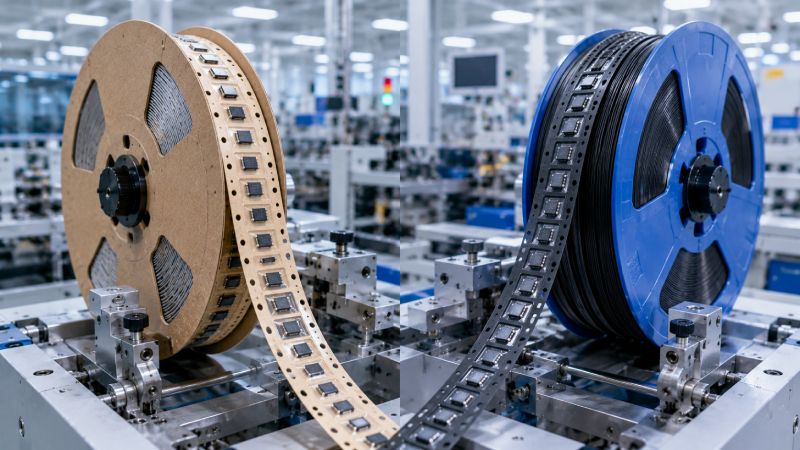
For SMT manufacturers, semiconductor suppliers, and electronic component packaging companies, selecting the right carrier tape is not simply about material preference. It involves balancing several factors, including:
-
Component size and weight
-
SMT line speed
-
Protection requirements
-
Packaging budget
-
Feeding stability
-
Production volume
In this article, we will compare paper carrier tape and embossed carrier tape from a practical manufacturing perspective, helping buyers and engineers determine which solution is best for specific SMT packaging applications.
The Core Difference Between Paper and Embossed Carrier Tape
The most important difference between paper carrier tape and embossed carrier tape lies in their structure, rigidity, and packaging purpose.
Paper-Based Flat Pocket Structure
Paper carrier tape uses processed paper materials to create pockets that hold electronic components. The structure is relatively lightweight and flexible compared with embossed plastic tape.
This design is commonly used for:
-
Passive components
-
Lightweight SMT parts
-
High-volume packaging programs
Because paper tape is lighter and simpler to process, it is often selected for cost-sensitive production environments.
Thermoformed Plastic Pocket Structure
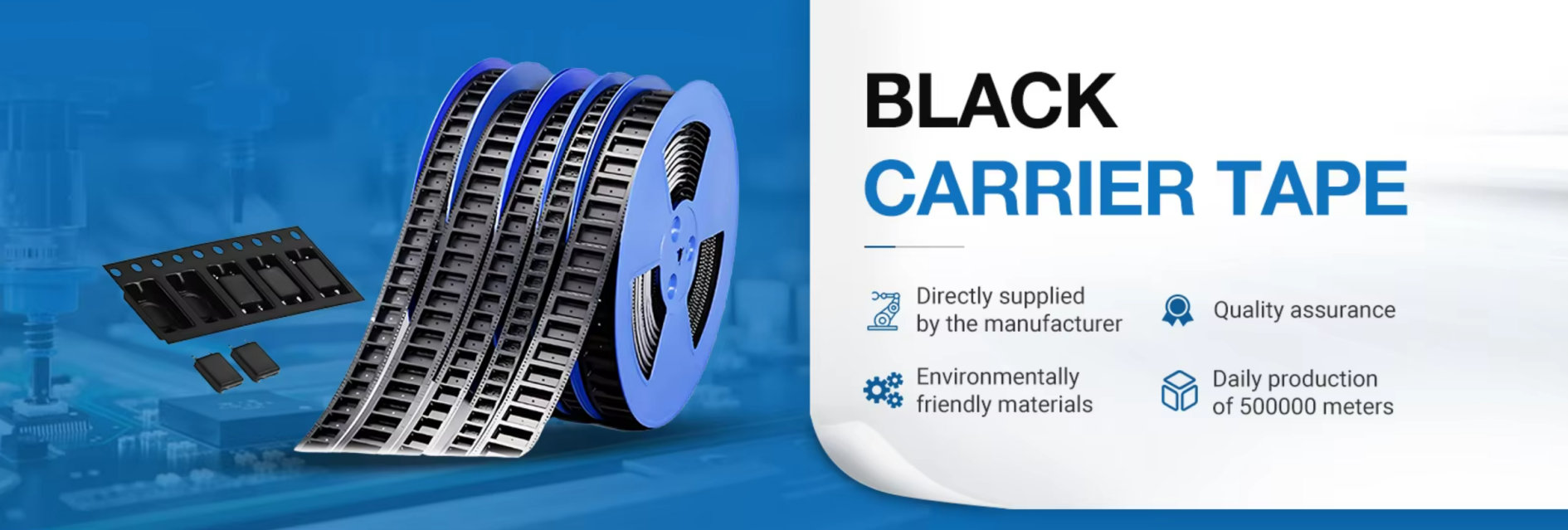
Embossed carrier tape uses thermoformed plastic materials such as PS, PET, or PC. The cavities are formed using precision molds that create highly accurate pocket dimensions.
Compared with paper tape, embossed tape provides:
-
Higher rigidity
-
Better dimensional consistency
-
Improved component protection
-
Greater cavity precision
This makes embossed carrier tape more suitable for precision SMT applications.
Why the Material Difference Matters
The material structure directly affects several important production factors:
-
Feeding stability
-
Pocket accuracy
-
Shock resistance
-
Reel durability
-
Component retention
For standard passive components, paper carrier tape may provide sufficient performance while reducing packaging cost. However, fragile ICs and precision semiconductors often require the additional protection and dimensional control offered by embossed carrier tape.
Cost Comparison: Which One Is More Economical?
Cost is one of the biggest factors influencing carrier tape selection.
Raw Material Cost Difference
Paper carrier tape is generally less expensive because the material itself is cheaper than engineered plastic materials used in embossed tape production.
This can significantly reduce packaging cost in large-scale SMT manufacturing operations.
For companies packaging millions of passive components, even small cost differences per reel can create substantial long-term savings.
Tooling and Production Cost
Embossed carrier tape requires thermoforming molds and higher-precision manufacturing systems. Tooling investment is often higher, especially for custom cavity designs.
Paper carrier tape usually involves:
-
Simpler forming processes
-
Lower tooling complexity
-
Faster setup for standard designs
As a result, paper carrier tape is often more economical for standard high-volume applications.
Transportation and Storage Cost
Paper carrier tape also offers logistical advantages because it is lighter than plastic alternatives.
Lower reel weight can help reduce:
-
Shipping expenses
-
Storage handling effort
-
Export transportation costs
For global electronics supply chains, transportation efficiency can become an important cost factor.
When Higher Cost Is Justified
Although embossed carrier tape is more expensive, the additional cost may be necessary for:
-
Precision IC packaging
-
Fragile semiconductor devices
-
High-value components
-
High-speed SMT production
In these situations, protection and feeding accuracy are often more important than packaging cost reduction.
SMT Feeding Performance Comparison
Feeding stability is one of the most critical factors in SMT packaging performance.
Even minor feeding inconsistencies can create production downtime and reduce assembly efficiency.
Feeding Stability at High Speed
Embossed carrier tape generally performs better in ultra-high-speed SMT production because the rigid plastic structure maintains more stable pocket geometry.
This helps improve:
-
Tape indexing accuracy
-
Component positioning consistency
-
High-speed feeder performance
Paper carrier tape can still perform very well in many standard SMT applications, especially when packaging lightweight components.
However, at extremely high production speeds, plastic tape may provide better mechanical stability.
Cover Tape Peeling Behavior
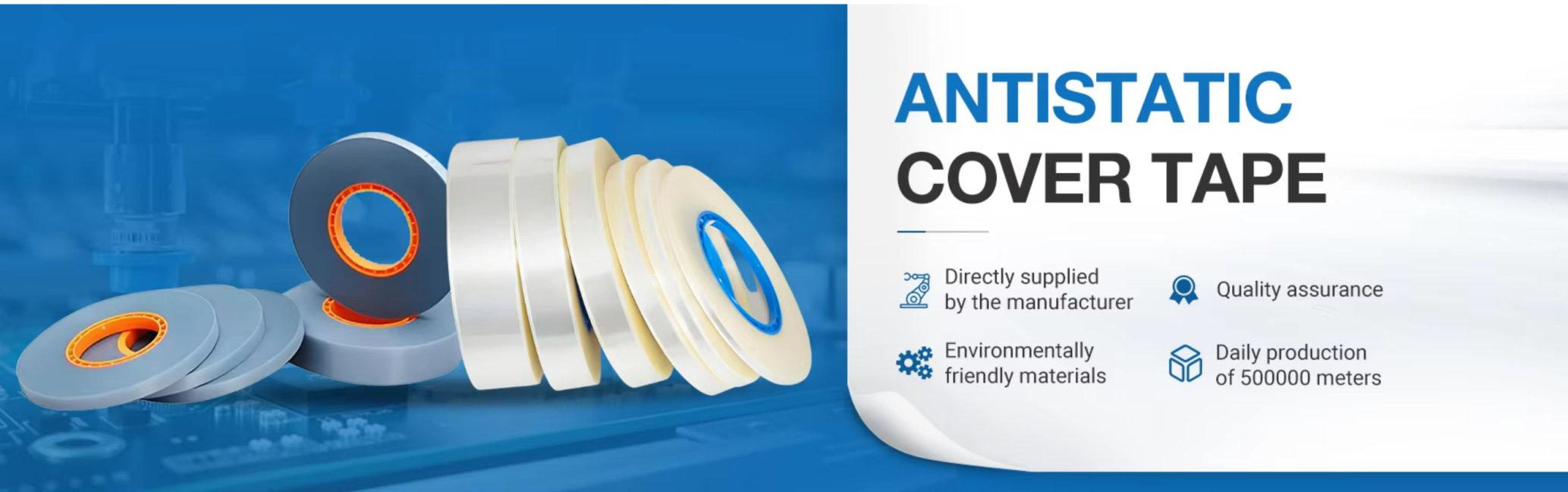
Both tape types require consistent cover tape peel strength for smooth feeder operation.
Unstable peeling force can cause:
-
Feeding interruptions
-
Component jumping
-
Feeder jams
-
Pick-and-place errors
Manufacturers often use dedicated Carrier Tape Peel Strength Tester for Packaging Validation systems to verify sealing consistency before shipment.
Stable peel force is essential regardless of tape material type.
Pocket Precision and Component Alignment
Embossed carrier tape offers higher pocket precision because thermoforming processes allow tighter dimensional control.
This is especially important for:
-
Fine-pitch ICs
-
Precision semiconductors
-
Miniature electronic devices
-
Sensitive SMT components
Paper carrier tape is usually sufficient for standard passive components but may not provide the same positioning precision required for ultra-small semiconductor packaging.
Which Tape Performs Better in High-Speed SMT Lines?
In general:
-
Paper carrier tape performs well for standard SMT production and lightweight components
-
Embossed carrier tape performs better for high-speed precision assembly environments
The best choice depends on the component type and SMT feeder requirements.
Component Protection Comparison
Carrier tape must not only support feeding performance but also protect components during transportation and handling.
Shock Resistance
Embossed carrier tape usually provides better shock resistance because the rigid plastic cavities hold components more securely.
This is especially useful during:
-
Long-distance shipping
-
Export transportation
-
Reel handling
-
Warehouse movement
Paper carrier tape can still provide good protection for lightweight components but may deform more easily under pressure.
Pocket Strength
Pocket deformation resistance is another major difference.
Embossed cavities maintain their shape more effectively under stress, helping reduce:
-
Component shifting
-
Pocket collapse
-
Feeding instability
Paper pockets are generally less rigid and therefore better suited for lighter SMT components.
Environmental Protection
Plastic carrier tape often provides better environmental resistance in conditions involving:
-
Humidity
-
Temperature changes
-
Mechanical stress
Paper carrier tape may require more controlled storage environments to maintain stable feeding performance.
Which Components Require Better Protection?
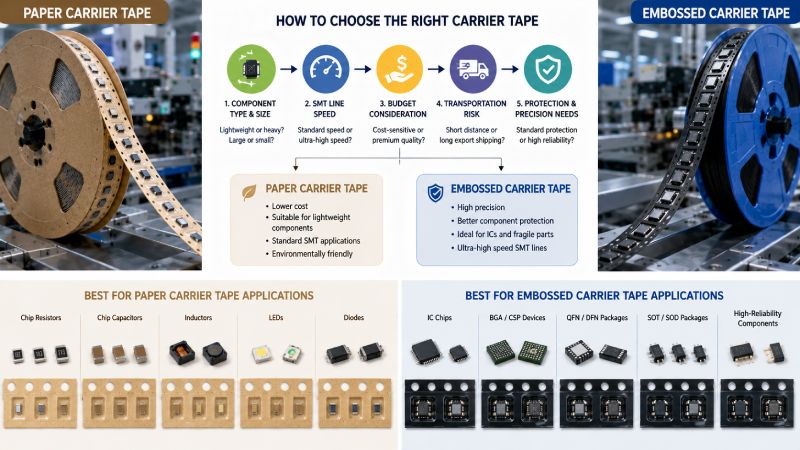
Embossed carrier tape is commonly preferred for:
-
IC chips
-
BGA devices
-
Semiconductor components
-
Fragile SMT packages
Paper carrier tape is commonly sufficient for:
-
Resistors
-
Capacitors
-
Small LEDs
-
Lightweight passive devices
Best Applications for Paper Carrier Tape
Paper carrier tape performs best in high-volume, lightweight component packaging environments.
Passive Components
Paper carrier tape is widely used for:
-
Chip resistors
-
Ceramic capacitors
-
Ferrite beads
-
Small inductors
These components are lightweight and compatible with standard SMT feeder systems.
Lightweight SMT Devices
Small LEDs, diodes, and compact electronic parts are also commonly packaged using paper carrier tape because they do not require heavy-duty cavity protection.
High-Volume Cost-Sensitive Production
Manufacturers prioritizing packaging efficiency and lower operating costs often prefer paper carrier tape for large-scale production programs.
This is particularly common in:
-
Consumer electronics
-
Home appliance manufacturing
-
Standard SMT assembly operations
Environmentally Focused Packaging Programs
As sustainability becomes more important, some manufacturers are increasing the use of paper-based packaging materials to reduce plastic consumption.
Best Applications for Embossed Carrier Tape
Embossed carrier tape is better suited for precision and high-protection applications.
IC and Semiconductor Packaging
Integrated circuits and semiconductor devices often require:
-
Precise cavity dimensions
-
Strong component retention
-
Stable feeding accuracy
Embossed plastic tape is commonly used to meet these requirements.
Precision SMT Components
Miniature SMT components with tight tolerances may require higher pocket precision than paper tape can provide.
Fragile or Irregular-Shaped Devices
Components with unusual shapes or fragile structures often benefit from rigid embossed cavities that reduce movement during transportation.
High-Reliability Electronics
Industries such as automotive electronics and industrial control systems often prioritize packaging reliability over packaging cost.
In these situations, embossed carrier tape is frequently preferred.
How to Choose the Right Carrier Tape for Your Components
Choosing the correct carrier tape requires balancing cost, protection, and SMT performance requirements.
Consider Component Weight and Size
Lightweight components are often compatible with paper carrier tape.
Heavier or more fragile devices may require embossed plastic cavities for improved protection.
Evaluate SMT Line Speed
Standard SMT production lines can usually operate effectively with paper carrier tape.
Ultra-high-speed feeders often perform better with embossed carrier tape due to its higher rigidity and dimensional stability.
Understand Packaging Budget
If packaging cost reduction is a major priority, paper carrier tape may provide excellent value for standard components.
However, choosing the lowest-cost option is not always the best long-term decision if feeding issues increase production downtime.
Review Transportation Risk
Long export shipments and complex logistics environments may require stronger packaging protection.
Embossed tape is often better for applications involving:
-
Long-distance transportation
-
High vibration exposure
-
Fragile components
Balance Precision vs Cost
Ultimately, the best carrier tape solution depends on balancing:
-
Precision requirements
-
Protection needs
-
Production efficiency
-
Budget limitations
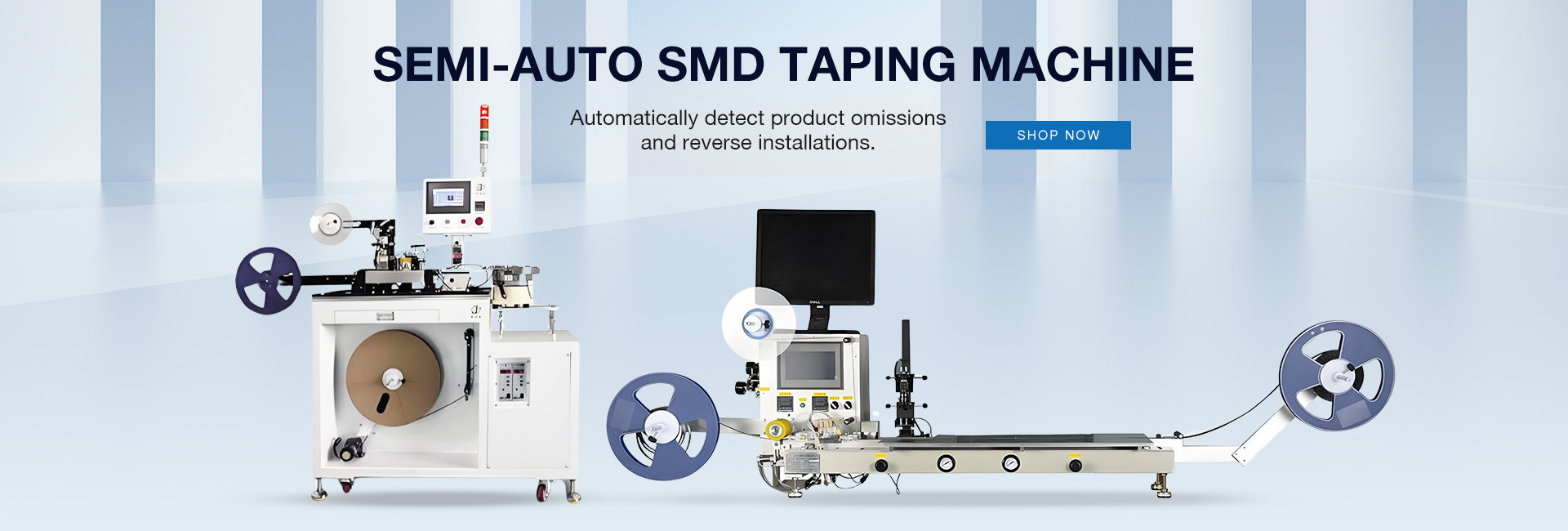
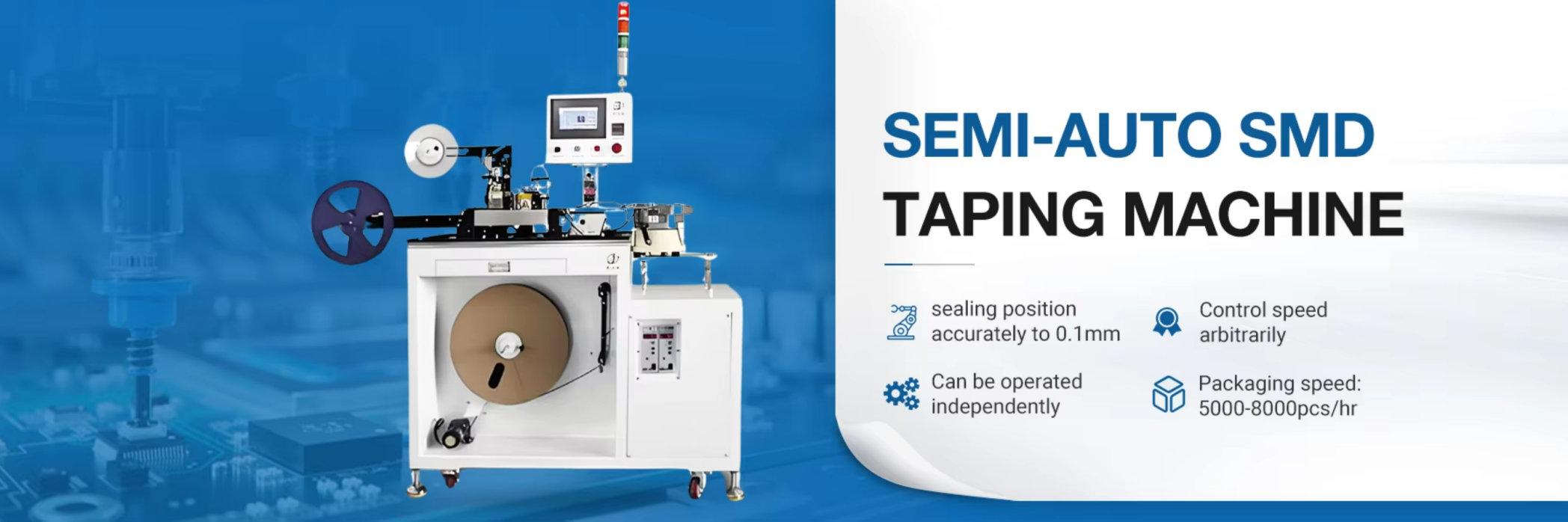
Many manufacturers also rely on advanced SMT Tape and Reel Packaging Machines to improve packaging consistency and feeding performance regardless of carrier tape type.
Common Mistakes When Choosing Carrier Tape
Selecting the wrong carrier tape can create production problems and increase operational costs.
Choosing Based Only on Cost
The cheapest packaging option is not always the best solution.
Poor feeding stability may create:
-
SMT downtime
-
Increased defects
-
Lower production efficiency
Ignoring SMT Feeder Compatibility
Different feeder systems may perform differently depending on tape structure and rigidity.
Compatibility testing is important before mass production.
Using Paper Tape for Fragile Components
Paper tape may not provide enough protection for sensitive semiconductors or fragile electronic devices.
Over-Specifying Embossed Tape
Using expensive embossed tape for simple passive components may unnecessarily increase packaging costs without meaningful production benefits.
Future Trends in Carrier Tape Packaging
Carrier tape technology continues evolving alongside SMT manufacturing requirements.
Several industry trends are becoming increasingly important:
-
Higher-speed SMT automation
-
Improved packaging precision
-
Sustainable packaging materials
-
Better inspection systems
-
Reduced feeder downtime
Both paper carrier tape and embossed carrier tape will continue playing important roles in future electronics manufacturing environments.
Conclusion
Paper carrier tape and embossed carrier tape are both essential SMT packaging solutions, but they are designed for different production priorities.
Paper carrier tape is often the better choice for lightweight components, high-volume manufacturing, and cost-sensitive applications. Embossed carrier tape is typically preferred for precision semiconductors, fragile devices, and high-reliability SMT production environments.
Neither option is universally better. The ideal solution depends on your component characteristics, SMT feeder requirements, packaging budget, and transportation conditions.
By carefully evaluating production needs and packaging performance requirements, manufacturers can select the carrier tape solution that delivers the best balance between efficiency, protection, and long-term production stability.



 Emial
Emial John Mr