
Paper Carrier Tape Materials Explained: Types, Properties, and How to Choose the Right One
Paper carrier tape plays an important role in SMT and electronic component packaging. While many buyers focus on pocket dimensions or reel specifications, the material itself is often what determines packaging stability, feeding performance, and long-term reliability.
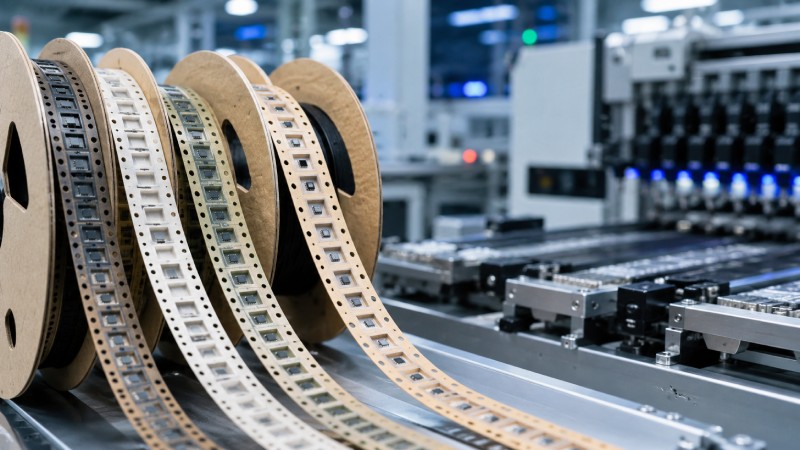
Different paper carrier tape materials offer different levels of rigidity, anti-static protection, moisture resistance, and forming consistency. Choosing the wrong material can lead to feeding errors, component damage, sealing problems, or increased production downtime.
In this guide, we’ll explain the most common paper carrier tape materials, their properties, advantages, limitations, and how to choose the right option for your SMT packaging application.
What Is Paper Carrier Tape?
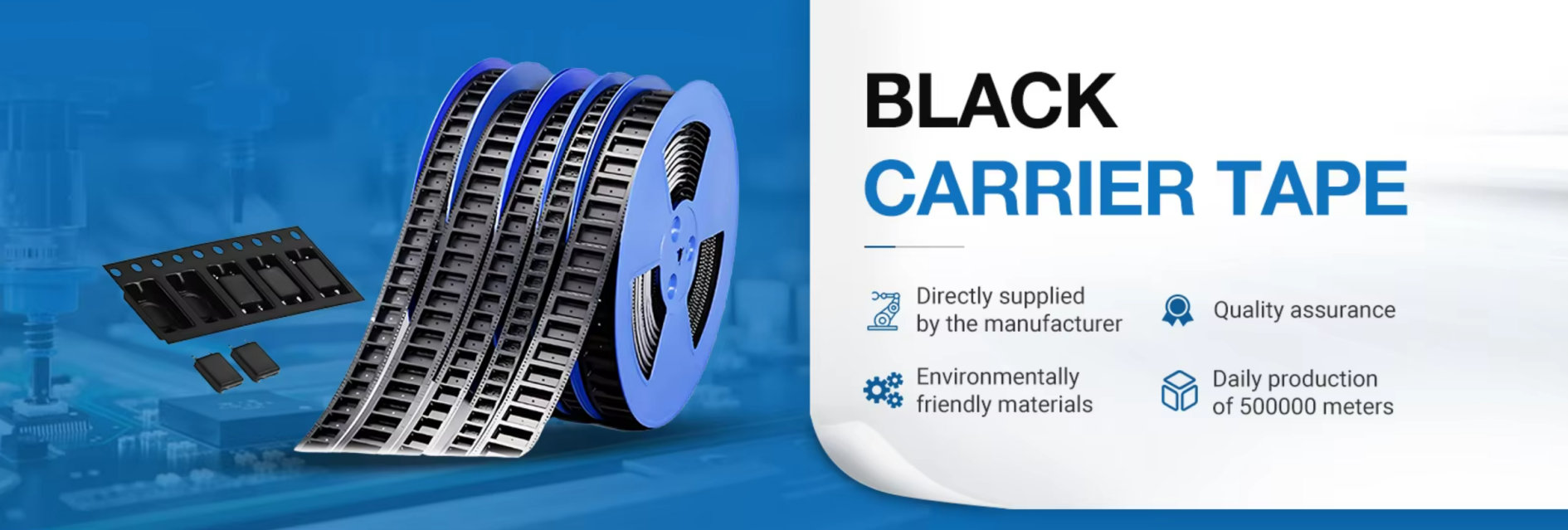
Paper carrier tape is a type of component packaging tape used in tape and reel packaging systems for automated SMT assembly. It is commonly used to package small electronic components such as resistors, capacitors, LEDs, inductors, and some semiconductor devices.
The tape contains continuously formed pockets that securely hold components during transportation, storage, and automated pick-and-place feeding. After components are loaded into the pockets, a cover tape seals the top surface before the tape is wound onto reels.
Compared with embossed plastic carrier tape, paper carrier tape is typically more economical and environmentally friendly. It is especially common for lightweight passive components and high-volume SMT production.
The material used to manufacture the paper carrier tape directly affects:
-
Pocket forming quality
-
Feeding accuracy
-
Tensile strength
-
Seal stability
-
Static protection
-
Environmental resistance
That is why understanding paper carrier tape materials is important for both packaging suppliers and electronics manufacturers.
Why Material Selection Matters in Carrier Tape Packaging
Many packaging issues in SMT production are not caused by machine problems. Instead, they often originate from poor carrier tape material selection.
A stable material ensures that the tape maintains dimensional accuracy during:
-
Pocket forming
-
Cover tape sealing
-
Reel winding
-
Transportation
-
High-speed SMT feeding
Low-quality or unsuitable materials can deform under heat, humidity, or mechanical stress. Even small dimensional changes may cause feeding misalignment inside automated pick-and-place systems.
Material selection also affects:
-
Pocket precision
-
Peel force consistency
-
Static discharge performance
-
Dust generation
-
Reel durability
For example, if the material lacks sufficient rigidity, pockets may collapse during transportation. If the surface is too rough, cover tape sealing consistency may become unstable. If the material lacks anti-static protection, sensitive IC components could suffer ESD damage.
In modern SMT manufacturing environments where machines operate at extremely high speeds, stable carrier tape material performance becomes critical for reducing downtime and maintaining production efficiency.
Main Types of Paper Carrier Tape Materials
Different paper carrier tape materials are designed for different applications, component types, and production requirements.
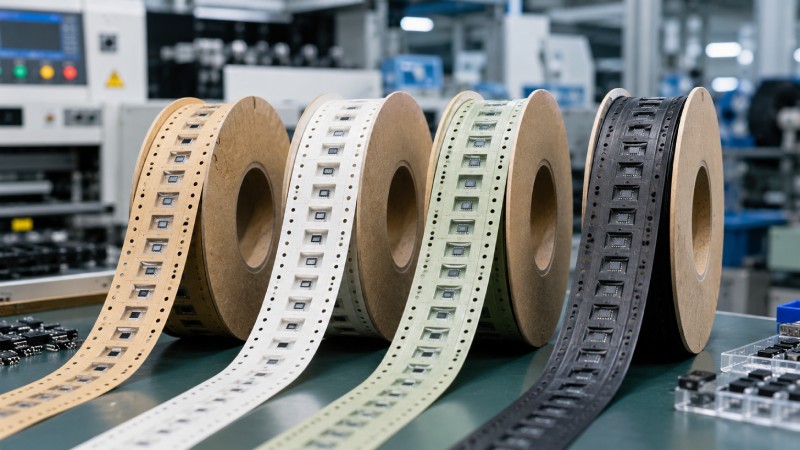
Kraft Paper
Kraft paper is the most widely used base material for paper carrier tape manufacturing.
It offers:
-
Good rigidity
-
Stable forming performance
-
Cost efficiency
-
Easy processing
-
Wide availability
Kraft paper carrier tape is commonly used for:
-
Resistors
-
Capacitors
-
Small passive components
-
Standard SMT applications
One major advantage of kraft paper is its balance between strength and affordability. It performs well in standard production environments and supports high-volume manufacturing.
However, standard kraft paper may have limitations in:
-
High humidity environments
-
Ultra-high-speed SMT lines
-
ESD-sensitive applications
For those situations, coated or reinforced materials are often preferred.
Anti-Static Coated Paper
Anti-static coated paper carrier tape is designed for electronic components that require ESD protection.
The material includes conductive or dissipative surface coatings that help control static electricity accumulation during:
-
Feeding
-
Transportation
-
Reel handling
-
Pick-and-place operations
This type of material is commonly used for:
-
IC packaging
-
Semiconductor devices
-
Sensitive LED components
-
Precision electronic parts
In automated SMT lines, static electricity can damage sensitive components without visible physical signs. Anti-static coatings help reduce this risk and improve packaging reliability.
Compared with standard kraft paper, anti-static paper materials generally offer:
-
Better surface conductivity
-
Improved ESD protection
-
More stable automated handling
However, they are typically more expensive due to the additional coating process.
Reinforced Composite Paper
Reinforced composite paper materials combine multiple layers or strengthening structures to improve mechanical performance.
These materials are designed for:
-
Heavy components
-
Large pocket designs
-
High-speed feeding systems
-
Applications requiring improved dimensional stability
Advantages include:
-
Higher tensile strength
-
Better deformation resistance
-
Improved pocket consistency
-
Enhanced transportation durability
Composite paper materials are often used when standard paper tape may not provide sufficient structural stability.
In some applications, reinforced paper materials can significantly reduce:
-
Pocket deformation
-
Feeding interruptions
-
Reel damage during shipping
Although the cost is higher than ordinary kraft paper, the improved reliability often justifies the investment for demanding SMT environments.
Recyclable Eco-Friendly Paper Materials
As sustainability becomes increasingly important in electronics manufacturing, many companies are shifting toward recyclable packaging solutions.
Eco-friendly paper carrier tape materials are designed to:
-
Reduce plastic usage
-
Improve recyclability
-
Support environmental compliance goals
Compared with plastic carrier tape, paper materials generally offer:
-
Lower environmental impact
-
Easier recycling
-
Reduced waste generation
This makes paper carrier tape attractive for manufacturers pursuing:
-
Green manufacturing initiatives
-
ESG compliance
-
Sustainable supply chain goals
Modern eco-friendly paper materials are also improving in terms of:
-
Surface consistency
-
Moisture resistance
-
Forming precision
-
High-speed compatibility
As technology continues to improve, recyclable paper carrier tape is expected to become even more common in SMT packaging applications.
Paper Carrier Tape Material Properties Explained
Understanding material properties helps manufacturers select the right paper carrier tape for specific production requirements.
Thickness
Material thickness affects:
-
Pocket depth
-
Structural rigidity
-
Reel flexibility
-
Feeding stability
If the material is too thin, pockets may deform easily. If it is too thick, reel winding performance may suffer.
Proper thickness selection depends on:
-
Component size
-
Component weight
-
Pocket geometry
-
SMT line requirements
Surface Smoothness
Surface smoothness plays a major role in:
-
Cover tape sealing
-
Feeding friction
-
Pocket consistency
Rough surfaces may generate excessive friction during automated feeding, while overly smooth surfaces may affect sealing stability.
A controlled surface finish helps maintain:
-
Stable peel force
-
Consistent machine feeding
-
Reduced dust generation
Tensile Strength
Tensile strength determines how well the tape resists stretching or tearing during:
-
Transportation
-
Reel winding
-
Automated feeding
Weak materials may crack or deform under mechanical stress, especially in high-speed SMT environments.
Higher tensile strength is particularly important for:
-
Large reels
-
Export shipping
-
Heavy components
-
High-volume production
ESD Protection
Static electricity can damage sensitive electronic components during packaging and assembly.
Anti-static paper carrier tape materials help:
-
Dissipate static charges
-
Protect sensitive components
-
Improve packaging reliability
Industries that commonly require ESD-safe materials include:
-
Semiconductor manufacturing
-
LED packaging
-
Automotive electronics
-
Precision SMT assembly
Moisture Resistance
Humidity can affect paper-based materials if moisture resistance is insufficient.
Moisture-resistant coatings or composite structures help improve:
-
Storage stability
-
Transportation durability
-
Environmental consistency
This is especially important for:
-
Overseas shipping
-
Humid climates
-
Long-term storage conditions
Paper Carrier Tape vs Plastic Carrier Tape Materials
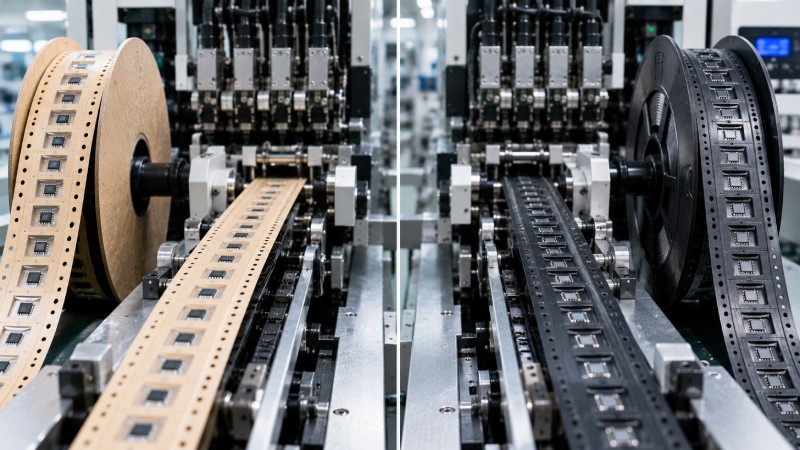
Both paper and plastic carrier tape materials have advantages depending on the application.
| Feature | Paper Carrier Tape | Plastic Carrier Tape |
|---|---|---|
| Cost | Lower | Higher |
| Sustainability | Better | Lower |
| Rigidity | Good | Excellent |
| Pocket Precision | Moderate | Very high |
| ESD Performance | Good with coating | Excellent |
| Heat Resistance | Moderate | Better |
| Lightweight Components | Excellent | Good |
| Complex Pocket Shapes | Limited | Better |
| Recyclability | Easier | More difficult |
Paper carrier tape is often preferred for:
-
Passive components
-
Standard SMT applications
-
Cost-sensitive production
-
Sustainable packaging initiatives
Plastic embossed carrier tape is typically used for:
-
Complex component geometries
-
Deep pockets
-
High-temperature environments
-
Ultra-high precision requirements
Choosing between the two depends on both technical requirements and production cost considerations.
How to Choose the Right Paper Carrier Tape Material
There is no single “best” paper carrier tape material for every application. Selection should be based on actual production requirements.
Based on Component Weight
Lightweight passive components usually work well with standard kraft paper materials.
Heavier components may require:
-
Reinforced composite paper
-
Higher rigidity materials
-
Improved tensile strength
Based on SMT Line Speed
High-speed pick-and-place systems require extremely stable feeding performance.
For high-speed automation, manufacturers often choose:
-
Reinforced materials
-
Precision-coated paper
-
Improved dimensional stability structures
Based on ESD Requirements
Sensitive components require anti-static protection.
If packaging:
-
ICs
-
Chips
-
Precision semiconductors
-
Sensitive LEDs
Anti-static coated paper materials are usually recommended.
Based on Transportation & Storage Conditions
Export shipping environments may expose carrier tape to:
-
Humidity
-
Temperature variation
-
Mechanical stress
Moisture-resistant or reinforced materials can improve reliability during long-distance transportation.
Based on Sustainability Goals
Companies looking to reduce plastic usage often prefer recyclable paper carrier tape materials.
This can help support:
-
Environmental compliance
-
Sustainability branding
-
Corporate ESG initiatives
Industries That Commonly Use Paper Carrier Tape
Paper carrier tape is widely used across multiple electronics manufacturing industries.
Common applications include:
-
SMT assembly
-
LED packaging
-
Passive component packaging
-
Consumer electronics
-
Automotive electronics
-
Semiconductor packaging
Despite the growth of embossed plastic carrier tape, paper carrier tape remains highly popular because it offers:
-
Lower cost
-
Good automation compatibility
-
High-volume production efficiency
-
Better environmental performance
For many standard SMT components, paper carrier tape continues to provide an excellent balance between performance and cost.
Common Problems Caused by Poor Material Selection
Using the wrong paper carrier tape material can create serious packaging and production issues.
Common problems include:
Pocket Deformation
Weak materials may collapse during transportation or reel winding.
Feeding Instability
Poor dimensional consistency can cause misfeeds in SMT machines.
Seal Failure
Improper surface properties may affect cover tape adhesion.
Static Damage
Lack of ESD protection may damage sensitive components.
Excessive Dust Generation
Low-quality materials can create paper dust during feeding, affecting equipment cleanliness.
Tape Cracking
Insufficient tensile strength may cause tearing during automated operation.
These issues can increase:
-
Production downtime
-
Scrap rates
-
Equipment maintenance
-
Packaging costs
That is why material quality should never be overlooked in carrier tape packaging design.
Future Trends in Paper Carrier Tape Materials
Paper carrier tape materials continue evolving as SMT manufacturing requirements become more advanced.
Key trends include:
-
Improved recyclable materials
-
Better anti-static coatings
-
Higher-speed feeding compatibility
-
Lower dust generation
-
Enhanced moisture resistance
-
Sustainable packaging innovations
As electronics manufacturers focus more on automation and environmental responsibility, paper carrier tape materials are expected to become increasingly sophisticated.
Future developments will likely focus on balancing:
-
Sustainability
-
Precision
-
Reliability
-
Cost efficiency
Conclusion
Paper carrier tape material selection directly affects packaging reliability, SMT feeding stability, and overall production efficiency.
Different materials offer different advantages in terms of:
-
Rigidity
-
ESD protection
-
Moisture resistance
-
Strength
-
Sustainability
For standard SMT applications, kraft paper remains a cost-effective solution. For sensitive or high-speed applications, anti-static and reinforced composite materials often provide better performance.
By understanding material properties and matching them to actual production requirements, manufacturers can reduce packaging defects, improve automation stability, and optimize long-term packaging costs.
Choosing the right paper carrier tape material is not just about packaging — it is about protecting production efficiency across the entire SMT assembly process.



 Emial
Emial John Mr