


Paper Carrier Tape Standards Explained: EIA-481 Requirements, Dimensions & Compliance Guide
In SMT manufacturing, even a small packaging inconsistency can lead to feeder jams, component misalignment, production downtime, and unnecessary costs. While many buyers focus on component quality, the packaging system that delivers those components to the production line is equally important.
Paper carrier tape plays a critical role in protecting electronic components during transportation and ensuring accurate feeding during automated assembly. However, paper carrier tape can only perform reliably when it complies with established industry standards.
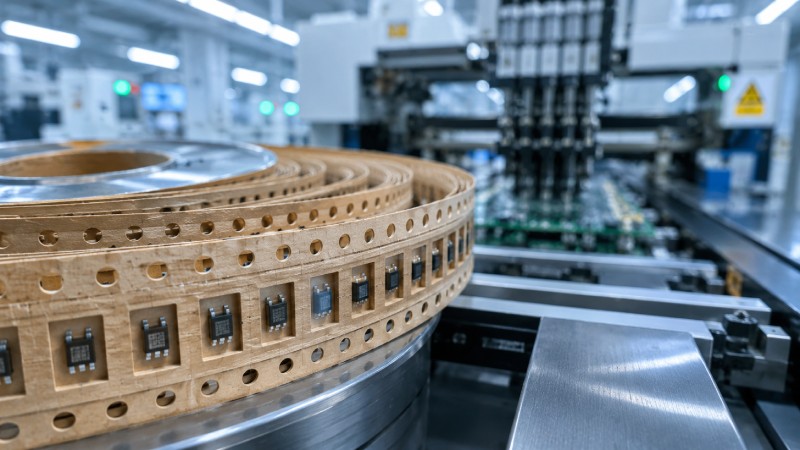
Understanding paper carrier tape standards helps manufacturers, procurement teams, and packaging engineers make informed decisions when selecting suppliers, validating packaging designs, and maintaining production efficiency. This guide explains the most important standards, dimensions, testing requirements, and compliance considerations that every SMT professional should know.
What Are Paper Carrier Tape Standards?
Paper carrier tape standards are industry-defined specifications that ensure carrier tapes can safely store, transport, and present electronic components to automated assembly equipment.
These standards establish requirements for:
-
Tape dimensions
-
Pocket dimensions
-
Pocket spacing
-
Sprocket hole locations
-
Cover tape compatibility
-
Reel packaging specifications
The primary goal is simple: components packaged by one supplier should work seamlessly with taping machines, feeders, and pick-and-place systems used anywhere in the world.
Without standardized specifications, manufacturers would face constant compatibility issues between packaging materials and production equipment.
Several industry organizations contribute to electronic packaging standards, including EIA, IEC, and JEDEC. Among these, the EIA-481 standard has become the most widely adopted specification for carrier tape and reel packaging.
Why Paper Carrier Tape Standards Matter in SMT Manufacturing
Many companies view carrier tape as a simple packaging material. In reality, it is a critical part of the automated assembly process.
Ensuring Machine Compatibility
Modern SMT lines rely heavily on automation. Components are fed from reels into high-speed placement machines that can process tens of thousands of parts per hour.
To maintain this speed and accuracy, carrier tape must align perfectly with:
-
Tape feeders
-
Indexing mechanisms
-
Vision systems
-
Pick-and-place equipment
A tape that deviates from standard dimensions can cause feeding interruptions, skipped components, or machine stoppages.
Protecting Components During Transportation
Electronic components are often transported over long distances before reaching production facilities.
Properly designed carrier tape pockets help:
-
Prevent component movement
-
Reduce vibration damage
-
Protect delicate leads and terminals
-
Maintain orientation
Standardized pocket designs ensure components remain secure throughout shipping and storage.
Reducing Production Downtime
A feeder malfunction lasting only a few minutes can disrupt an entire production schedule.
By following established standards, manufacturers reduce risks associated with:
-
Pocket misalignment
-
Incorrect indexing
-
Cover tape failures
-
Component flipping
The result is more reliable production and lower operating costs.
EIA-481: The Most Important Paper Carrier Tape Standard
When discussing carrier tape standards, EIA-481 is the reference that most industry professionals recognize.
What Is EIA-481?
EIA-481 is an industry standard that defines the requirements for carrier tape, cover tape, and reel packaging used for electronic components.
Its purpose is to ensure interoperability between packaging materials and automated assembly equipment across the global electronics industry.
Today, many semiconductor manufacturers, passive component suppliers, EMS providers, and packaging companies rely on EIA-481 as their primary specification.
What Does EIA-481 Cover?
The standard provides detailed guidance on numerous packaging characteristics, including:
-
Tape width
-
Pocket dimensions
-
Pocket pitch
-
Sprocket hole dimensions
-
Hole positioning
-
Reel dimensions
-
Component orientation
-
Cover tape sealing requirements
These specifications create a common framework that allows different suppliers to package components consistently.
Why Buyers Prefer EIA-481 Compliance
For procurement teams and production engineers, EIA-481 compliance offers several advantages.
First, it simplifies supplier qualification because packaging performance can be evaluated against recognized standards.
Second, it improves compatibility with existing feeders and placement equipment.
Third, it reduces risk when sourcing components globally, since packaging specifications remain consistent regardless of supplier location.
For companies operating multiple SMT lines, standardization significantly improves production reliability and reduces engineering validation work.
Key Paper Carrier Tape Dimensions Defined by Standards
Carrier tape performance depends heavily on dimensional accuracy.
Even small variations can create feeding problems during automated assembly.
Tape Width
Paper carrier tape is available in several standard widths, including:
| Standard Width |
|---|
| 8 mm |
| 12 mm |
| 16 mm |
| 24 mm |
| 32 mm |
| 44 mm |
| 56 mm |
The selected width depends on component size and pocket requirements.
Choosing the correct width ensures sufficient protection while maintaining compatibility with feeder systems.
Pocket Pitch
Pocket pitch refers to the distance between adjacent component pockets.
Consistent pocket pitch is critical because feeder mechanisms advance the tape according to predefined increments.
Variations in pitch can lead to:
-
Placement errors
-
Missed picks
-
Feeder synchronization problems
Sprocket Hole Positioning
Sprocket holes guide carrier tape through feeding systems.
These holes must be manufactured with extremely high accuracy.
If hole spacing deviates from specifications, feeders may experience:
-
Indexing failures
-
Positioning inaccuracies
-
Increased wear
-
Unexpected stoppages
For high-speed SMT operations, precise sprocket hole positioning is essential.
Pocket Depth and Clearance
Pocket depth determines how securely a component is held inside the tape.
If pockets are too shallow:
-
Components may protrude
-
Leads can become damaged
-
Parts may fall out during transportation
If pockets are too deep:
-
Components may tilt
-
Pick-up accuracy can decrease
Proper clearance ensures both protection and reliable component presentation.
Material Requirements for Paper Carrier Tape
Dimensions alone are not enough. Material performance also plays a major role in carrier tape reliability.
Strength Requirements
Paper carrier tape must withstand multiple handling processes, including:
-
Packaging
-
Transportation
-
Storage
-
Automated feeding
The material should resist tearing, crushing, and deformation under normal operating conditions.
Strong materials help prevent packaging failures before components reach the production line.
Dimensional Stability
Environmental conditions can influence paper-based materials.
Changes in humidity and temperature may cause expansion or contraction if material quality is poor.
High-quality paper carrier tapes are engineered to maintain dimensional stability across various storage and operating environments.
This consistency supports reliable feeding performance throughout the product lifecycle.
Environmental Considerations
As sustainability becomes increasingly important, many electronics manufacturers are exploring environmentally friendly packaging solutions.
Paper carrier tape offers several advantages:
-
Reduced plastic usage
-
Improved recyclability
-
Lower environmental impact
-
Easier waste management
For companies pursuing sustainability goals, paper carrier tape is becoming an attractive alternative to some plastic packaging options.
Quality Control and Testing Requirements
Compliance with standards requires more than simply designing carrier tape according to specifications.
Manufacturers must also verify performance through testing and inspection.
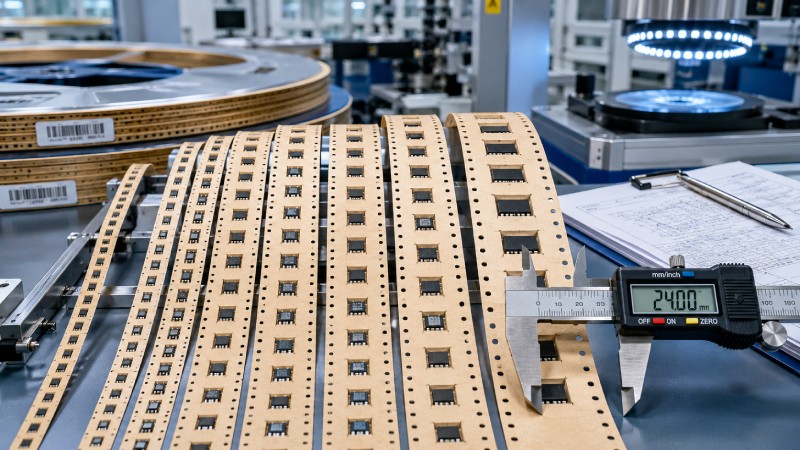
Dimensional Inspection
Quality control teams routinely measure:
-
Tape width
-
Pocket width
-
Pocket depth
-
Pocket pitch
-
Hole dimensions
-
Hole spacing
These inspections ensure production consistency and compliance with required tolerances.
Component Retention Testing
Carrier tape must hold components securely throughout transportation and handling.
Retention testing evaluates whether components remain properly positioned under vibration and movement.
This testing helps identify designs that may allow component shifting or loss.
Cover Tape Peel Testing
Cover tape performance is another critical factor.
If peel force is too low, components may escape during transportation.
If peel force is too high, feeders may struggle to remove the cover tape efficiently.
Manufacturers often perform peel force testing to verify proper sealing performance and feeder compatibility.
Advanced inspection equipment such as Carrier Tape Peel Strength Testers can help manufacturers monitor and validate peel performance throughout production.
Common Paper Carrier Tape Compliance Problems
Even experienced suppliers can encounter compliance issues.
Understanding common problems helps buyers identify risks early.
Incorrect Pocket Design
Poorly designed pockets can lead to:
-
Component flipping
-
Orientation changes
-
Pick-up failures
-
Increased placement defects
Pocket geometry should always be matched to the specific component being packaged.
Poor Hole Accuracy
Sprocket holes serve as the positioning reference for feeder systems.
Inaccurate hole spacing can result in:
-
Feeding interruptions
-
Indexing errors
-
Reduced placement accuracy
This issue becomes increasingly critical as production speeds increase.
Material Deformation
Low-quality paper materials may absorb moisture or deform during storage.
Potential consequences include:
-
Dimensional changes
-
Pocket distortion
-
Feeding instability
Proper material selection and manufacturing controls help minimize these risks.
Non-Standard Reel Packaging
Even when the carrier tape itself meets specifications, non-standard reel dimensions can create compatibility problems.
Incorrect reel sizes may interfere with feeder installation and reel handling procedures.
Complete compliance requires attention to both tape and reel specifications.
How to Verify a Supplier‘s Paper Carrier Tape Compliance
Selecting a reliable supplier requires more than reviewing a catalog.
Request Dimensional Reports
Professional suppliers should be able to provide measurement reports covering:
-
Tape width
-
Pocket dimensions
-
Hole spacing
-
Manufacturing tolerances
These reports demonstrate process control and quality management capabilities.
Review Testing Documentation
Ask suppliers for supporting test data such as:
-
Peel force testing
-
Material performance reports
-
Retention testing results
-
Quality inspection records
Documented testing provides greater confidence in product consistency.
Conduct Sample Validation
Before placing large production orders, request samples and perform validation testing on your own equipment.
This approach allows engineers to verify:
-
Feeder compatibility
-
Pick-and-place performance
-
Packaging quality
-
Production reliability
Real-world testing often reveals issues that documentation alone cannot identify.
Evaluate Manufacturing Capabilities
Suppliers using modern automated packaging and inspection systems are generally better positioned to maintain consistent quality.
Manufacturing capability directly affects dimensional accuracy, process repeatability, and long-term reliability.
Companies with advanced carrier tape production and packaging equipment often achieve tighter process control and more stable product quality.
Future Trends in Paper Carrier Tape Standardization
Carrier tape standards continue to evolve alongside advancements in electronics manufacturing.
As electronic components become smaller and more complex, packaging tolerances are becoming increasingly demanding.
Future developments are likely to focus on:
-
Higher dimensional precision
-
Better feeder compatibility
-
Increased automation support
-
Enhanced quality monitoring
-
Sustainable packaging materials
At the same time, environmental regulations and corporate sustainability initiatives will continue driving interest in paper-based carrier tape solutions.
Manufacturers that combine strict standards compliance with sustainable material innovation will be well positioned to meet future market requirements.
Conclusion
Paper carrier tape standards play a vital role in ensuring reliable SMT production. They establish the dimensional, material, and performance requirements necessary for compatibility with modern automated assembly equipment.
Among these standards, EIA-481 remains the industry‘s most important reference, providing a common framework for carrier tape, cover tape, and reel packaging.
For buyers, understanding these standards helps reduce sourcing risks, improve production efficiency, and maintain consistent packaging quality. When evaluating suppliers, dimensional reports, testing documentation, sample validation, and manufacturing capabilities should all be part of the qualification process.
In an industry where precision matters at every stage, standards compliance is not simply a technical requirement—it is a key factor in achieving stable, efficient, and cost-effective electronics manufacturing.
FAQ
What is the primary standard used for paper carrier tape?
EIA-481 is the most widely recognized standard for carrier tape and reel packaging in the electronics industry. It defines dimensions, pocket design, sprocket holes, reel specifications, and packaging requirements.
Why is carrier tape dimensional accuracy important?
Dimensional accuracy ensures compatibility with feeders and pick-and-place machines. Small deviations can cause indexing errors, misfeeds, and production interruptions.
Can paper carrier tape be used for automated SMT assembly?
Yes. Paper carrier tape is widely used in SMT manufacturing and is designed to work with automated feeder systems when manufactured according to industry standards.
How is carrier tape quality verified?
Manufacturers typically perform dimensional inspections, retention testing, cover tape peel testing, and process validation to ensure compliance and performance.
Is paper carrier tape more environmentally friendly than plastic carrier tape?
In many applications, paper carrier tape offers improved recyclability and reduced plastic consumption, making it an attractive option for companies pursuing sustainability initiatives.



 Emial
Emial John Mr