




Common Paper Carrier Tape Defects: Causes, Inspection Methods & Prevention Guide
Paper carrier tape plays a critical role in modern SMT (Surface Mount Technology) packaging. It protects electronic components during transportation, ensures reliable feeding in automated pick-and-place machines, and helps manufacturers maintain high production efficiency. However, even small defects in paper carrier tape can lead to feeding interruptions, component damage, machine downtime, and increased production costs.
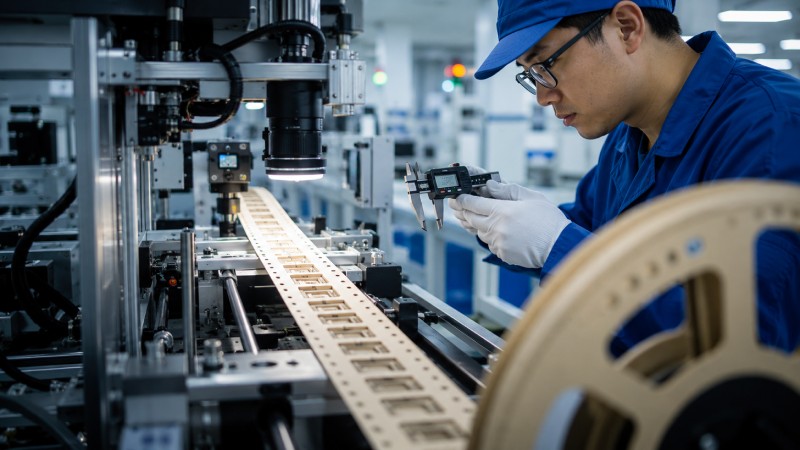
For electronics manufacturers, OEMs, and procurement teams, understanding common paper carrier tape defects is essential for preventing quality issues before they reach the production line. This guide explains the most common defects found in paper carrier tape, their causes, inspection methods, and practical strategies for defect prevention.
Why Defect Control Is Critical in Paper Carrier Tape Manufacturing
Paper carrier tape may appear simple, but its dimensional accuracy directly impacts SMT assembly performance. Every cavity, sprocket hole, and sealing surface must meet strict tolerances to ensure smooth automated feeding.
When carrier tape defects occur, the consequences can extend far beyond packaging. Components may shift within cavities, pick-and-place machines may lose indexing accuracy, and production lines may experience costly stoppages.
The hidden costs of poor-quality carrier tape often include:
-
Increased machine downtime
-
Higher component scrap rates
-
Rework and troubleshooting expenses
-
Delayed product shipments
-
Customer quality complaints
Because SMT production relies heavily on automation, even a minor defect repeated across thousands of meters of tape can create significant operational problems.
The Most Common Paper Carrier Tape Defects
Understanding the most frequent defects helps manufacturers identify issues early and implement corrective actions before production is affected.
Pocket Dimension Variations
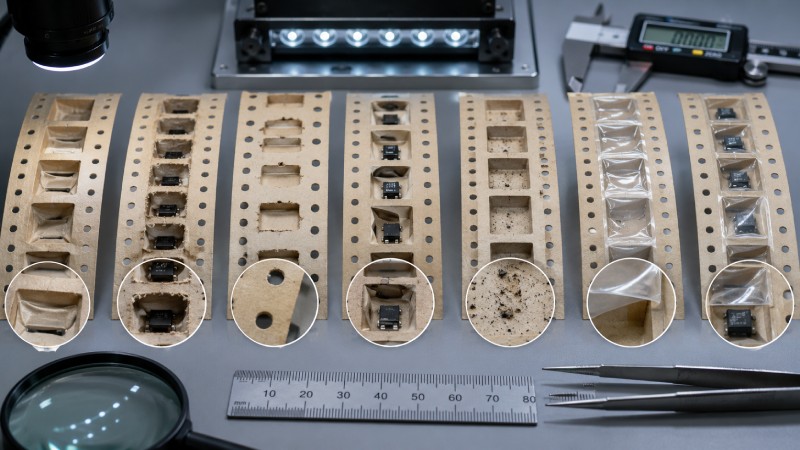
One of the most common defects involves inconsistent cavity dimensions. If pockets are larger or smaller than design specifications, components may not fit correctly.
Oversized pockets allow components to move during transportation and feeding. Undersized pockets can cause insertion difficulties and may even damage delicate electronic parts.
Common signs include:
-
Loose components inside cavities
-
Components tilting during transportation
-
Inconsistent pocket measurements
Since pocket dimensions determine component stability, even small deviations can negatively affect pick-and-place accuracy.
Pocket Position Misalignment
Pocket alignment is equally important. Cavities must be positioned precisely relative to the sprocket holes so automated equipment can locate components accurately.
Misaligned pockets may result from tooling wear, setup errors, or poor process control.
Potential consequences include:
-
Vision system recognition errors
-
Incorrect component pickup positions
-
Increased placement defects
Manufacturers often detect this issue through dimensional inspection and automated vision systems.
Sprocket Hole Position Errors
Sprocket holes guide the carrier tape through feeding equipment. If hole diameter, pitch, or positioning falls outside specification, feeding problems can occur.
Common symptoms include:
-
Feeding interruptions
-
Tape slipping
-
Indexing inaccuracies
-
Machine jams
Because SMT equipment depends on consistent sprocket hole geometry, this defect is among the most serious quality concerns.
Burrs and Rough Edges
During punching and forming processes, paper fibers may remain attached to cavity edges or tape surfaces.
These burrs may seem insignificant, but they can cause several problems:
-
Component surface damage
-
Increased contamination
-
Poor cover tape sealing
-
Feeding interference
Proper die maintenance and quality control are essential for minimizing burr formation.
Crushed or Deformed Pockets
Paper carrier tape cavities are designed to protect components from external pressure. However, excessive forming pressure, poor material quality, or improper handling can cause pockets to collapse.
Deformed pockets often lead to:
-
Reduced component protection
-
Component movement
-
Feeding failures
This defect is particularly problematic for fragile electronic components that require stable positioning throughout transportation and assembly.
Surface Contamination
Dust, loose paper fibers, and foreign particles can contaminate carrier tape during manufacturing or storage.
Surface contamination may:
-
Affect component cleanliness
-
Reduce sealing quality
-
Create reliability concerns for sensitive electronics
Clean production environments and proper packaging procedures significantly reduce contamination risks.
Poor Cover Tape Adhesion
Paper carrier tape relies on cover tape sealing to secure components inside cavities. If adhesion is insufficient, cover tape may lift prematurely.
Poor sealing can result in:
-
Component loss during transportation
-
Pocket exposure
-
Reduced packaging reliability
Seal strength must remain consistent across the entire reel to ensure dependable performance.
Excessive Peel Force Variation
Peel force refers to the force required to remove cover tape during automated feeding.
When peel force is too high:
-
Feeding equipment experiences greater stress
-
Components may shift during peeling
When peel force is too low:
-
Cover tape may separate prematurely
Maintaining stable peel force is critical for uninterrupted SMT production.
What Causes Paper Carrier Tape Defects?
Most paper carrier tape defects can be traced back to four primary causes.
Raw Material Quality Issues
The quality of the paper substrate directly affects final tape performance.
Problems often arise from:
-
Inconsistent paper thickness
-
Poor fiber structure
-
Excessive moisture absorption
-
Low-strength paper materials
High-quality paper materials provide better dimensional stability and forming consistency.
Improper Forming Parameters
Carrier tape manufacturing requires carefully controlled forming pressure, tooling alignment, and production speed.
Incorrect process settings may create:
-
Pocket deformation
-
Dimensional inconsistencies
-
Surface defects
Regular process validation helps prevent these issues.
Tooling Wear and Maintenance Problems
Over time, forming tools and punching dies experience wear.
Worn tooling may produce:
-
Burrs
-
Misaligned pockets
-
Hole position errors
-
Inconsistent dimensions
Preventive maintenance programs are essential for maintaining quality consistency.
Environmental Factors
Paper materials are sensitive to environmental conditions.
High humidity can cause:
-
Dimensional changes
-
Material softening
-
Reduced stability
Dusty environments may introduce contamination that affects both tape quality and component protection.
How Manufacturers Inspect Paper Carrier Tape for Defects
Effective inspection systems help identify defects before products reach customers.
Dimensional Inspection
Manufacturers measure critical dimensions including:
-
Tape width
-
Pocket width
-
Pocket depth
-
Pocket pitch
Precision measuring equipment ensures compliance with design specifications.
Sprocket Hole Verification
Inspection systems evaluate:
-
Hole diameter
-
Hole pitch
-
Hole position accuracy
Because sprocket holes control feeding performance, these measurements are especially important.
Visual Inspection
Operators and vision systems check for:
-
Burrs
-
Surface contamination
-
Pocket damage
-
Material defects
Automated vision inspection can identify issues more consistently than manual inspection alone.
Peel Force Testing
Peel force testing verifies compatibility between carrier tape and cover tape.
Testing helps ensure:
-
Stable cover tape removal
-
Consistent feeding performance
-
Reliable sealing quality
Many high-quality suppliers include peel force data in inspection reports.
Defect Prevention Best Practices
Preventing defects is significantly more cost-effective than correcting problems after production.
Follow Industry Standards
Manufacturers should follow recognized packaging standards to maintain dimensional consistency and feeding reliability.
Standardized designs reduce compatibility issues across different SMT systems.
Establish Incoming Quality Control
Buyers should inspect incoming carrier tape before production use.
A typical inspection checklist includes:
-
Pocket dimensions
-
Hole positioning
-
Surface condition
-
Peel force performance
-
Cover tape sealing quality
Early detection prevents costly line disruptions.
Verify Cover Tape Compatibility
Not all cover tapes perform equally with every paper carrier tape design.
Before large-scale production, manufacturers should verify:
-
Sealing performance
-
Peel force consistency
-
Feeding reliability
Compatibility testing reduces packaging-related failures.
Control Storage Conditions
Proper storage helps preserve carrier tape quality.
Recommended practices include:
-
Maintaining stable temperature
-
Controlling humidity levels
-
Protecting reels from contamination
-
Avoiding excessive stacking pressure
Good storage conditions extend product reliability.
Conduct Pilot Production Runs
Testing carrier tape under actual production conditions is one of the most effective ways to identify potential issues.
Pilot runs allow manufacturers to evaluate:
-
Feeding performance
-
Component stability
-
Machine compatibility
-
Peel characteristics
Small-scale validation often prevents major production problems later.
How to Evaluate a Paper Carrier Tape Supplier‘s Quality System
Selecting the right supplier is one of the most effective ways to minimize defect risks.
When evaluating suppliers, consider asking the following questions:
-
Do you perform dimensional inspections on every production batch?
-
Do you provide inspection reports?
-
Do you conduct peel force testing?
-
What quality standards do you follow?
-
How do you control tooling wear?
Reliable suppliers typically offer:
-
Consistent quality documentation
-
Process traceability
-
Vision inspection systems
-
Statistical process control
-
Experienced engineering support
Warning signs may include vague quality procedures, inconsistent samples, or a lack of testing data.
A supplier‘s quality management system often determines long-term packaging reliability more than price alone.
Paper Carrier Tape Defect Troubleshooting Guide
| Problem | Possible Cause | Recommended Solution |
|---|---|---|
| Components moving inside pockets | Pocket oversized | Optimize cavity dimensions |
| Feeding interruptions | Hole position errors | Verify tooling accuracy |
| Cover tape lifting | Poor sealing conditions | Improve sealing parameters |
| Pocket collapse | Excessive forming pressure | Adjust forming process |
| High peel force | Cover tape mismatch | Test compatible materials |
| Surface contamination | Poor production environment | Improve cleanliness controls |
| Burr formation | Tool wear | Replace or maintain tooling |
Using a structured troubleshooting process helps identify root causes quickly and minimizes production downtime.
Frequently Asked Questions About Paper Carrier Tape Defects
What is the most common paper carrier tape defect?
Pocket dimension variation is one of the most common defects because cavity size directly affects component retention and feeding performance.
How do carrier tape defects affect SMT assembly?
Defects can cause feeding interruptions, pickup errors, component damage, and reduced production efficiency.
Can defective carrier tape damage electronic components?
Yes. Burrs, pocket deformation, and inadequate sealing can expose components to physical damage during transportation and handling.
How is peel force measured?
Peel force is measured using specialized testing equipment that evaluates the force required to remove cover tape at specified angles and speeds.
How can buyers reduce carrier tape quality risks?
Buyers should work with qualified suppliers, request inspection reports, verify material compatibility, and perform incoming quality inspections before production use.
Conclusion
Paper carrier tape quality has a direct impact on SMT production efficiency, component protection, and overall manufacturing costs. Defects such as pocket dimension variations, sprocket hole errors, burrs, contamination, poor sealing, and peel force inconsistencies can all lead to feeding problems and production disruptions.
Fortunately, most defects are preventable through proper material selection, process control, tooling maintenance, inspection procedures, and supplier quality management.
For manufacturers and procurement teams, understanding common paper carrier tape defects is not simply a quality control exercise—it is a critical step toward reducing downtime, improving assembly performance, and ensuring reliable electronic component packaging.
By partnering with experienced carrier tape suppliers and implementing robust inspection practices, companies can significantly reduce packaging-related failures and achieve more consistent SMT production results.



 Emial
Emial John Mr