
Cover Tape Sealing for Paper Carrier Tape: Process, Parameters, Defects & Best Practices
Introduction
A reel of electronic components may travel through multiple stages before reaching an SMT production line. It can be wound, stored, transported across countries, unloaded, stocked in a warehouse, and eventually installed on automated assembly equipment. Throughout this journey, the cover tape is expected to remain attached to the carrier tape while still allowing smooth removal during component feeding.
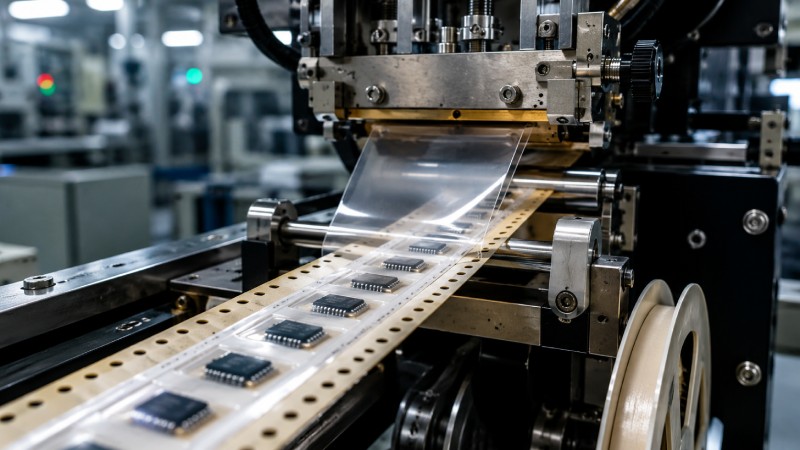
Many packaging issues are not caused by the components themselves but by inconsistent sealing behavior between the cover tape and the paper carrier tape. Loose sealing may expose pockets during transportation, while excessive bonding can create feeding interruptions during assembly. Understanding the factors behind seal formation helps packaging engineers reduce avoidable defects and improve reel performance throughout the supply chain.
Why Sealing Consistency Matters Throughout the Supply Chain
Once components are loaded into a paper carrier tape, they rely on the cover tape to remain securely positioned until assembly begins. The seal must withstand vibration, handling, reel winding tension, and environmental changes without allowing pockets to open.
At the same time, the cover tape cannot be bonded so aggressively that it becomes difficult to peel away during automated feeding. SMT equipment operates at high speeds and depends on predictable peeling behavior. Variations from reel to reel can increase machine stoppages and reduce production efficiency.
For this reason, packaging teams often evaluate sealing performance across the entire logistics and assembly process rather than focusing on seal strength alone.
Factors That Influence Seal Formation
The interaction between a cover tape and a paper carrier tape is influenced by several process variables working together.
Heat Exposure
Most heat-seal cover tapes contain adhesive layers that react within a specific temperature range. If insufficient heat reaches the sealing area, bonding may remain incomplete. Excessive heat can change adhesive behavior and alter peeling characteristics.
Pressure Distribution
Pressure helps bring the adhesive layer into contact with the carrier tape surface. Uneven pressure may create localized weak areas even when the temperature setting appears correct.
Contact Time
The amount of time the sealing head remains in contact with the tape also affects the final result. Faster production speeds reduce heat transfer time, while slower speeds increase exposure.
Material Surface Characteristics
Different paper carrier tapes may use different coatings or surface treatments. These differences can influence how the adhesive interacts with the sealing area.
Because these variables affect one another, parameter adjustments are typically evaluated as a combination rather than independently.
Selecting a Cover Tape for Different Packaging Conditions
Not every project requires the same cover tape configuration.
For reels intended for long-distance export shipments, packaging teams often prioritize stable sealing performance under varying transportation conditions. Products that may remain in inventory for extended periods can require additional evaluation of material compatibility over time.
For high-speed packaging lines, process stability and consistent peeling behavior may receive greater attention than maximum bond strength. In applications involving miniature components, maintaining pocket protection during handling becomes a major consideration.
Selection decisions generally depend on:
-
Component dimensions
-
Pocket depth
-
Transportation requirements
-
Packaging speed
-
Assembly equipment
-
Environmental storage conditions
A cover tape that performs well in one application may not necessarily perform the same way in another.
Why One Sealing Recipe Does Not Fit Every Project
Packaging engineers frequently ask for a standard temperature or pressure setting. In practice, there is rarely a universal parameter set that works across all carrier tape and cover tape combinations.
Several factors influence process settings:
| Variable | Possible Impact |
|---|---|
| Cover tape adhesive | Seal formation behavior |
| Carrier tape coating | Bonding characteristics |
| Component size | Pocket protection requirements |
| Machine configuration | Heat transfer and pressure consistency |
| Production speed | Contact duration |
A parameter set that performs well on one machine may produce different results on another machine operating under different environmental conditions.
For this reason, validation trials are typically conducted before large production runs begin.
Typical Issues Found During Packaging Validation
Validation testing often identifies process variations before products enter mass production.
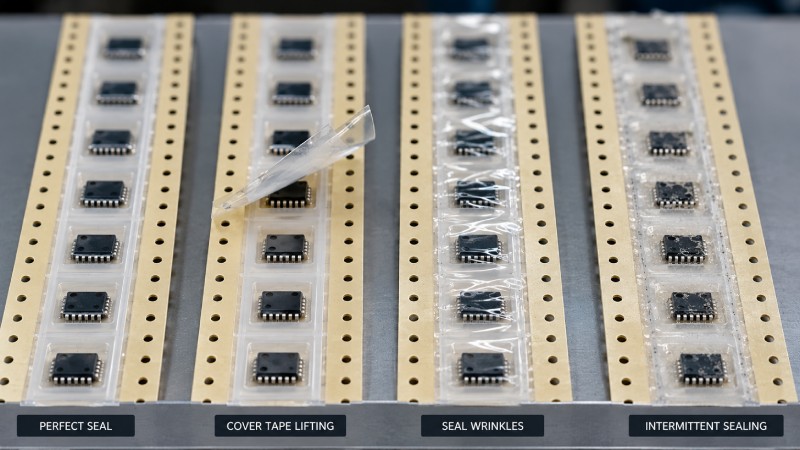
Cover Tape Edge Separation
In some cases, sections of the cover tape may begin lifting away from the carrier tape. This can occur when bonding conditions are not fully optimized or when material compatibility has not been verified.
Excessive Peeling Resistance
If the cover tape becomes difficult to remove during feeding, assembly equipment may experience interruptions or inconsistent operation.
Uneven Seal Appearance
Wrinkles, inconsistent sealing lines, or irregular bonding patterns may indicate equipment alignment issues or tension imbalances.
Inconsistent Results Between Reels
When sealing performance varies significantly between production lots, process control or material variation may require further investigation.
Identifying these conditions during validation is generally less costly than addressing them after shipment.
Evaluating Peeling Performance Before Production Release
Packaging performance is often assessed through controlled peeling tests before production approval.
The objective is not simply to determine whether the cover tape remains attached. Testing also examines how the tape behaves when removed under controlled conditions.
Evaluation may include:
-
Peeling consistency
-
Tape removal behavior
-
Pocket stability
-
Residue observation
-
Feeding simulation
Stable peeling characteristics often contribute to smoother operation on automated assembly lines.
Packaging teams frequently compare multiple material combinations before selecting the final production configuration.
Material Compatibility Considerations
One challenge frequently encountered during sourcing is the assumption that all carrier tapes and cover tapes can be freely mixed.
In reality, suppliers may use different adhesive systems, coating technologies, and manufacturing processes. Even products that appear similar visually may produce different results during sealing and peeling.
Before approving a new material combination, packaging teams often perform:
-
Seal evaluation
-
Peeling assessment
-
Environmental exposure testing
-
Transportation simulation
-
SMT feeding verification
These activities help reduce uncertainty before production begins.
Process Controls Used During Tape and Reel Packaging
Reliable packaging performance is usually supported by process controls throughout production.
Material Verification
Incoming carrier tape and cover tape materials are checked before use to confirm consistency between batches.
Equipment Setup Verification
Sealing equipment is adjusted and verified before production starts.
Sample Evaluation
Trial reels are commonly produced and inspected before large-volume runs.
Routine Monitoring
Production teams may perform periodic inspections throughout the packaging process to identify unexpected changes.
Traceability Records
Production records help identify material lots and process settings associated with specific reels.
These controls support more predictable packaging outcomes across different production batches.
Questions to Discuss with a Packaging Supplier
When reviewing a carrier tape project, buyers often focus primarily on dimensions and lead time. However, sealing-related questions can provide valuable insight into a supplier‘s process capabilities.
Examples include:
-
Has this cover tape been tested with this carrier tape material?
-
What evaluation methods are used during process setup?
-
Are sample reels available for feeding verification?
-
How are production parameters monitored?
-
How is consistency between batches maintained?
-
Can transportation testing be provided?
-
What documentation is available for validation activities?
The answers often reveal more about packaging capability than basic product specifications alone.
Frequently Asked Questions
Does every paper carrier tape require the same sealing settings?
No. Material construction, adhesive characteristics, and equipment design can influence the sealing conditions used during production.
Can different suppliers‘ cover tapes be used interchangeably?
Not always. Compatibility testing is typically recommended before switching materials.
Why is peeling behavior evaluated during validation?
Because packaging performance continues beyond transportation. Cover tape removal characteristics can influence assembly equipment operation.
Can environmental conditions affect sealing results?
Temperature and humidity may influence material behavior, particularly during storage and transportation.
Why do packaging teams conduct trial runs?
Trial production helps identify potential issues before large quantities are packaged.
Conclusion
For paper carrier tape applications, sealing performance is usually evaluated across the entire packaging and assembly cycle rather than at a single production step. Transportation conditions, material compatibility, machine settings, and peeling behavior can all influence how a reel performs once it reaches the SMT line.
By focusing on process stability, material matching, and validation activities before mass production, packaging teams can reduce variation between reels and achieve more predictable results throughout storage, transportation, and automated assembly.



 Emial
Emial John Mr